
SHAKIR ANSARI
If your company still relies on outdated websites, legacy software, or manual processes, you’re likely losing speed, customers, and efficiency—without even realizing it.
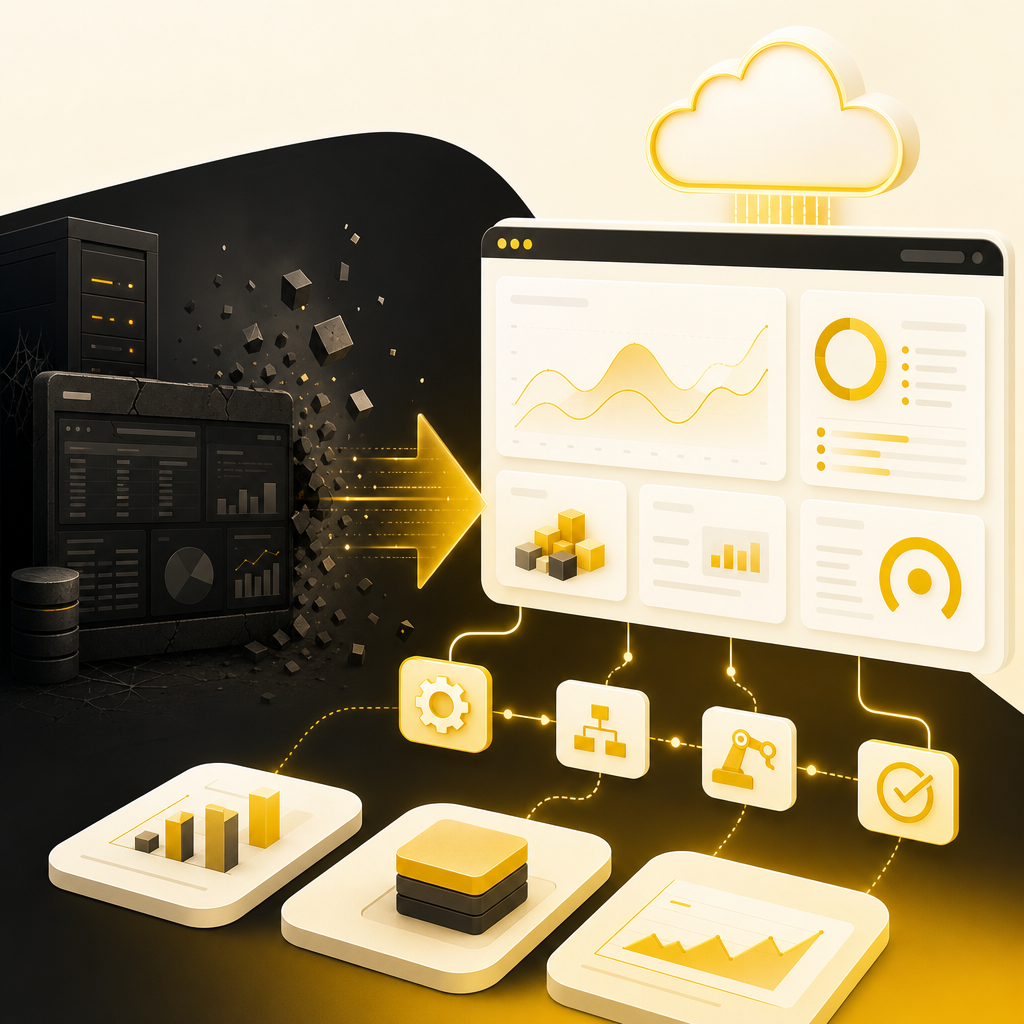
Legacy modernization isn’t just a technical upgrade. It’s a business transformation: rebuilding systems so your teams can work faster, integrate tools smoothly, reduce operational costs, and scale without breaking.
Plan, rebuild, integrate, migrate, and automate legacy systems for growth-ready operations.
Legacy modernization becomes urgent when systems can’t keep up with modern customer expectations, security needs, or business goals. Modernization helps reduce bottlenecks by rebuilding core systems into scalable, integrated, and automatable platforms—without disrupting your business operations.
Every update becomes risky, time-consuming, and more expensive to complete.
Older platforms can create unreliable uptime and slower digital experiences.
Systems that do not share data properly slow workflows and decisions.
Repetitive work wastes hours every week and limits operational efficiency.
Customer growth and data growth become harder to support safely.
Older codebases and outdated platforms require more effort to maintain.
Legacy modernization usually involves one or more strategies. The best outcomes typically come from a phased approach, balancing risk, cost, time-to-value, and long-term scalability.
When the current system is too costly to maintain or structurally limiting, rebuilding creates a modern architecture from the ground up.
If the app logic still works but the environment is outdated, re-platforming modernizes hosting—often through cloud migration.
Refactoring upgrades existing code for better maintainability, security, and performance without changing business logic too much.
Integration connects legacy and modern systems using APIs, enabling faster workflows and gradual transformation.
Once systems can communicate, workflow automation and AI can remove repetitive tasks.
When modernization is done correctly, you get measurable improvements across customer journeys, operations, data flow, reliability, maintenance, product iteration, and growth foundations.
Modern websites and apps that load quickly and convert.
Process automation helps reduce manual work.
API integrations connect systems and improve movement of data.
Modern infrastructure supports stronger operational stability.
Cleaner architecture reduces future maintenance effort.
Support growth, SaaS expansion, or e-commerce growth.
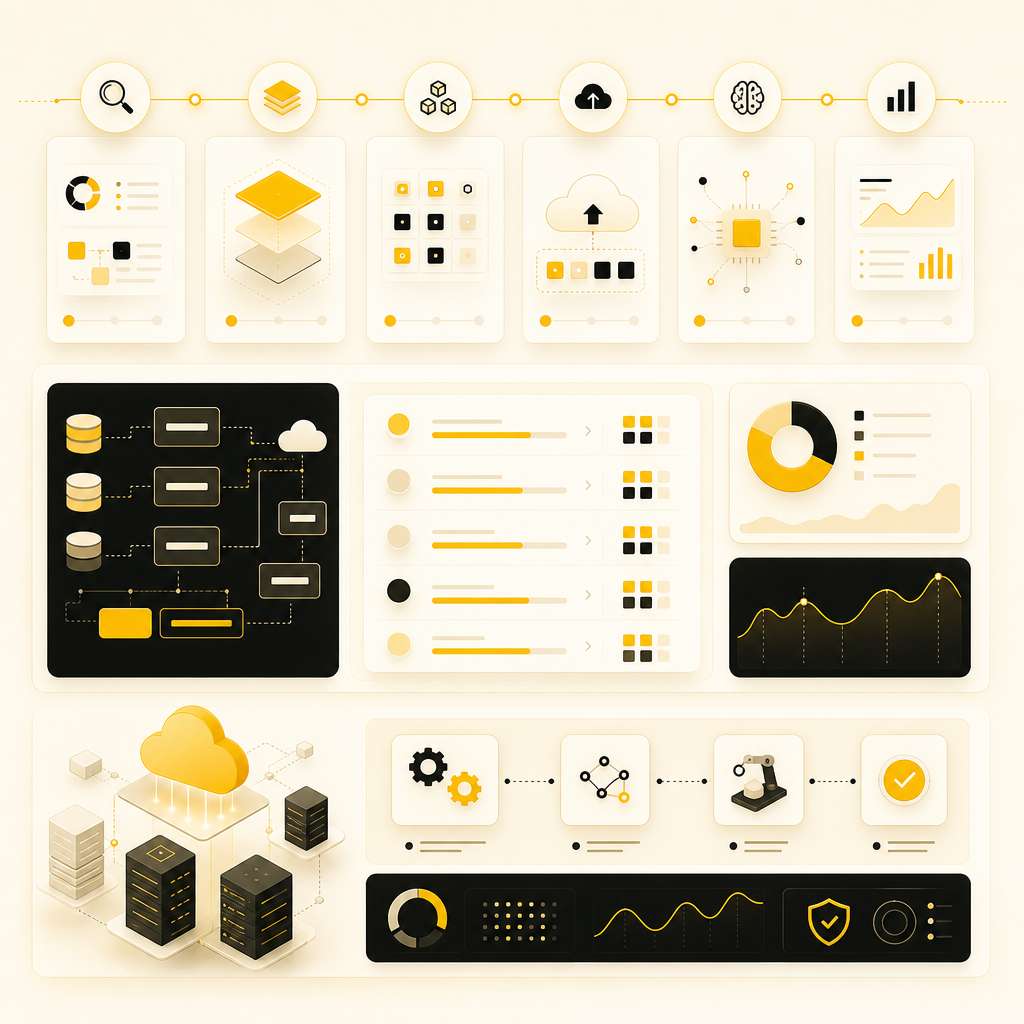
Here’s a proven modernization workflow that established businesses can follow, from legacy systems to a growth-ready digital foundation.
Identify what’s working versus failing, map critical workflows and bottlenecks, evaluate technical debt, performance, security risks, and dependencies, and confirm business goals. Deliverables include a modernization plan, risk assessment, phased scope, and target architecture direction.
Modern systems are typically built around modular services or components, reliable databases, API-driven communication, cloud-based deployment patterns, and automation-friendly workflows.
Often the best plan includes refactoring high-risk components, re-platforming stable parts to the cloud, integrating legacy systems while new modules are built, and automating workflows where ROI is fastest.
Build modern UI and app experiences, migrate data safely with validation and rollback planning, implement API layers, deploy to cloud environments, and test thoroughly before cutover.
After integration, automation becomes the multiplier: workflow automation reduces manual work, AI-powered agents assist with triage, summarization, or support routing, and smarter data handling connects systems.
Modernization is ongoing, with performance monitoring, security hardening, iterative improvements, long-term support, and enhancements.
Cloud migration is often the fastest way to improve reliability, scalability, and performance—when planned correctly.
The key is to plan data transfer strategy, validate performance and security, ensure rollback options, and migrate in phases for lower risk.
Legacy modernization often exposes a bigger opportunity: reducing repetitive work. Process automation connects workflows across tools so tasks happen automatically based on rules and triggers—without waiting on manual steps.
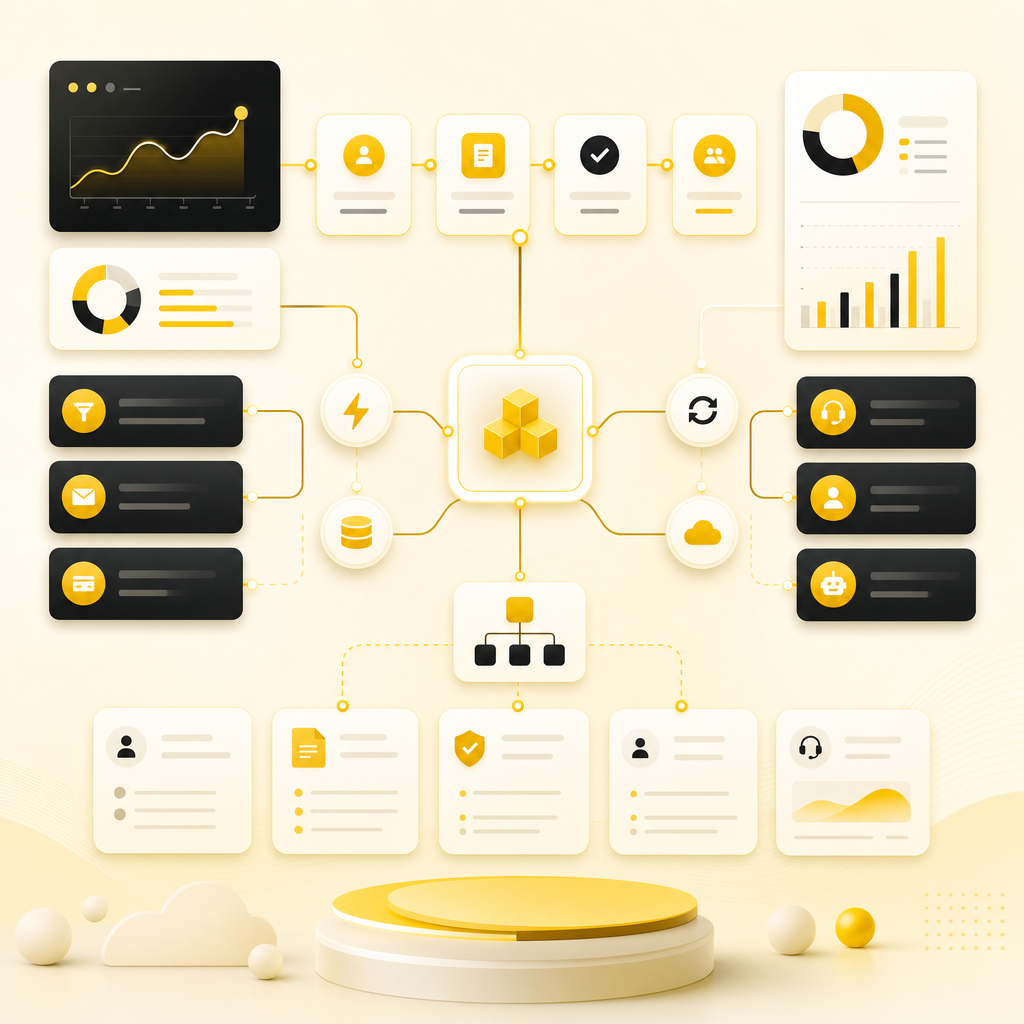
Move leads into the right workflows without manual handoffs.
Trigger updates across tools when key business events happen.
Automate notifications and approval steps for repeatable processes.
Support ticket categorization, response suggestions, and routing.
AI automation services can support workflows such as routing, triage, and assistance with repetitive tasks.
Businesses choose Shakir Ansari – Full Stack Developer & AI Automation Solutions when they need more than generic development—they need reliable execution and real business outcomes.
Support for custom web development, website development, full-stack applications, API integrations, SaaS platforms, e-commerce solutions, workflow automation, AI automation, and SEO services.
Modernization works best when tailored to your workflows, integrations, data needs, and scalability goals—not forced into generic patterns.
Depending on your modernization scope, typical deliverables include roadmap planning, modern UI, APIs, cloud deployment, rebuilt modules, automation workflows, testing, go-live support, and ongoing improvements.
This guide is designed for companies with outdated websites or user experiences, old software that’s hard to maintain, inefficient digital processes, disconnected systems, manual workflows, and a need for cloud migration, legacy modernization, and process automation.
No. Many companies start by integrating legacy systems, refactoring high-risk modules, and modernizing infrastructure first. The best approach is usually phased.
A phased migration with validation, testing, and rollback planning reduces risk. You migrate in parts—starting with the areas that deliver value fastest.
Automation is a multiplier. Once systems are connected, often via APIs, workflow automation can remove manual work and improve consistency.
Yes. A phased strategy is typically designed to reduce disruption so your business can continue running during transformation.
Yes. The RTP team builds AI-powered automation and AI agent workflows designed to support operations—such as routing, triage, and assistance with repetitive tasks.
If your business is ready to modernize outdated systems and build a scalable digital foundation, Shakir Ansari & the RTP team can help you plan, rebuild, integrate, and automate with confidence.
Tell us what’s currently holding your systems back—website performance, legacy software constraints, broken integrations, or manual processes—and we’ll recommend a modernization path focused on business outcomes.
Custom websites • Full-stack applications • SaaS platforms • API integrations • E-commerce • Process automation • AI automation