
SHAKIR ANSARI
Early-stage startups and growing SaaS companies often start with no-code options to move fast. But as your product evolves—adding integrations, custom workflows, role-based access, multi-tenant logic, performance needs, and AI-driven automation—founders must decide when no-code is enough and when to shift to full-stack development.
A practical guide to choosing speed now—and scalability next.
No-code helps teams move quickly. Full-stack helps them stay durable as complexity grows.
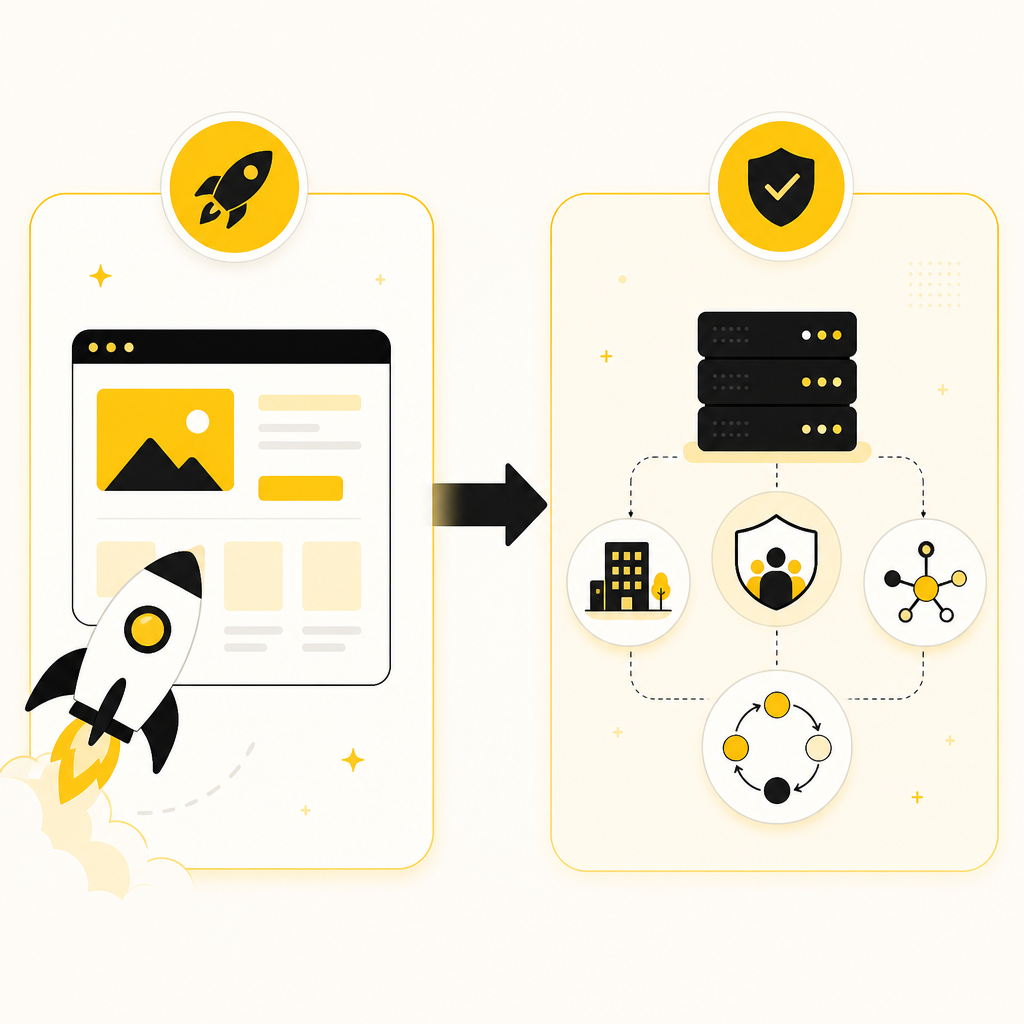
Launch an MVP quickly
No-code is excellent for speed
Full-stack is needed for durability
Move fast when it matters—and harden the system when growth demands it.
No-code tools generally help teams:
For early-stage startups, this can reduce time-to-market and help you focus on learning your users.
For growing SaaS companies, no-code can still be useful—but usually for internal tooling, quick experiments, or “glue” between systems.
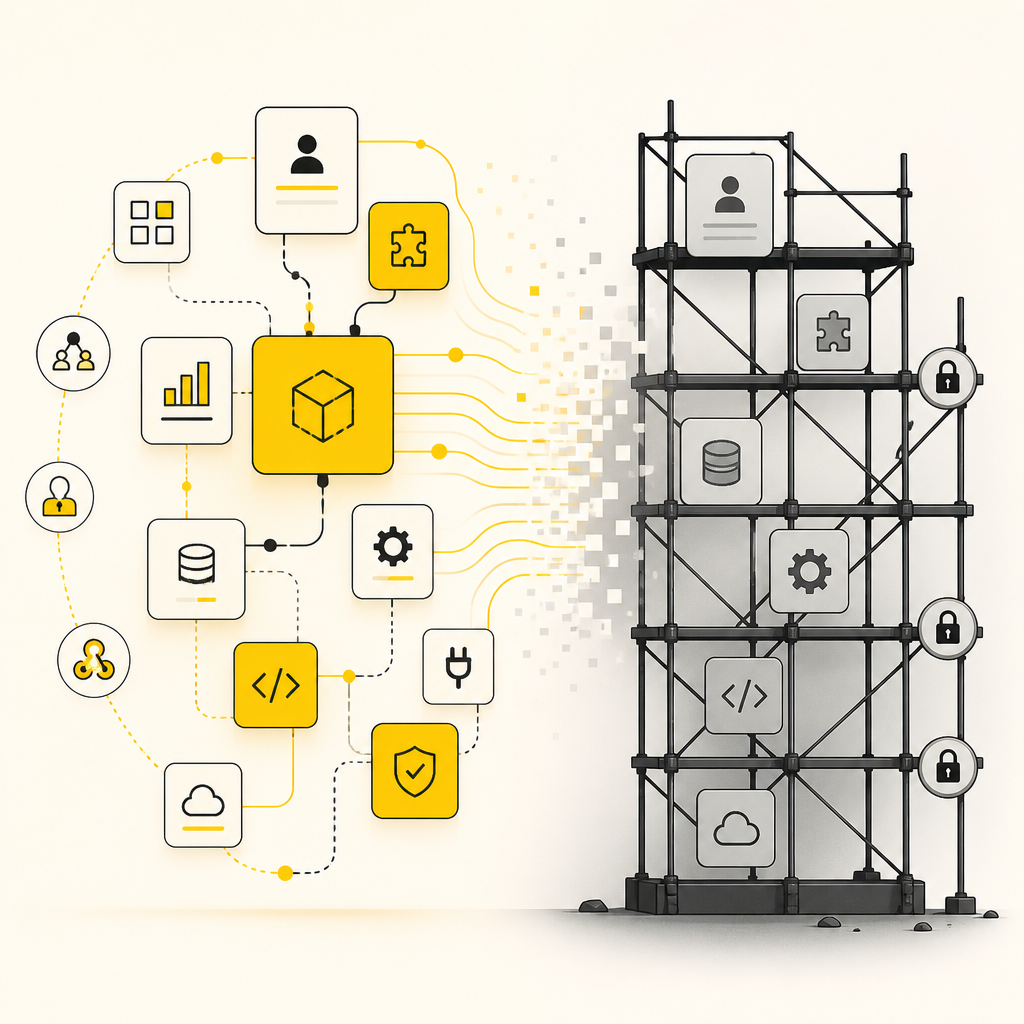
No-code solutions are powerful, but they can become limiting when your SaaS needs deeper customization or reliability across scale. Common pressure points include:
Complex business logic
Multi-step approvals, dynamic permissions, custom billing rules, or domain-specific calculations often require custom code.
Advanced integrations
Some systems require custom API behavior, secure token handling, webhooks orchestration, or data transformation that goes beyond basic connectors.
Scalability and performance control
When user load increases or workflows get more complex, you may need tighter control over architecture, caching, queues, and backend efficiency.
Maintainability
Over time, a “patchwork” no-code build can become harder to extend safely without introducing regressions.
Vendor lock-in
Switching platforms later can be costly—especially once your product logic and workflows rely heavily on a specific tool’s structure.
The key takeaway: no-code is excellent for speed, but full-stack is often needed for durability.
Use this decision framework to match your product stage to the right approach.
A Founder-Friendly Rule of Thumb: If your roadmap requires unique logic + dependable integrations + scalable automation, you’ll likely benefit from full-stack development sooner than later.
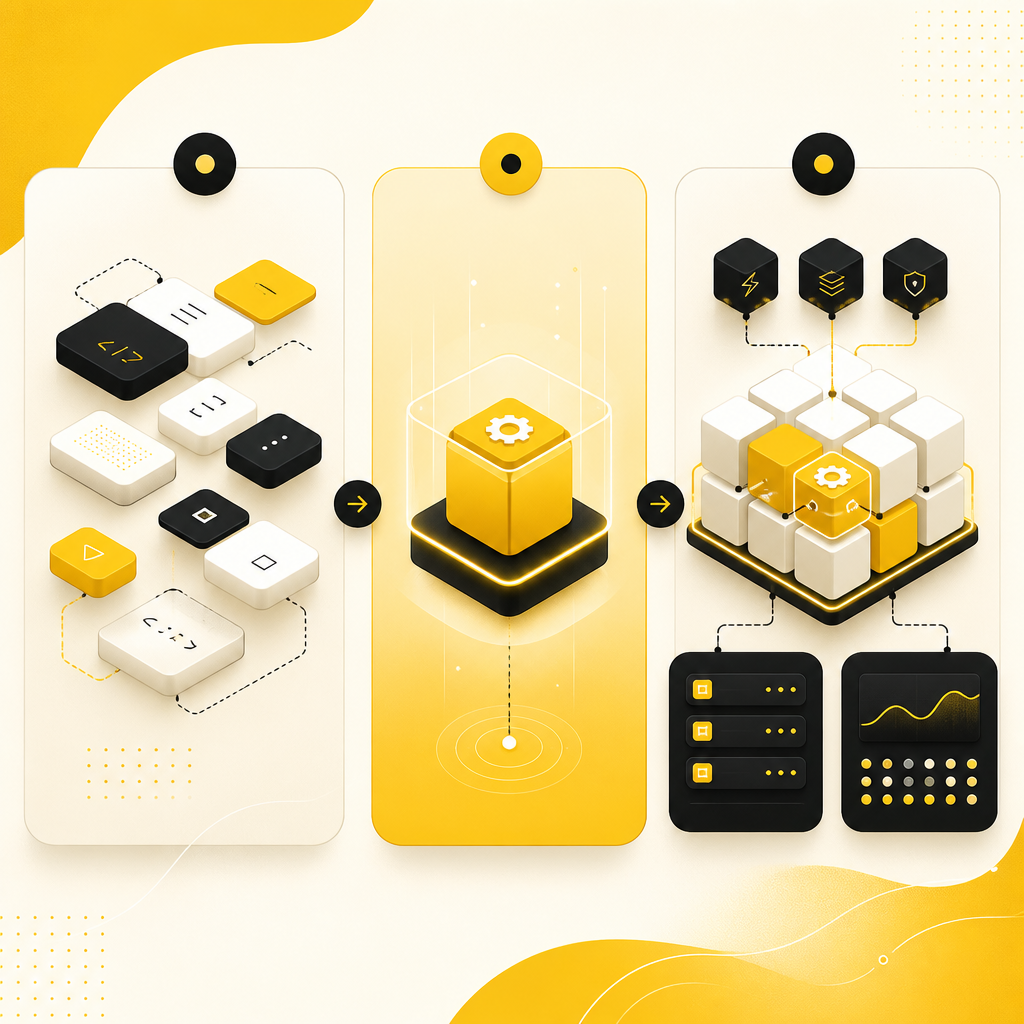
Many SaaS teams benefit from a staged approach:
1
to validate the problem, not to perfect the architecture.
2
3
This reduces wasted engineering while protecting your ability to grow.
Founders often discover that “it connected” isn’t enough—what you need is:
Instead of manual work, you want automated workflows such as:
AI features typically require:
This is where full-stack engineering is often the most dependable approach.
Whether you’re hiring or selecting a technical partner, aim for a full-stack team that can cover the full system lifecycle—not just the frontend.
If you’re building a SaaS or digital platform, these questions help ensure you don’t outgrow your “quick build.”
A common founder challenge is realizing that a product can’t rely on no-code forever, but the team that built it may not understand:
A strong full-stack team bridges that gap—turning early speed into long-term product reliability.
For founders choosing between no-code options and full-stack development, the practical goal is simple: build systems that support growth, not just launches.
Shakir Ansari
– Full Stack Developer & AI Automation Solutions and the RTP team provide custom-coded digital products that help businesses:
With 10+ years of experience and 1300+ web applications developed, the team is positioned to help startups and growing SaaS companies evolve from fast prototypes into durable systems.
If you’re planning the transition from no-code speed to full-stack durability, start with a clear scope.
Use this checklist to decide whether you should stay with no-code or move toward full-stack development:
[ ] Are critical workflows becoming core to the product?
[ ] Do you need advanced integrations beyond standard connectors?
[ ] Are you concerned about performance, reliability, or future scaling?
[ ] Do you need fine-grained roles/permissions and SaaS-ready data modeling?
[ ] Will AI automation require custom orchestration and monitoring?
[ ] Would refactoring be risky or disruptive if you wait too long?
If you answered “yes” to multiple items, it’s often a strong signal to plan a transition to full-stack.
Yes. No-code can be ideal for validating ideas, launching MVPs quickly, and testing workflows with users—especially when your requirements are straightforward and integrations are manageable.
Move beyond no-code when your product needs custom business logic, reliable API integrations, scalable automation, role-based access, or AI-driven workflows that require backend orchestration.
Yes. A common approach is to start with no-code to learn quickly, then refactor or rebuild the parts that become mission-critical—logic, integrations, and automation pathways.
Typically it includes frontend and backend engineering, SaaS-ready architecture, authentication/authorization, data modeling, API integrations, automation workflows, and maintainable system design.
AI automation often requires custom orchestration—deciding when tasks run, validating outputs, triggering API actions safely, handling failures, and logging/monitoring. That’s usually more reliable with full-stack engineering.
Look for experience with SaaS architecture, API/webhook integrations, scalable automation systems, maintainable code practices, and the ability to transition from prototype to production.
No-code options help early-stage startups and teams move fast—but SaaS growth usually demands more control over logic, integrations, scalability, and automation. When your roadmap requires dependable systems (including AI-driven workflows), full-stack development becomes the foundation that protects future growth.
If you’re planning that transition—or you want a build that’s growth-ready from the start—explore how a full-stack + automation partner can shape your product’s architecture and roadmap.
Get a plan for integrations, automation, and scalable backend logic.