SHAKIR ANSARI

Full-Stack Platforms for Healthcare & Wellness

Full Stack Development for Healthcare & Wellness

Healthcare and wellness organizations need more than a “nice website.” Your patients expect fast booking, secure intake, clear communication, and reliable self-service—while your team needs fewer manual steps and cleaner workflows.

Shakir Ansari – Full Stack Developer & AI Automation Solutions builds custom web development sevices that take you from basic pages to automation-ready web platforms—from front-end design to secure back-end systems, dashboards, portals, integrations, and scalable infrastructure.

Schedule a consultation
Built for smoother patient experiences and cleaner workflows.
1

fewer admin headaches

2

smoother patient experiences

3

automation-ready web platforms

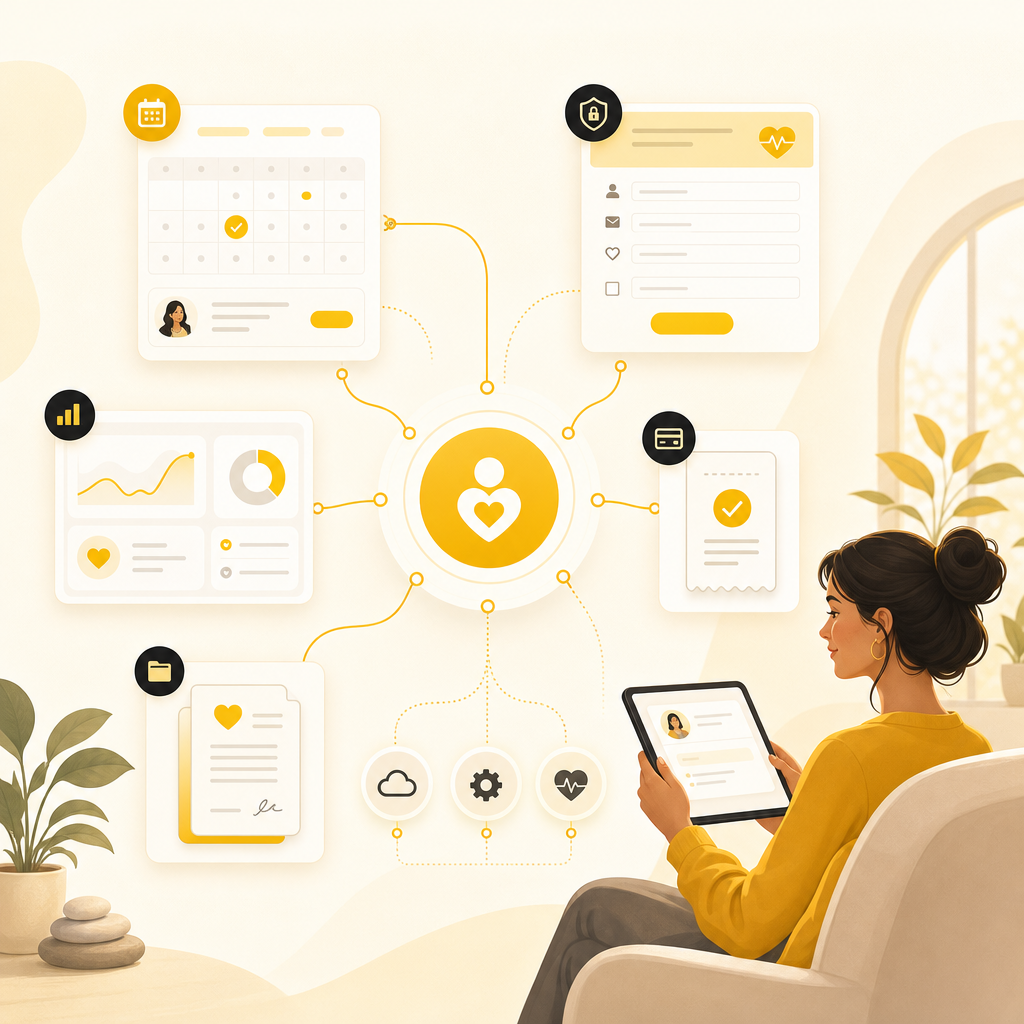
Illustration showing connected healthcare workflows like scheduling, secure intake, dashboards, payments, and patient portal integrations.

Why Your Business Needs More Than a Website

A standard website can’t fully support the operations that healthcare and wellness teams run every day. Full-stack systems replace manual workflows with software that connects everything:

  • Appointment requests → scheduling → confirmations
  • Patient intake → secure forms → automated routing
  • Provider/admin dashboards → visibility into leads & appointments
  • Payments → gateway integrations → receipts and records
  • Portals → patient accounts → document access & updates
  • Integrations → CRM, marketing tools, and internal workflows

When you rely on templates or stitched-together tools, you often end up with:

  • slow performance and inconsistent UX
  • security gaps across systems
  • duplicated data and manual “copy/paste” work
  • limited scalability when your practice grows

With custom website development + full-stack engineering, you get one cohesive system built for reliability.

Website vs. Web Application (What Your Business Actually Needs)

Choose a Website when you mainly need:

  • marketing pages
  • service descriptions
  • contact forms
  • basic lead capture

If your goal is to run operations, you need a web application—because it includes logic, user roles, databases, and workflows.

Choose Full Stack Web Applications when you need:

  • booking & scheduling logic
  • patient portals
  • secure intake forms
  • admin panels
  • dashboards & reporting
  • integrations (APIs) with third-party tools
  • automation and workflow triggers
  • scalable performance under real usage

For clinics, therapists, wellness centers, and medical service businesses, the “web application” path is often the turning point from operational stress to smoother delivery.

What Full Stack Development Includes (End-to-End)

Custom full-stack development builds the complete product—from what patients see to how your organization runs behind the scenes.

  • Custom web application development
  • Front-end development (e.g., React) for patient and provider experiences
  • Back-end development with PHP, Laravel, Node.js, or similar stacks
  • Database design & management for reliable records and reporting
  • API development and third-party integrations
  • User dashboards & admin panels (roles, permissions, workflows)
  • SaaS platform development (when you need a product, not just a site)
  • E-commerce functionality (where applicable: packages, products, subscriptions)
  • Payment gateway integrations
  • CRM, ERP, and business tool integrations
  • Performance optimization
  • Security improvements
  • Ongoing maintenance & feature upgrades

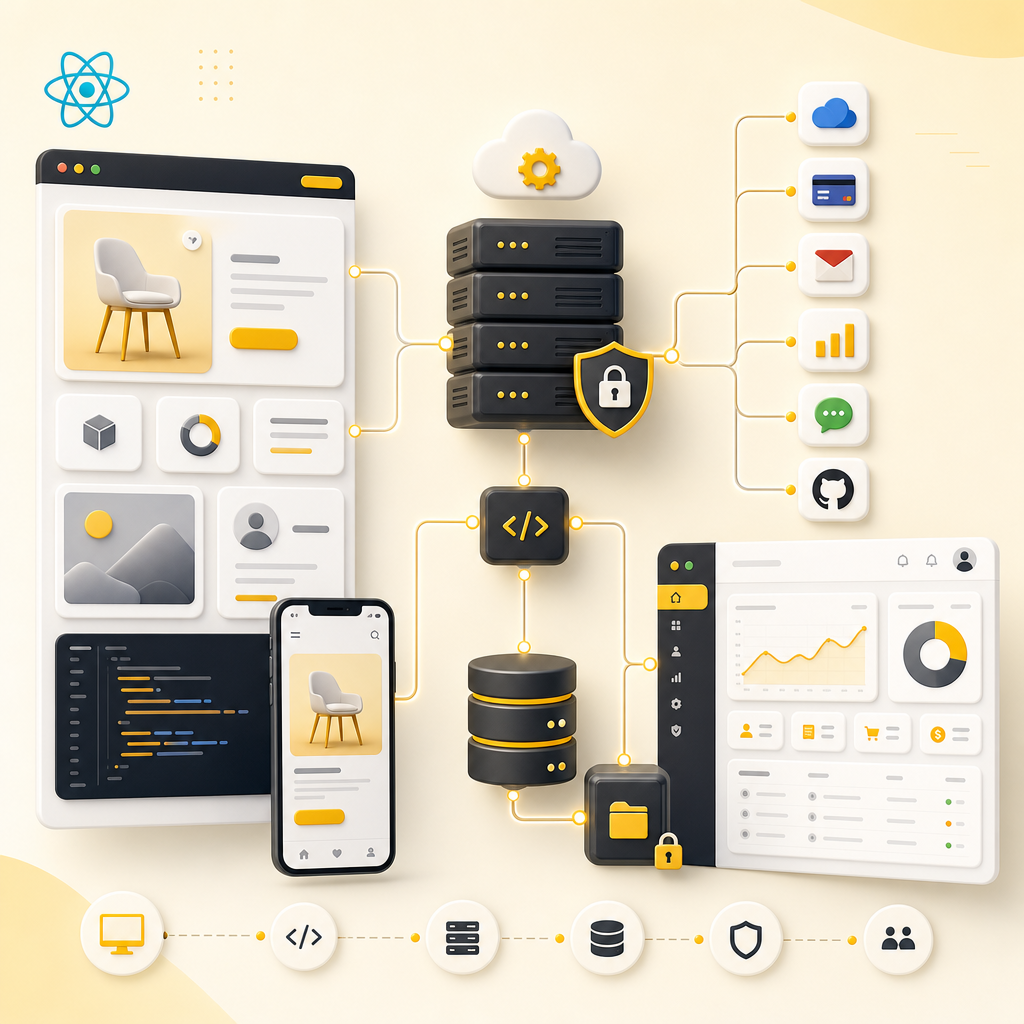
Illustration showing an end-to-end full-stack system: front-end UI, back-end services, database, APIs, dashboards, and integrations.

Healthcare & Wellness Use Cases We Build

Below are examples of digital systems commonly required in healthcare and wellness operations—especially when teams outgrow basic forms and static pages.

1) Appointment & Scheduling Platforms

  • booking flows customized to your services
  • confirmation emails/SMS triggers (via integrations)
  • calendars, availability rules, and appointment status tracking
  • provider/admin views and appointment management

2) Patient Portals & Self-Service Experiences

  • patient login and account management
  • appointment history, documents, and updates
  • secure messaging workflows (where applicable)
  • role-based access control for staff and providers

3) Secure Forms & Automated Intake Workflows

  • intake forms that route submissions automatically
  • structured data capture (so your team doesn’t re-enter info)
  • file uploads with secure handling
  • automated notifications to staff and workflows for follow-up

4) Admin Dashboards That Replace Manual Tracking

  • lead and appointment pipelines
  • service utilization reporting
  • operational KPIs and visibility for teams

5) CRM/Marketing Integrations (APIs That Keep Data Accurate)

  • sync contacts and appointment outcomes
  • automate lead lifecycle steps
  • connect campaigns to scheduling outcomes

6) AI-Powered Automation & Smart Agents (Where It Fits)

  • automate repetitive follow-ups and internal routing
  • assist with internal workflows (e.g., triage-like routing, task creation)
  • build “automation-ready” platforms that evolve over time

When automation is the priority, ai automation services can complement the workflow triggers.

Why One Full-Stack Team Matters (Front-End + Back-End Together)

Many businesses hire design-only teams, then separately hire developers later—leading to mismatched assumptions, delays, and rework.

When one team handles both Web Design & Development and the back-end system, you get:

Illustration highlighting security, performance, and scalability with encrypted data, secure access, and scalable infrastructure cues.

Security, Performance, and Scalability for Growing Practices

Healthcare and wellness platforms often handle sensitive user activity (accounts, documents, intake data, booking records). We build with modern standards to reduce risk and improve reliability.

We focus on:

  • secure user authentication and role-based permissions
  • secure handling of sensitive workflows and uploads
  • performance optimization for fast patient experiences
  • scalable database and API design
  • maintainable code for future upgrades

*Note: We can align to HIPAA-like security expectations and best practices depending on your requirements and hosting setup. Your compliance needs should be confirmed with your internal/legal guidance.*

RESOURCES & TOOLS (Use These Before You Build)

Want to plan your next healthcare platform smarter? Here are practical resources we often use during discovery and strategy:

Healthcare Website-to-Platform Checklist

  • What belongs on a marketing site vs. an application
  • Which workflows should be automated first
  • What data must be stored and structured

Patient Portal Requirements Template

  • roles and permissions (patient, provider, admin)
  • portal features (documents, history, updates)
  • session and account needs

Secure Intake Form Spec Guide

  • required fields and validation rules
  • file upload and routing logic
  • notifications and follow-up workflow mapping

API Integration Planning Sheet

  • what connects (CRM, email tools, calendars, payments)
  • what data flows in/out
  • error handling expectations and retry logic

Automation Workflow Map

  • triggers (form submit, appointment status change)
  • actions (notify staff, create tasks, sync CRM)
  • escalation rules and ownership

If you’d like, we can review your current stack and produce a gap assessment in a short consult.

Our Website Strategy Process (How We Move From Idea to a Working Platform)

A great full-stack build starts with strategy—not just coding. Our Our Website Strategy Process helps teams upgrade from basic sites to reliable systems.

Step 1: Discovery & Workflow Mapping

  • identify current bottlenecks (manual tasks, slow lead handling, unclear data)
  • define patient vs. admin vs. provider journeys
  • list must-have features for launch and the “phase 2” roadmap

Step 2: UX, Content, and System Requirements

  • design flows for booking, intake, and portal experiences
  • define forms, dashboards, and role-based access
  • finalize measurable success criteria (conversion, speed, completion rates)

Step 3: Architecture & Tech Planning

  • choose the best stack for scalability and maintainability
  • plan databases, APIs, and integration points
  • security and performance plan for the workflows that matter

Step 4: Full-Stack Development & UI Engineering

  • front-end build (e.g., React) for speed and usability
  • back-end build (PHP/Laravel/Node.js as needed)
  • database setup, admin panels, portals, and workflow automation

Step 5: Integrations, QA, and Hardening

  • connect third-party tools via APIs
  • payments, CRM syncing, scheduling logic
  • testing for edge cases and workflow reliability

Step 6: Launch, Optimization, and Ongoing Improvement

  • performance checks and issue fixes
  • SEO and indexing improvements where relevant
  • maintenance + feature upgrades as your needs evolve

For deeper visibility work, you can also explore seo services.

Tech & Platforms We Commonly Use

Depending on your goals, we support modern tools and mature ecosystems such as:

Front-end

React

Back-end

PHP, Laravel, Node.js

CMS / e-commerce

WordPress, Shopify, WooCommerce, Squarespace (when appropriate)

Integrations & automations

API integrations, workflow automation systems

SaaS & dashboards

custom-coded platforms designed for growth

With 10+ years of experience and 1300+ web applications developed, the RTP team brings battle-tested delivery for real operational needs.

Build the Platform Your Team Deserves

If you’re ready to move beyond templates and basic forms—and build a system that automates workflows, secures data, and scales with growth—let’s talk.

Get a roadmap for your next digital system, including what to build first (booking, portal, intake automation, dashboards, integrations) and how to structure it for long-term success.

Schedule a consultation
Discuss your full-stack build, integrations, and automation-ready platform.

Frequently Asked Questions

What exactly does full-stack development include for healthcare businesses?

It includes the front-end experience (patient/provider UI), the back-end systems (logic, workflows, databases), secure portals and admin panels, API integrations (CRM, payments, tools), and automation to reduce manual work.

Can you build appointment systems and scheduling workflows?

Yes. We build appointment and booking platforms with scheduling logic, confirmation flows, status tracking, and admin/provider dashboards.

Do you develop secure patient portals and intake forms?

Yes. We build user portals and secure intake workflows with authentication, role-based access, and automation-ready routing logic.

Can you integrate our existing tools (CRM, payments, marketing)?

Yes. We connect systems through APIs and workflow automation so data stays consistent and teams avoid manual updates.

Do you handle performance and security improvements?

Yes. We optimize performance, design scalable architecture, and implement security best practices for workflows, user access, and sensitive operations.

Will this help with SEO?

Yes—while SEO depends on content strategy, we support technical SEO needs (fast performance, clean structure, maintainable pages) as part of the build.