
SHAKIR ANSARI

Enterprise Full-Stack Development for Manufacturing Dashboards & Portals

Full-Stack Development for Manufacturing Enterprises

Manufacturing teams don’t just need a website—they need working software systems that support daily operations: inventory visibility, order processing, production tracking, supplier workflows, and role-based portals for internal teams.

Full-stack development delivers exactly that: complete digital products built from Custom Web Design on the front end to secure, scalable systems on the back end—ready to integrate with the business software you already use.

Why manufacturers need more than website development

A typical marketing website is not designed to handle real operational work like:
  • Updating inventory levels and locations
  • Tracking order status from receipt to production
  • Managing work orders, schedules, and production progress
  • Coordinating supplier steps and documentation
  • Giving different teams different views (ops, managers, warehouse, suppliers)
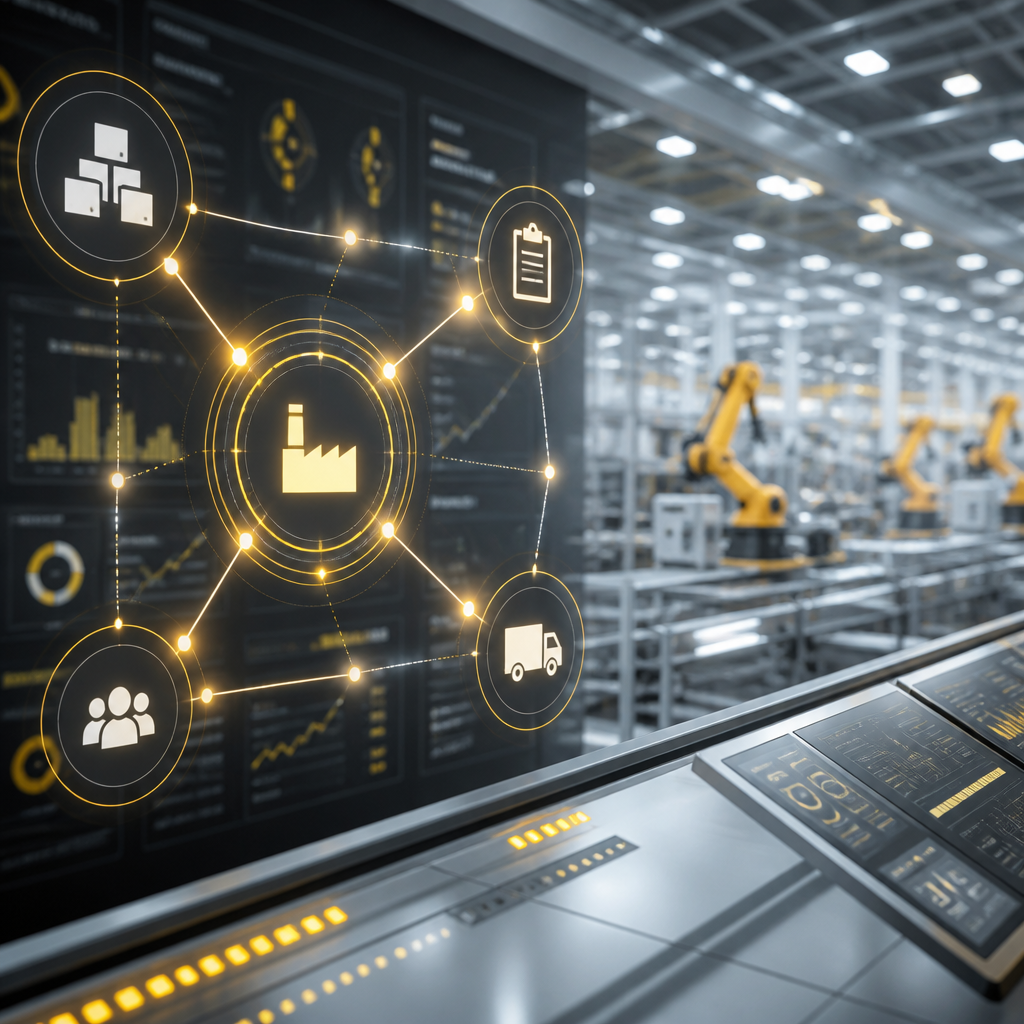
Abstract manufacturing operations workflow visualizing inventory and order processing connections with glowing nodes and production context, without any readable dashboard text.

Website vs. web application: what your manufacturing company actually needs

Many businesses start with “Website Development,” then realize they need application functionality—logins, dashboards, workflows, and integrations.

  • Website (static/content-focused): Great for brand, information, and contact.
  • Web application (process-focused): Built for tasks, data, and users—dashboards, admin panels, inventory tools, order systems, and portals.

If your goal includes inventory tools, order systems, supplier workflows, or production tracking, you’re in enterprise software development territory—not basic website design.

What is ENTERPRISE SOFTWARE DEVELOPMENT in manufacturing?

For manufacturers, ENTERPRISE SOFTWARE DEVELOPMENT usually means building internal platforms and workflow systems that are:

  • Role-based (admins, planners, warehouse staff, supervisors, suppliers)
  • Data-driven (inventory, orders, production stages, schedules)
  • Integrated (ERP/CRM/warehouse/shipping/third-party tools)
  • Secure (authentication, permissions, audit trails)
  • Scalable (many users, ongoing transactions, consistent performance)

That’s where full-stack development becomes the right foundation.

The full-stack development components manufacturing teams rely on

A complete full-stack build typically includes:

1) Custom Web Design for operational UX

Dashboards and portals must be usable under real conditions—quick filtering, clear statuses, and responsive layouts for desktops and tablets.

2) Front-end development (dashboard and portal interfaces)

Common capabilities include:

  • Custom dashboards (production, inventory, order status)
  • Admin panels for configuration and approvals
  • Supplier portals and internal user experiences

3) Back-end development (business logic and workflows)

You need reliable systems that enforce rules like:

  • Order workflow states and transitions
  • Production tracking milestones
  • Inventory updates and validations
  • Supplier workflow steps and review/approval logic

4) Database design and management

Operational systems require structured data models and consistent updates—so your reports stay accurate.

5) API development and third-party integrations

APIs connect your web app to the tools your company depends on, such as:

  • ERP and CRM systems
  • Inventory/WMS-style systems
  • Shipping/labeling tools
  • Payment or billing platforms (when applicable)
  • Internal services and automation systems

6) Security and performance improvements

Manufacturing systems often handle critical operations—so they need:

  • Secure authentication and permissioning
  • Audit logging for traceability
  • Performance tuning for heavy data views

7) Ongoing maintenance and feature upgrades

Operational software changes over time as production methods, suppliers, and business rules evolve.

Manufacturing systems full-stack teams commonly build

Below are examples of the kinds of products manufacturers digitize with custom full-stack development:
Custom dashboards for operations leaders

  • Production progress by line, shift, or stage
  • Bottleneck indicators (what’s delayed and why)
  • Real-time order and work order status visibility

Inventory tools and internal visibility portals

  • Stock levels by location/warehouse
  • Low-inventory alerts
  • Historical inventory movement tracking

Order systems that reduce manual follow-ups

  • Order intake and status updates
  • Automated workflow steps (approval, scheduling, fulfillment)
  • Team-specific views (sales, operations, warehouse)

Supplier workflows and supplier onboarding portals

  • Supplier submissions and document management
  • Step-by-step supplier approvals
  • Collaboration flows with controlled access

Admin panels to manage rules and users

  • Configure workflow stages and permissions
  • Manage master data
  • Support internal operations and audits
Editorial manufacturing automation scene using glowing connected shapes and gear-like mechanisms to symbolize conditional workflows and system-wide syncing, without readable text.

How full-stack development enables automation (not just data display)

Dashboards that only show numbers are a start. The real advantage is building software that can change outcomes through automation.

  • Moving orders to the next production stage when conditions are met
  • Triggering alerts when inventory drops below thresholds
  • Notifying teams when suppliers complete required steps
  • Syncing updates across internal tools via APIs
  • Supporting AI-powered assistance (when you need smarter workflows and decision support)

One team for front-end + back-end = faster, more consistent delivery

Manufacturers benefit when a single full-stack team handles the end-to-end build:

  • Consistent UX and business logic (the dashboard behaves the way operations expects)
  • Cleaner integration work (APIs are implemented with the product requirements in mind)
  • Fewer handoff gaps between design, development, and system architecture
  • Quicker iteration when production workflows evolve

Key architecture considerations for manufacturing portals and enterprise apps

When building custom manufacturing software, the “enterprise-ready” details matter:

  • Role-based access control: Different permissions for operators, managers, and suppliers
  • Audit trails: Trace changes to orders, inventory, and production updates
  • Data integrity: Prevent invalid workflow transitions and inconsistent stock states
  • Scalability: Handle growing data volume and user concurrency
  • Performance: Fast filtering, searching, and reporting for large datasets

What to expect in a custom build (from Custom Web Design to deployment)

A practical full-stack engagement typically follows this flow:
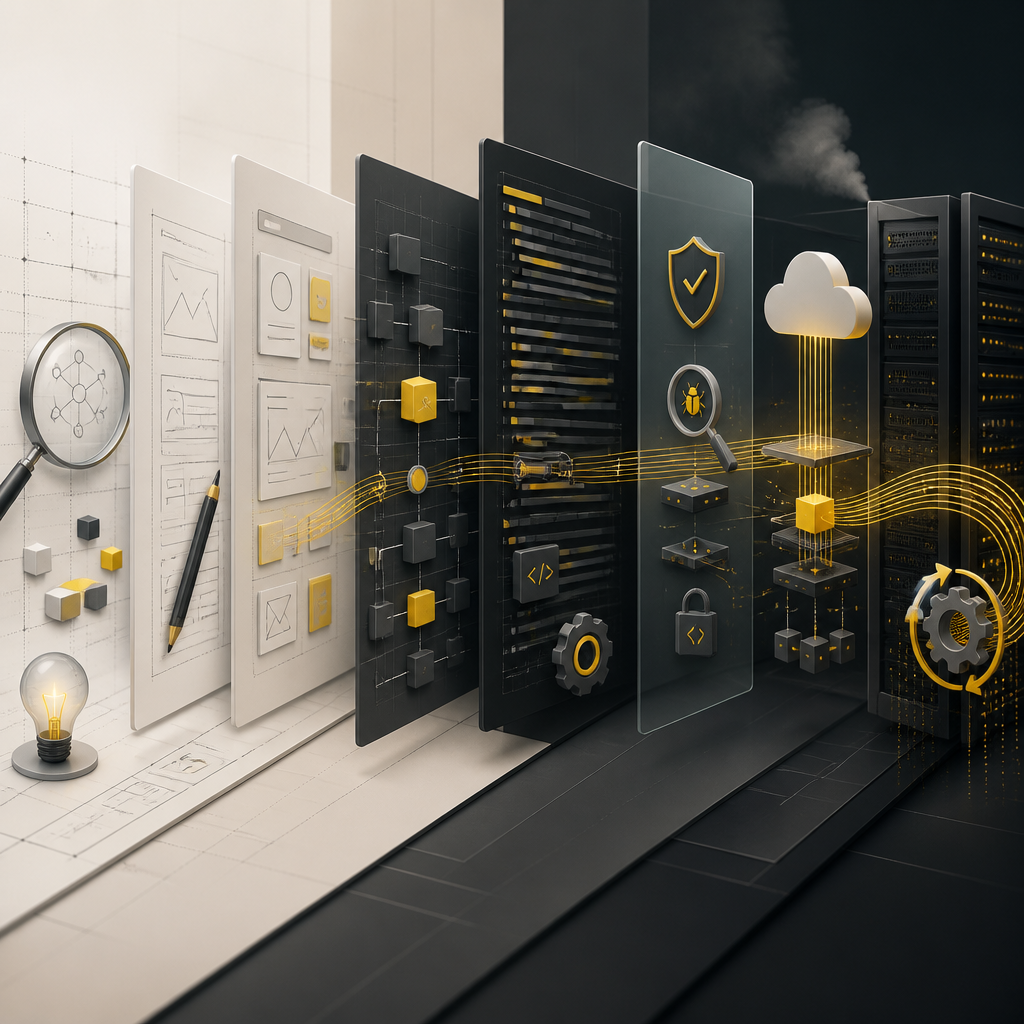
  1. Discovery & workflow mapping (your order, inventory, and production steps)
  2. UX and Custom Web Design for dashboards and portals
  3. System planning (APIs, databases, permissions, integration approach)
  4. Full-stack development (front end, back end, automation logic)
  5. QA and security checks (role testing, validation, performance verification)
  6. Deployment & integration with your existing business tools
  7. Maintenance and iteration as your operations improve
Abstract end-to-end custom build visual showing layered workflow and system architecture transition from design through deployment without any readable text.

Why custom solutions outperform off-the-shelf software for manufacturers

Off-the-shelf tools can be useful, but they often struggle with:

  • Unique production workflows
  • Custom supplier steps
  • Specific reporting formats and internal approvals
  • Integration requirements with your existing systems

Custom full-stack development ensures your software matches your operations—so you don’t adapt your process around the product.

FAQs

1) What’s the difference between full-stack development and custom web design?

Custom Web Design focuses on the front-end experience (UX/UI). Full-stack development builds the complete system—front end, back end, databases, APIs, security, and workflow automation—so the portal actually runs your business processes.

2) Can full-stack development integrate with our ERP or business systems?

Yes. Full-stack builds commonly include API development and third-party integrations so your manufacturing portal, dashboards, and order/inventory tools can exchange data with existing business software.

3) Are manufacturing dashboards only “reporting,” or can they run workflows?

They can do both. Many manufacturing solutions use dashboards to display status and also trigger workflow actions—approvals, stage changes, notifications, and automated updates.

4) Do we need an admin panel for a manufacturing enterprise app?

Most enterprise systems do. Admin panels help manage users, permissions, master data, workflow settings, and system configurations—without relying on engineering for every change.

5) How do you handle security for internal portals and supplier access?

Security typically includes authentication, role-based access control, permissioned actions, and audit logs to ensure traceability and safe collaboration.

6) What tech stacks do you use for full-stack manufacturing systems?

Full-stack solutions may include modern front-end frameworks (like React) and back-end development using stacks such as PHP/Laravel, Node.js, and related technologies—based on your requirements and integration needs.

Conclusion: Upgrade from basic websites to manufacturing enterprise software

For manufacturing companies, the next step isn’t another static website—it’s custom full-stack development that delivers secure portals, automated workflows, and real-time dashboards.

With thoughtful Custom Web Design, robust back-end systems, well-structured databases, and API integrations, your team can replace manual processes and support growth with scalable enterprise software.

Call to Action (CTA)

If you’re ready to build or upgrade manufacturing dashboards, inventory tools, order systems, or supplier workflows, explore Full Stack Development with Shakir Ansari and his team to design an automation-ready solution tailored to your operations.