
SHAKIR ANSARI
A modern client onboarding portal does more than “collect information.” It automates the full workflow—from intake forms and document collection to approvals, payments, welcome emails, task tracking, and secure client access with Sign in. For service providers, that means fewer back-and-forth messages, less manual admin work, and faster time-to-service.
This pillar page explains how ENTERPRISE SOFTWARE DEVELOPMENT can power a custom client onboarding system using full-stack development and AI Agents & Automation.
A client onboarding system is a web application that manages each client’s onboarding journey as a structured process. Instead of handling onboarding through email threads and spreadsheets, your portal tracks:
A client portal adds a key advantage: clients can complete required steps, upload documents, and view status in one place—without needing you to manually coordinate every stage.
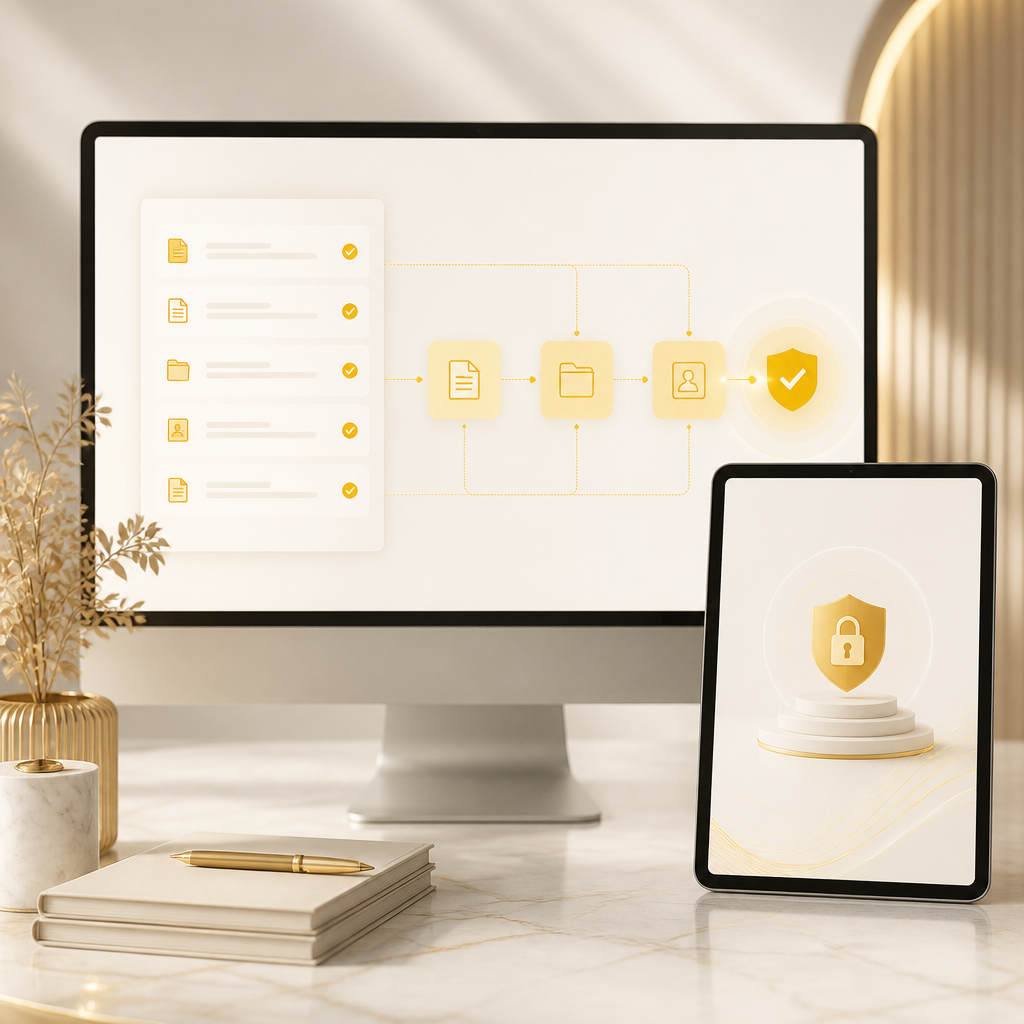
When you build a portal with full-stack development, you can tailor workflows to your business model. Common components include:
Generic onboarding software can work for basic flows, but service providers frequently outgrow templates because their onboarding is operationally specific.
Common gaps that custom full-stack builds can solve:
Custom development gives you control over the workflow—and lets your system scale as your services expand.
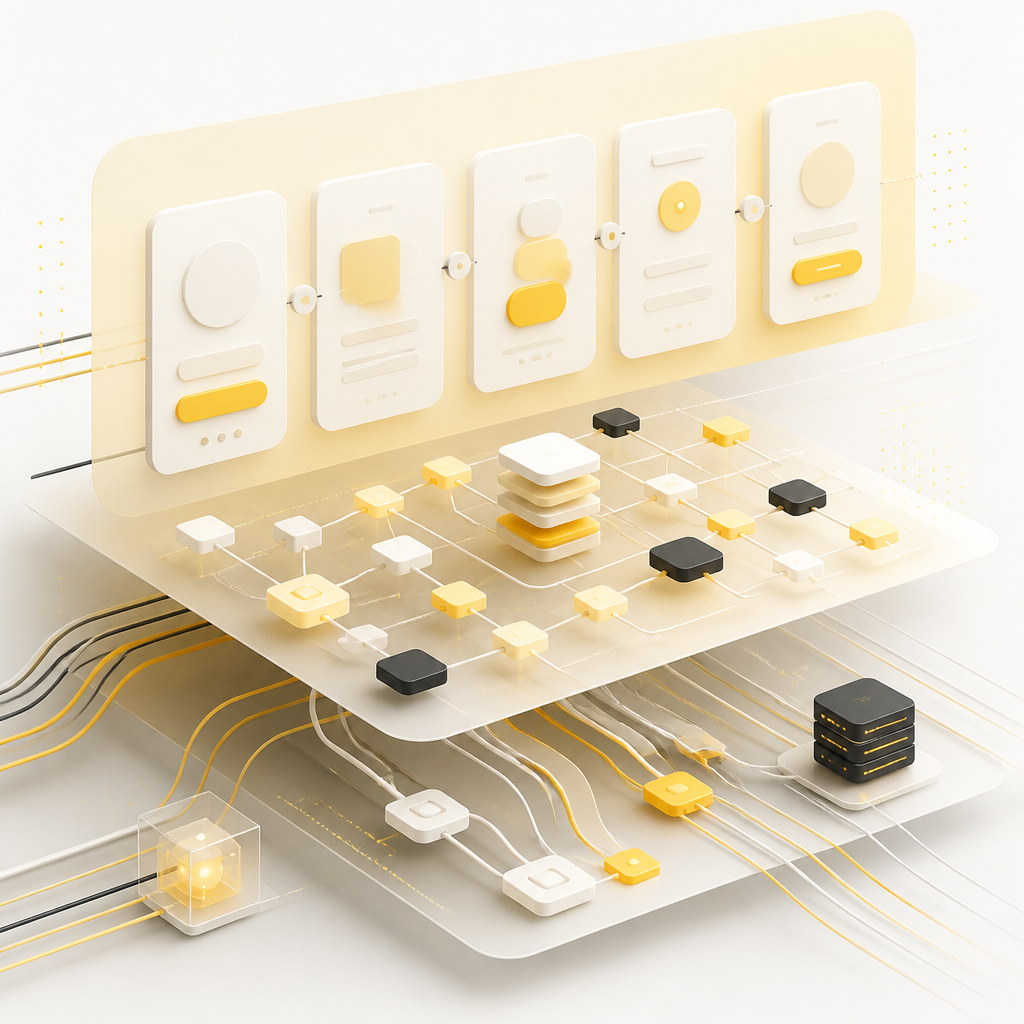
A client onboarding portal needs both front-end experiences and back-end reliability. Full-stack development connects them into one operational system.
When one development team handles the full stack, it’s easier to keep the portal fast, consistent, and automation-ready.
If you’re building for growth, your onboarding platform should be designed like a long-term system—not a one-off project.
Enterprise-ready onboarding typically includes:
A full-stack approach lets you align security, performance, and workflow logic from the start.
Your onboarding portal should not be an isolated tool. With API development and third-party integrations, you can connect it to the systems you already use, such as:
This is one of the biggest advantages of custom systems: APIs allow your onboarding workflow to become part of the broader business ecosystem.
Automating onboarding isn’t only about status changes and task routing. AI Agents & Automation can help reduce manual review and improve decision speed—while still keeping humans in control where needed.
Examples of practical AI uses in onboarding:
A full-stack build can incorporate AI in a controlled way—powered by automation rules, review queues, and clear audit trails.

A custom portal can support many service scenarios, for example:
Because the workflow is custom, the portal can mirror your actual operations instead of forcing your team to adapt to the software.
Choose custom full-stack development when you need:
Choose off-the-shelf tools when your workflow is simple, your integration needs are limited, and you don’t expect frequent process changes.
A strong onboarding system is built in stages:
1) Map the onboarding journey
2) Define data + states
3) Design the client portal UX
4) Build workflow + admin panels
5) Integrate payments + notifications
6) Add AI Agents & Automation (where it helps)
7) Test, secure, and launch
8) Iterate with real onboarding data
Once your portal is live, track metrics to improve the system:
These KPIs help you validate that your automation is working—not just “running.”
A basic form only captures data. A full onboarding system manages the entire workflow—documents, approvals, task tracking, payments, and ongoing client visibility through the portal.
Sign in enables secure, role-based access. It ensures clients can see only what they should, and it supports audit trails for onboarding activity.
Yes. With API development and integrations, your onboarding portal can sync client records, trigger tasks, and update statuses across your business stack.
AI is most useful for assisting document review, accelerating categorization, recommending next steps, and improving consistency—while keeping your approval workflow under human control.
For advanced onboarding workflows (approvals, payments, portals, automation, integrations), full-stack development is the most reliable way to keep front-end UX and back-end workflow logic aligned.
A client onboarding portal built with full-stack development can replace manual onboarding with an automated, trackable workflow: intake forms, document collection, approvals, payments, welcome emails, task tracking, and secure client access via Sign in.
When you design it with ENTERPRISE SOFTWARE DEVELOPMENT principles—scalability, security, reliability, and maintainability—you create a system that supports growth. And with AI Agents & Automation, you can further reduce manual work and speed up onboarding decisions.
If you want a custom onboarding portal tailored to your exact workflow, explore Full Stack Developement with Shakir Ansari and the RTP team—so your client onboarding becomes an automation-ready system with secure Sign in, integrations, and scalable architecture. Would you like help mapping your onboarding steps (forms, documents, approvals, payments, and portal tasks) into a build plan?