
SHAKIR ANSARI
Operations leaders don’t need “more tools”—they need fewer manual steps. AI automation helps connect systems, automate repetitive tasks, route approvals, and generate operational reporting so your team can focus on execution (not admin).
Custom AI automation solutions by Shakir Ansari – Full Stack Developer & AI Automation Solutions help businesses streamline daily operations—without forcing you to replace what you already run.
Automate first response and routing for tickets, inquiries, and requests.
Reduce copy/paste, manual updates, and repetitive admin tasks.
Generate reports automatically from operational data—daily, weekly, or on-demand.
Most operational bottlenecks look the same:
AI automation fixes the underlying issue: disconnected workflows.
Instead of forcing staff to do repetitive work, AI-powered systems can:
This is exactly what operations leaders and AI automation decision-makers look for—whether you’re a Director of AI & Automation building strategy, a Senior Facilities & Real Estate Manager managing recurring operational work, or an operations manager optimizing day-to-day execution.
AI automation uses AI-powered logic (and often AI agents) to automate processes such as:
The key: it connects to your existing systems—so teams keep using the tools they trust.
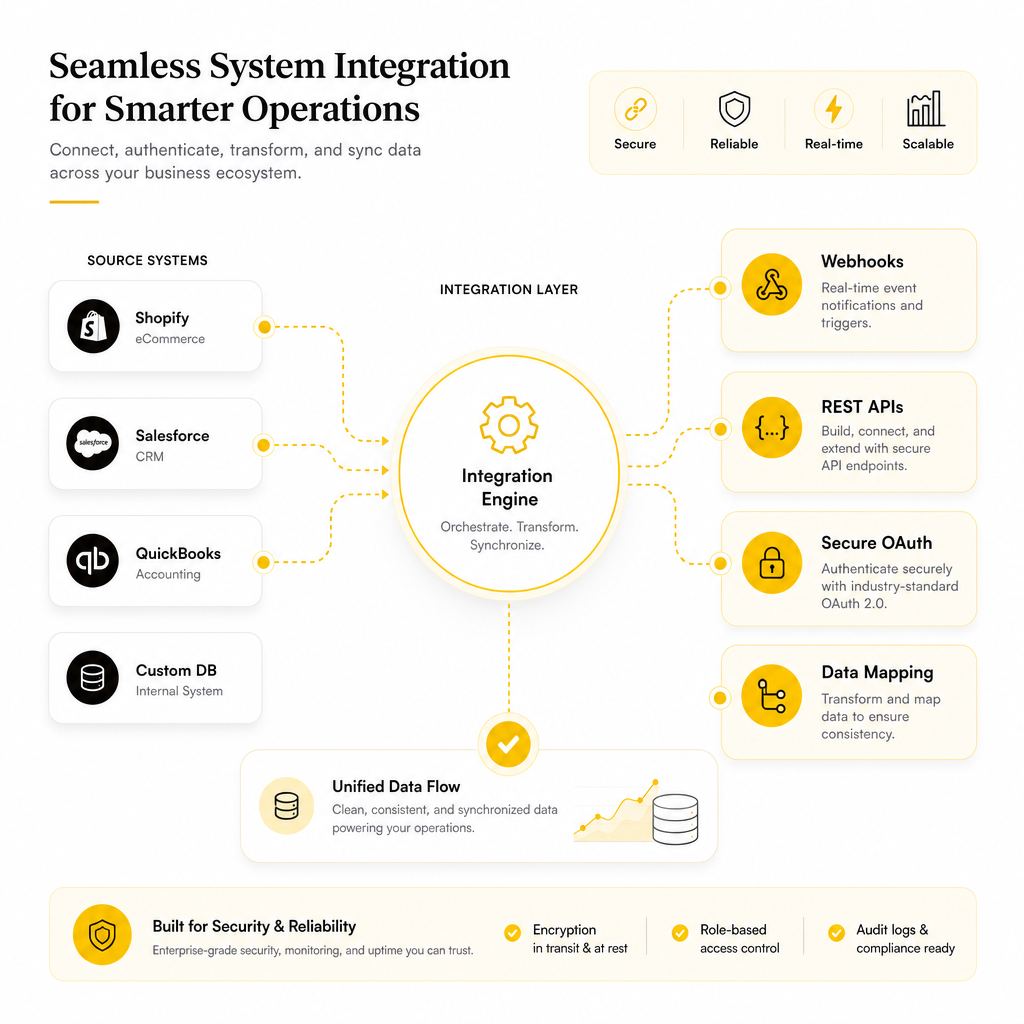
The fastest way to improve operations is not to start over—it’s to connect what you already use.
Shakir Ansari – Full Stack Developer & AI Automation Solutions builds custom-coded workflows that integrate via:
### Where API documentation matters
If integrations are unclear, automation fails quietly. We build around API documentation and structured mappings so the workflow is dependable:
Result: automation that’s maintainable—not fragile.
When AI automation is implemented correctly, teams typically see improvements in:
Automate first response and routing for tickets, inquiries, and requests.
Reduce copy/paste, manual updates, and repetitive admin tasks.
Use human-in-the-loop approvals for sensitive steps while automating the rest.
Generate reports automatically from operational data—daily, weekly, or on-demand.
Standardize how requests are handled across teams and locations.
Below are common workflows operations leaders automate first because they deliver quick ROI.
Result: fewer leads slip through, faster follow-up, cleaner pipeline data.
Result: improved SLA performance without adding headcount.
Result: approvals move faster while risk stays controlled.
Result: less “where is this at?” and fewer forgotten follow-ups.
Result: reporting becomes a system—not a manual project.
Result: faster documentation with fewer errors.
Step-by-step execution that maps to operational reality:
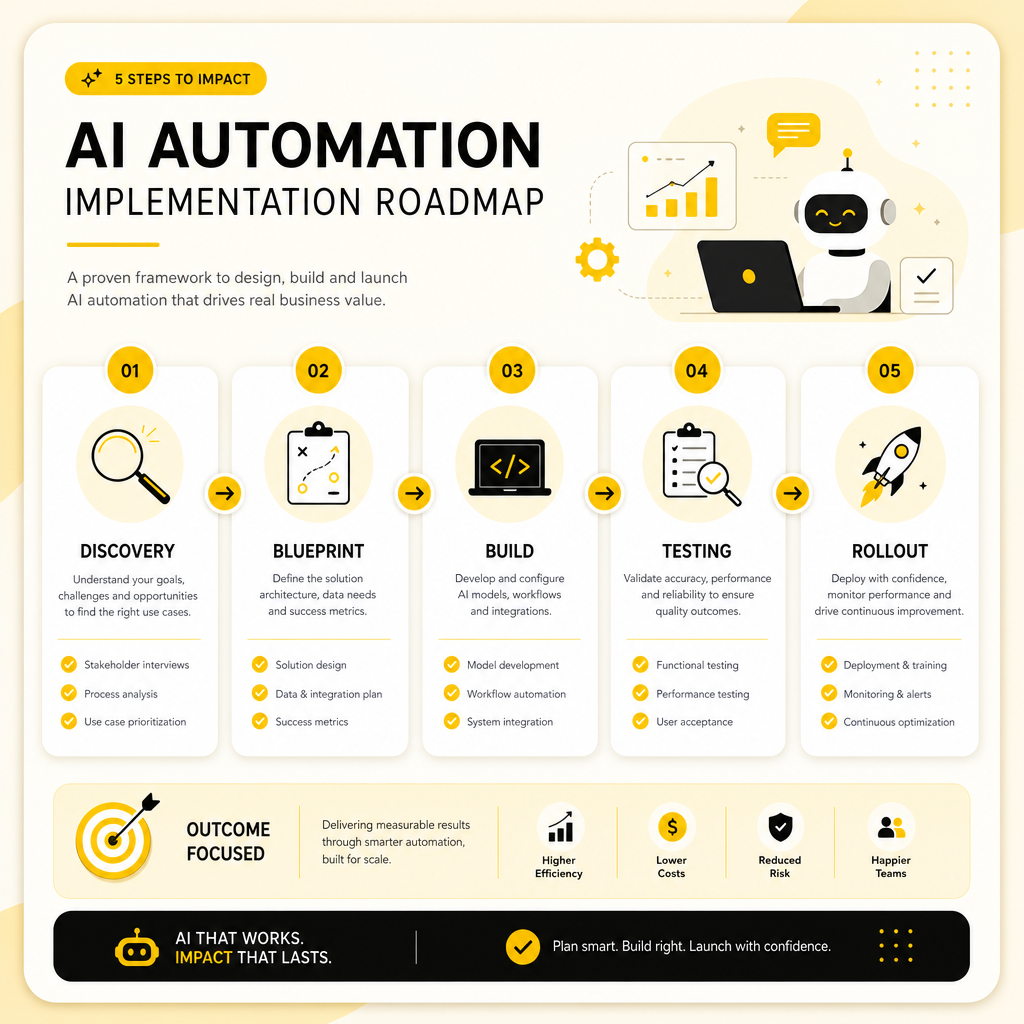

For a Senior Facilities & Real Estate Manager, recurring operational work can be automated—especially around request intake, vendor coordination, and documentation.
Examples:
Result: faster response to issues and better visibility across properties.
A Director of AI & Automation typically cares about:
That’s why Shakir Ansari’s approach emphasizes workflow design, integration quality, and operational reliability—so automation doesn’t break when real-world inputs change.
With 10+ years of experience and 1,300+ web applications built, Shakir Ansari and the RTP team deliver production-grade automation across:
Core goal: help businesses save time, reduce manual work, and operate more efficiently by connecting systems and automating the repetitive parts of the job.
Yes. The goal is to connect your current systems using APIs, webhooks, and workflow logic—so you don’t need to replace everything.
Not at all. Many operations workflows use human-in-the-loop approvals for sensitive steps while automating the rest.
Timeline depends on complexity and the number of integrations. We start small, prove value quickly, then scale.
We can still work with incomplete documentation by testing endpoints, using logs, and building resilient integration layers. The best outcomes come from structured documentation and clear data mapping.
Good implementations include validation, error handling, retries, and escalation paths—so automation remains reliable even when inputs vary.
Stop letting repetitive tasks drain your team.
If you’re an Operations Manager looking to reduce manual work, automate approvals, generate reporting, and connect tools—Shakir Ansari – Full Stack Developer & AI Automation Solutions can build a tailored automation system for your environment.
Contact us to discuss your workflow and get a practical AI automation plan.