
SHAKIR ANSARI
B2B sales teams don’t lose time because they don’t care—they lose time to repetitive work: copying lead details, updating CRMs, writing follow-ups, generating proposals, coordinating onboarding, and producing reports.
Less manual outreach, faster response times, and consistent follow-up.
Clean pipeline data and fewer missed details through AI-driven updates.
Shorter sales cycles and fewer errors with consistent, faster quotes.
AI in B2B sales helps companies automate those daily tasks with smarter workflows—without forcing you to replace your existing systems. Instead of “rip-and-replace,” AI automation connects your tools (CRM, email, forms, calendars, docs, ticketing, analytics) and improves response times across the entire revenue lifecycle.
If your goal is faster lead nurturing, cleaner pipeline data, quicker proposals, smoother onboarding, and better reporting—this pillar page shows practical AI automation strategies you can implement.
This is for business-to-business companies that want to automate:
Most teams start with a chatbot. That’s a start—but AI’s real impact comes when it’s connected to your processes.
Below are the highest-impact strategies B2B teams use to automate revenue workflows with AI.
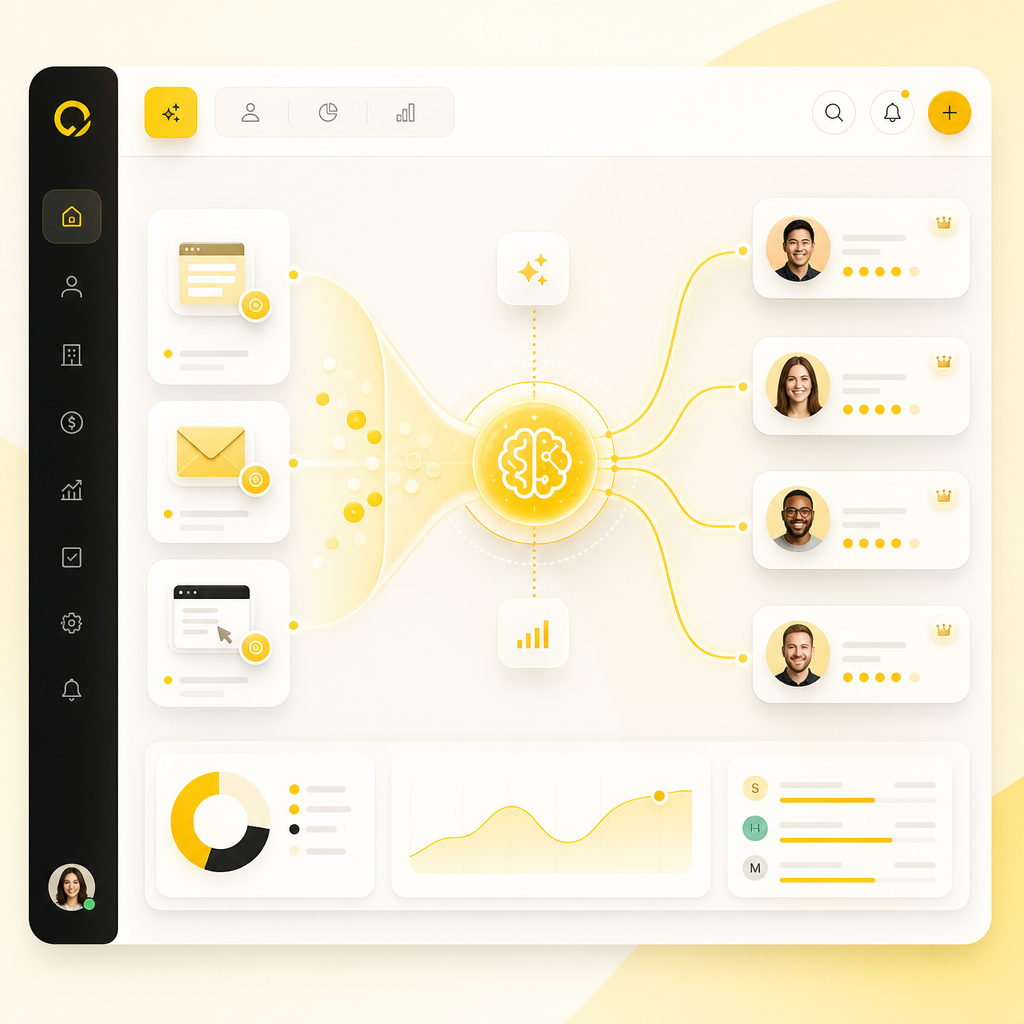
Problem: Leads arrive from multiple channels (forms, ads, events, email), and they wait for human review.
AI solution: Auto-capture and enrich leads, then route them to the right owner and sequence.
What your workflow can do
Result: No lead goes unanswered—and the right person responds sooner.
Problem: Follow-ups are repetitive and often not context-aware.
AI solution: Generate and personalize sequences using customer context, past interactions, and product fit.
Practical examples
Key conversion benefit: Higher reply rates without adding headcount.
Problem: Sales reps manually update CRM fields and miss details.
AI solution: Automatically log activities, extract key fields, and sync changes across tools.
Workflow examples
Result: Cleaner pipeline data and better forecasting.
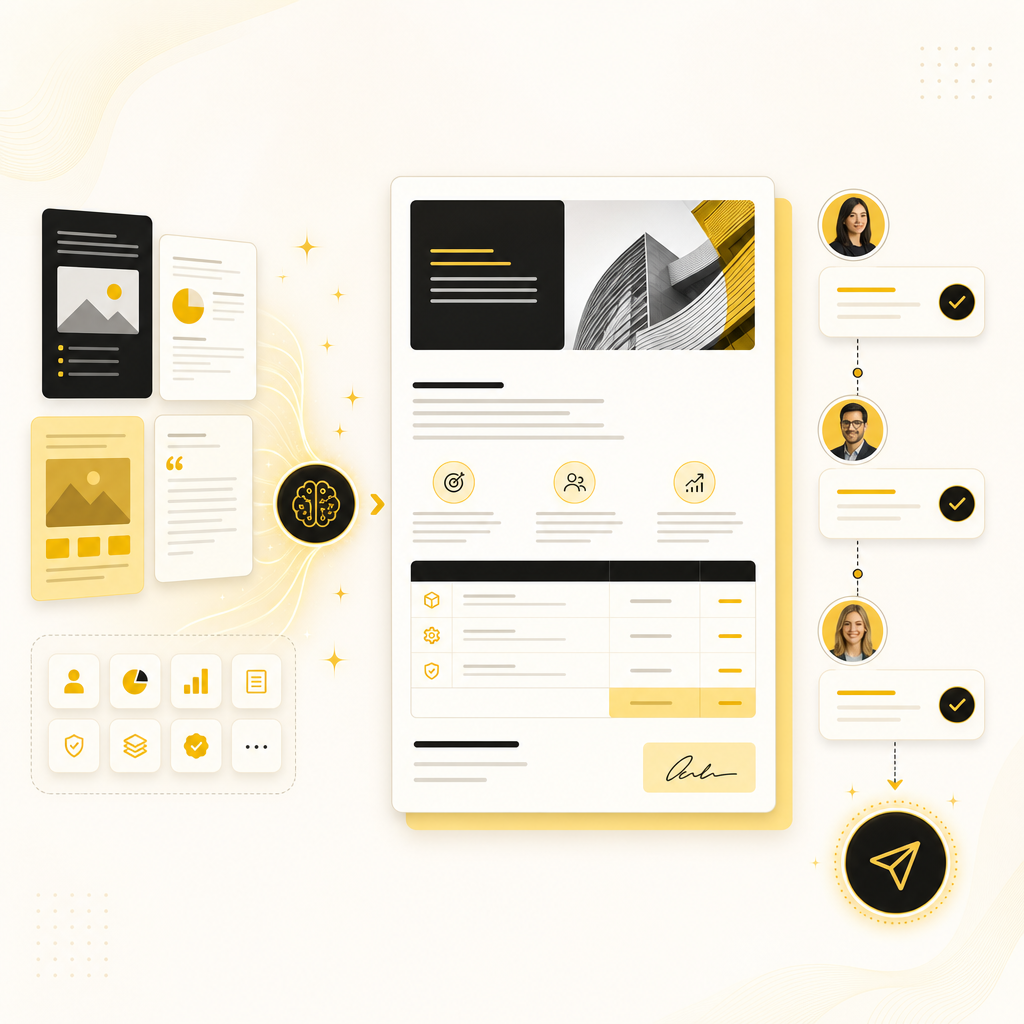
Problem: Proposals take time—especially when they require pulling information from multiple sources.
AI solution: Create proposal drafts from CRM/account data and approved templates.
What to automate
Result: Shorter sales cycles and fewer errors.
Problem: Opportunities stall because the team misses timing signals.
AI solution: AI monitors intent and activity, then triggers next actions.
Examples
Result: Deals move forward because follow-up is built into the workflow.
Problem: Scheduling and onboarding coordination creates delays between departments.
AI solution: Automate appointment booking and create onboarding tasks when the deal closes.
Workflow examples
Result: A smoother customer experience from “signed” to “started.”
Problem: Support requests and account questions drain sales and admins.
AI solution: Automate first-line responses and route complex issues properly.
Examples
Result: Stronger retention and a more efficient team.
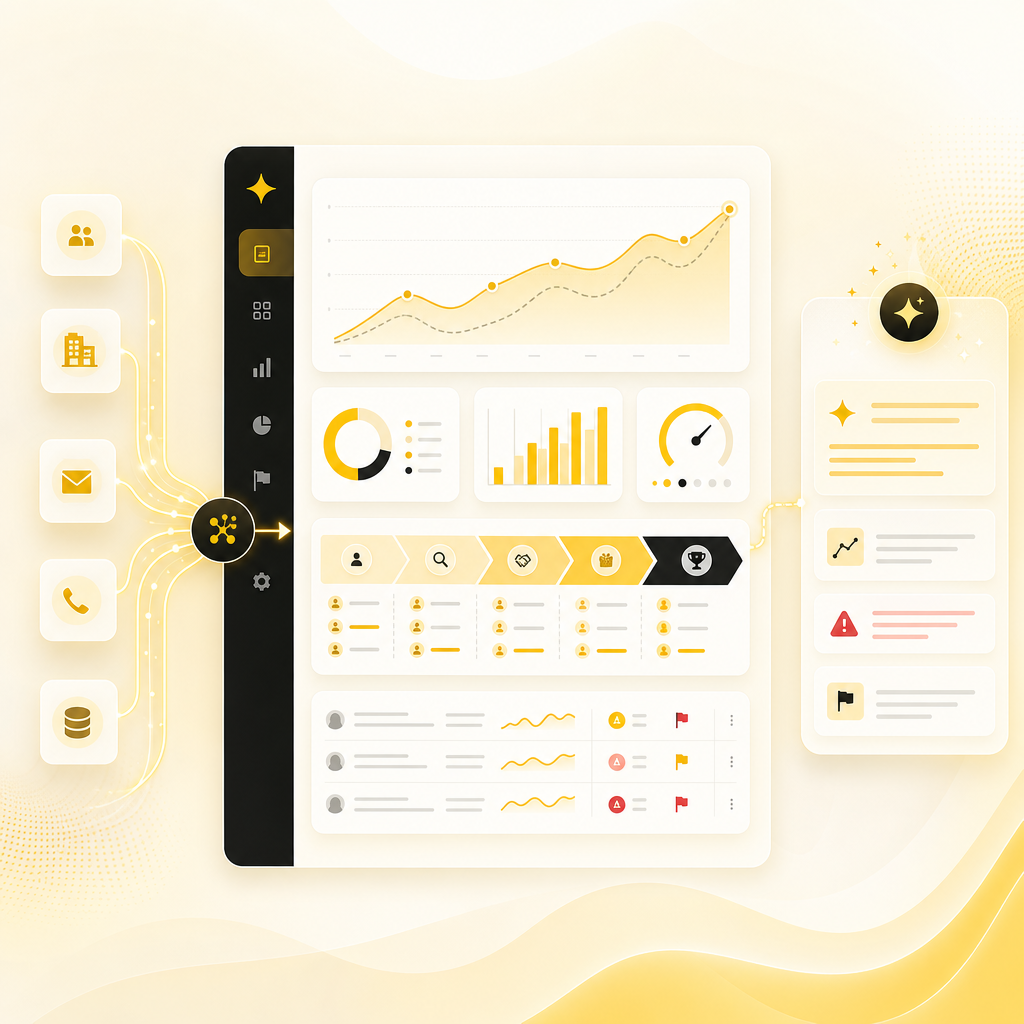
Problem: Reporting is slow, inconsistent, and often delayed.
AI solution: Generate reporting outputs from your CRM and activity data—then summarize what matters.
Examples
Result: Faster decision-making with less effort.
A major misconception: companies need to swap CRMs, email tools, or internal processes to “use AI.”
Instead, you can layer AI on top of what you already have:
Goal: smarter operations, not operational disruption.
Shakir Ansari – Full Stack Developer & AI Automation Solutions helps businesses build, improve, and automate digital systems—including AI-powered automation that connects tools and reduces manual work.
With 10+ years of experience and 1,300+ web applications developed, the RTP team delivers custom-coded solutions across:
Pick the outcomes you want first—then automate the surrounding workflow.
Most B2B teams see the fastest wins in:
When workflows are connected end-to-end, your team spends more time selling—and less time maintaining systems.
A good strategy starts with process clarity, then builds automation in layers.
Use this as a practical starting point:
No. Most teams keep their CRM and integrate AI automation around it using APIs and workflow connections.
Not when workflows use your templates, CRM data, and approval steps. AI drafts can be personalized and reviewed before sending.
By syncing structured fields, validating required information, and logging changes automatically (with optional human review).
Yes. Strong automation connects deal closure signals to onboarding tasks, documents, and internal handoffs.
Done right, it reduces coordination time. AI can summarize meetings, route tasks, and keep teams aligned automatically.
No. B2B teams of many sizes use custom automation when it targets high-friction workflows.
Usually lead handling + CRM updates or proposal drafting—because they touch high volume and clear process steps.
Yes. Custom AI automation is often about connecting the exact tools you already use.
If you want AI in B2B sales that actually reduces manual work—automates lead nurturing, updates your CRM, speeds up proposals, improves onboarding, and delivers reporting—then start with a workflow-first plan.
Get in touch with Shakir Ansari – Full Stack Developer & AI Automation Solutions to map your processes and build custom AI automation that integrates with your existing systems.