
SHAKIR ANSARI

AI-SEO & AEO for Generative AI Search Optimization

AI-SEO & AEO: SEO Services for AI Search

AI-SEO & AEO (Answer Engine Optimization) goes beyond traditional rankings. Search behavior is changing as AI-driven assistants, generative search experiences, and answer-based interfaces become more common. For businesses preparing for AI and search evolution, the goal is the same: make your website easy to understand, easy to retrieve, and easy to cite—so more of your content shows up when people ask questions.

What Is AI-SEO & AEO?

AI-SEO & AEO is the practice of optimizing your site for visibility in AI-assisted discovery and answer-focused search experiences—not just classic blue-link results.

Instead of focusing only on “matching keywords,” AI-driven systems evaluate signals like:

  • Content clarity and structure (can the answer be extracted?)
  • Topical authority (is your site the best source on the subject?)
  • Entity and relationship signals (do pages connect to what the question is really about?)
  • Technical accessibility (can systems crawl, interpret, and index reliably?)
  • Usefulness for specific intent (does your content answer the user’s question directly?)

AEO specifically focuses on earning visibility for queries that are answered within summaries, Q&A modules, or assistant responses. That often overlaps with featured snippets, “People Also Ask,” and “best answer” style placements.

Classic SEO still matters—crawlability, indexation, page speed, and on-page relevance remain foundational. But generative AI and answer-based search introduce new expectations:

  1. Answers must be extractable
    • Content that’s long but hard to parse may not be easily pulled into an answer.
  2. Context matters more than keyword density
    • Systems look for concepts, entities, and coverage depth.
  3. Search intent becomes more conversational
    • Queries often arrive as questions, comparisons, “how-to,” or “which is best.”
  4. Local relevance can be decided by the query
    • “near me,” service areas, and location-specific intent are increasingly influenced by AI-driven interpretation.

This is why businesses need an SEO approach that’s both technical and content-ready for answer extraction.

The Core Pillar: Structuring Your Website for Answer-Based Results

To improve your chances of being used as an answer source, structure your site so important information is easy to retrieve and understand.

An abstract editorial diagram of interconnected website topic clusters and structured answer blocks in warm gold and near-white tones, representing how site structure supports extractable answers.

1) Build an SEO information architecture that AI can navigate

  • Organize pages by topic clusters
  • Keep URLs and navigation consistent
  • Use internal linking to connect related subtopics
  • Prioritize key pages (services, solutions, FAQs, location pages) in the site structure

2) Strengthen technical foundations (still essential for AI discovery)

  • Ensure pages are indexable
  • Improve crawl efficiency (clean routing, logical templates, fewer orphan pages)
  • Fix duplicate or thin pages
  • Improve Core Web Vitals and reduce render friction
  • Use canonical tags correctly

3) Use structured data to clarify meaning

Structured data helps systems interpret what a page represents. Common opportunities include:

  • Organization / Website
  • LocalBusiness (when relevant)
  • Service
  • FAQPage (when FAQs genuinely appear on the page)
  • Article / BlogPosting
  • BreadcrumbList

Content That Wins in AI-SEO & AEO (Not Just Content That Ranks)

AI-assisted systems tend to favor content that is:

  • Clear and direct
  • Well-structured
  • Supported by specifics
  • Aligned to real user questions

Create “answer-ready” content blocks

To increase extractability:

  • Start key sections with a plain-English summary
  • Use concise definitions near the top of a page
  • Break steps into numbered sequences for “how-to” queries
  • Add comparison tables where appropriate (e.g., options, pros/cons)
  • Provide FAQs that reflect common customer questions (and keep them accurate)

Match conversational intent (question-driven SEO)

Instead of only targeting broad terms, include:

  • What it is / why it matters
  • How it works
  • Best practices
  • Common mistakes
  • Costs drivers (without guessing—use ranges or decision factors where appropriate)
  • “Choose X vs Y” comparisons

Cover entities and subtopics thoroughly

AI-driven search is sensitive to whether your page truly covers the subject. Strengthen topical depth by adding:

  • Related concepts
  • Supporting explanations
  • Industry-specific context
  • Use cases and outcomes
  • Clear differentiators (what makes your approach unique)

Featured snippets often function like “answer containers.” To make snippet capture more likely:

  • Put the direct answer in the first visible section of the content
  • Use formatting that matches snippet patterns:
    • Short definition paragraphs
    • Bulleted lists
    • Numbered steps
    • Simple tables for comparisons
  • Keep headings descriptive (use H2/H3 to structure the answer flow)

If your goal is AEO, treat snippets as a byproduct of well-structured, high-clarity answers.
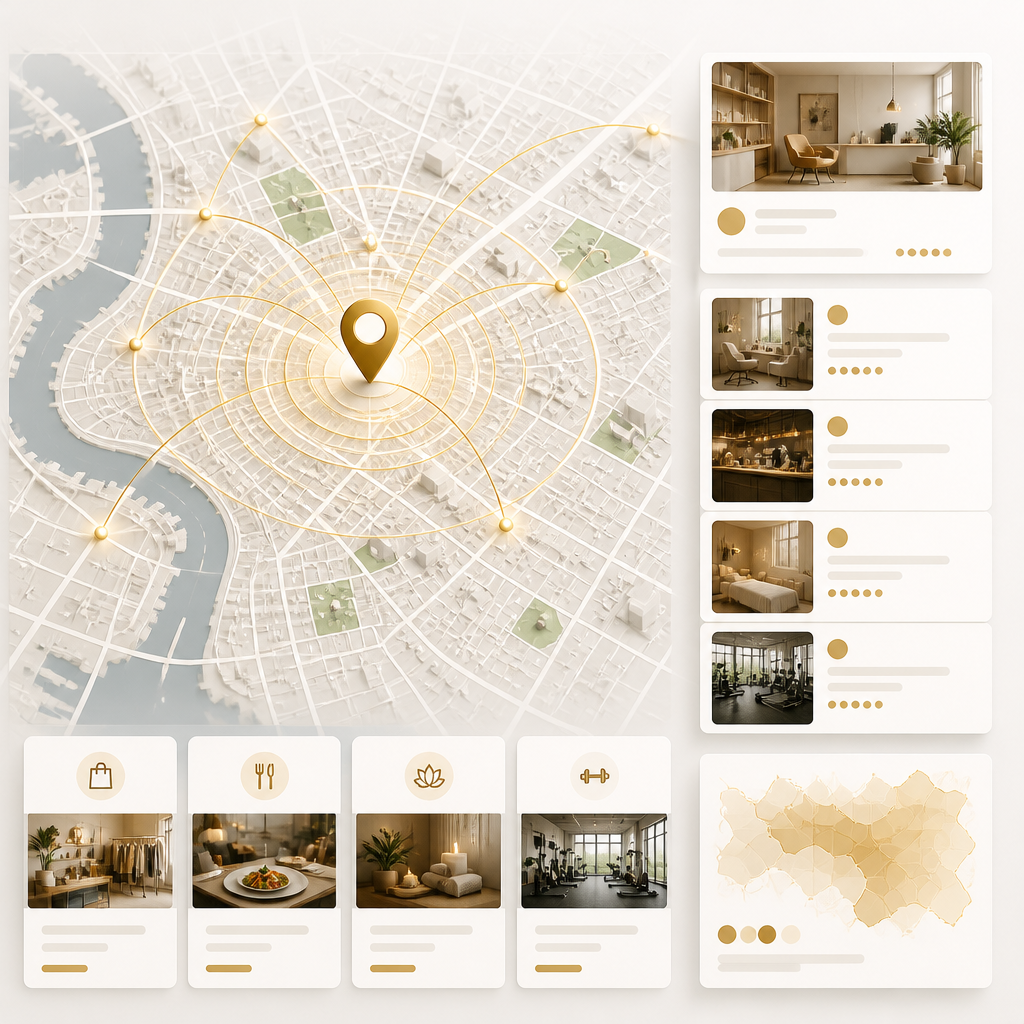
A stylized city location marker with service-area rings connecting to structured local information panels in warm gold and near-white tones, representing AI-influenced local discovery.

Local SEO & AI Search: Capturing “Near Me” and Service-Area Intent

For many businesses, AI search results are deeply influenced by location intent and local credibility. Local SEO & AI Search focuses on making local information unambiguous and consistent.

What to optimize for AI-influenced local discovery

  • Location pages (only if you truly serve those areas)
    • Include services offered, service coverage, and relevant local details
  • Consistent NAP (Name, Address, Phone) across the web
  • Google Business Profile optimization Categories, services, hours, attributes, photos, and Q&A readiness
  • Review signals Encourage legitimate feedback and respond where appropriate
  • Local schema LocalBusiness + service details where relevant

How to connect local relevance to your content

Add local context where it matters:

  • FAQs for “X in [City/Region]”
  • Case studies and examples by service area
  • Clear calls-to-action that reflect local user needs (e.g., consultation, site audit, discovery call)

🧠AI & Automation: How to Operationalize AI-SEO Without Chaos

AI-SEO works best when it’s not a one-time project. You need continuous optimization—audits, content updates, and performance monitoring. That’s where 🧠AI & Automation helps.

Common ways automation supports AI-SEO:

  • Technical SEO automation
    • Crawl monitoring, redirect audits, broken link detection
  • Content QA workflows
    • Detect thin pages, outdated sections, missing FAQ coverage
  • Schema generation and validation
    • Ensure structured data aligns with on-page content
  • Keyword-to-intent mapping assistance
    • Support briefs that align with answer-based queries
  • Local signal checks
    • Flag NAP inconsistencies and local listing mismatches
  • Reporting that connects work to outcomes
    • Track indexation, visibility trends, and content performance signals

At a practical level, automation helps teams move faster while keeping SEO consistent, accurate, and scalable.

Our SEO Services Approach (Built for AI-Ready Growth)

Shakir Ansari and the RTP team combine full-stack development experience with SEO strategy—so your website isn’t just optimized for today, but structured for evolving discovery.

Our SEO Services typically support:

  • Technical SEO improvements (indexation, performance, crawlability, site health)
  • Website structure optimization (topic clusters, internal linking, page templates)
  • Content optimization for answer extraction and featured-snippet readiness
  • Keyword and intent targeting aligned to AI-assisted search behavior
  • Local SEO foundations for AI-influenced “service area” and local queries
  • Implementation support through custom development and integrations where needed

AI-SEO & AEO Implementation Roadmap (Practical Steps)

Step 1: Baseline your current visibility and content readiness

  • Identify pages with high intent potential
  • Review technical bottlenecks (crawl/index/performance)
  • Map content to question types (definitions, how-to, comparisons, FAQs)

Step 2: Fix technical blockers first

  • Resolve indexation issues
  • Improve speed and rendering stability
  • Clean up duplicate/low-value templates
  • Add/repair structured data where appropriate

An abstract, textless flow of connected roadmap panels and maintenance pathways in warm gold and near-white tones, representing a practical AI-SEO and AEO implementation journey.

Step 3: Rebuild content into answer-ready formats

  • Add clarity at the top of key pages
  • Improve headings and extractable sections
  • Expand missing subtopics and entity coverage
  • Update FAQs to reflect real customer questions

Step 4: Strengthen local signals (if location-based intent applies)

  • Optimize Google Business Profile
  • Improve location/service-area pages
  • Ensure NAP and local consistency
  • Add local schema where applicable

Step 5: Use automation to maintain performance

  • Run recurring audits
  • Refresh content based on coverage gaps and intent shifts
  • Monitor structured data health and technical regressions

FAQs

1) Is AI-SEO the same as traditional SEO?

Not exactly. Traditional SEO focuses on rankings and relevance. AI-SEO & AEO adds extra emphasis on answer extractability, content structure, entity coverage, and AI-assisted discovery signals.

2) How do featured snippets relate to AEO?

Featured snippets are often the clearest “answer format” on the results page. Optimizing for snippet patterns typically improves your ability to provide concise, extractable answers—supporting AEO goals.

3) What should we prioritize first: content or technical SEO?

Start with technical blockers that prevent reliable indexing and interpretation (crawlability, performance, duplicates). Then optimize content structure so key answers are easy to extract and cite.

4) How does Local SEO & AI Search differ from normal local SEO?

The fundamentals remain, but AI search can interpret context and intent more dynamically. That means stronger location clarity, better local content alignment, and more consistent local signals matter even more.

5) Can 🧠AI & Automation replace an SEO strategy?

No. Automation speeds up execution and monitoring, but strategy determines what to optimize, how to structure pages, which intents to target, and how to keep content accurate.

6) What types of pages usually benefit most from AI-SEO?

Service pages, solution pages, industry pages, FAQs, comparisons, and location/service-area pages tend to benefit because they match question-driven intent.

Conclusion

AI-SEO & AEO is about making your website answer-ready: technically accessible, structurally organized, and content-rich in ways that support extraction, summarization, and citation in AI-driven search experiences. For businesses preparing for AI and search evolution, the most effective SEO services combine solid technical execution with content strategy designed for featured snippets and answer-based results—plus local optimization when location intent matters.

If you want to improve your organic visibility and build an AI-ready search presence, explore how Shakir Ansari and the RTP team can support your SEO Services strategy end-to-end.