
SHAKIR ANSARI
If your business has outgrown a basic website, you need more than templates—you need a reliable web platform that runs your daily operations. Full stack development helps you build complete digital products, from front-end design to back-end systems, so your web application can automate workflows, connect tools, and support growth.
Custom web development for booking platforms, internal dashboards, CRM tools, SaaS products, and e-commerce experiences.
Many small businesses start with a “brochure” site. But as soon as you need bookings, user logins, admin dashboards, payments, integrations, automated workflows, and AI where it adds value, you’re no longer just building a website. You’re building a web app—and the platform must be designed for real operations, not just display.
Helps customers find you.
Helps your business run—behind the scenes.
A basic site works when your needs are primarily marketing pages, contact forms, lead capture, and basic SEO content. You need a custom solution when your business requires custom workflows and approvals, role-based access, dynamic reporting and dashboards, integrations via APIs, and scalable performance as users grow.
That’s where web apps deliver value—because they’re built around your processes, not generic features. If you need a broader foundation first, explore our website development services.
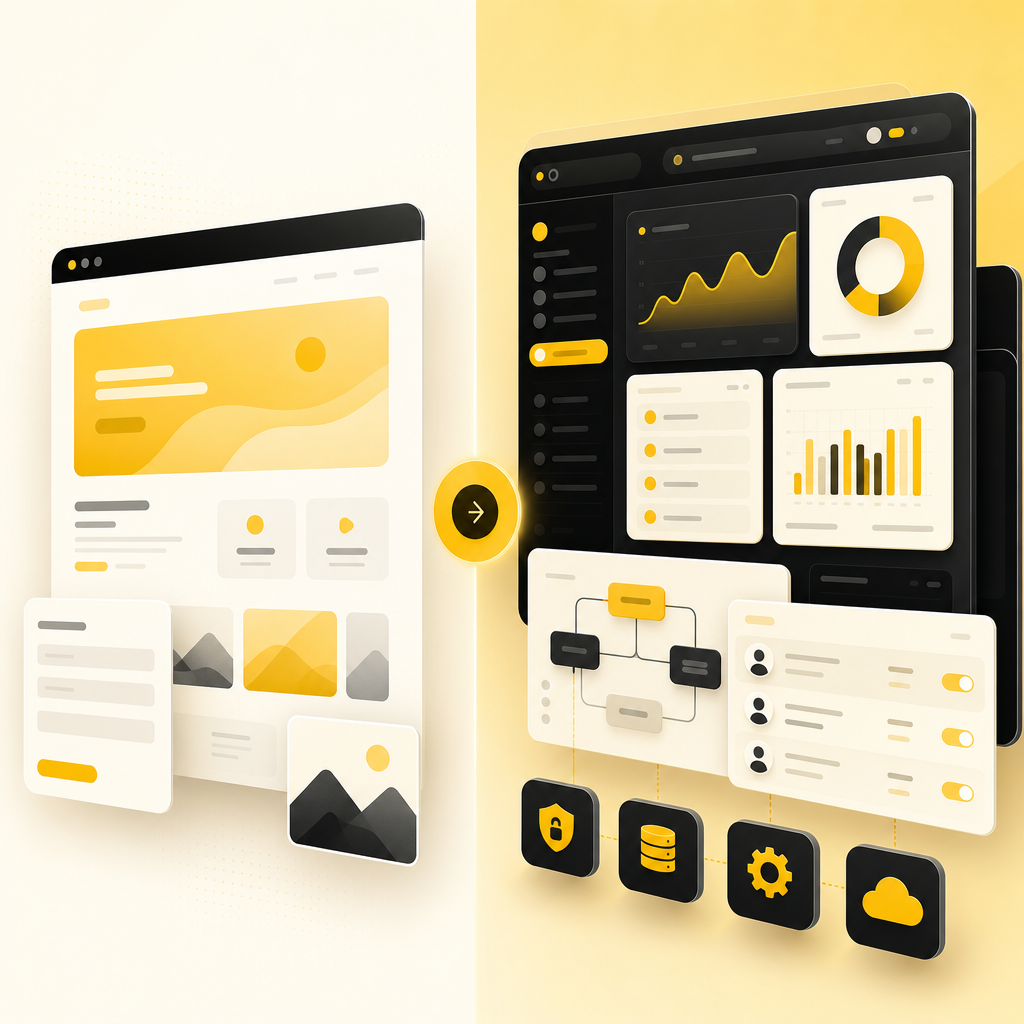
Custom web applications can replace manual processes by centralizing your operations into one system. With the right architecture, your systems become automation-ready, so you spend less time chasing updates and more time serving customers.
Automatic booking confirmations and reminders.
Dashboards that pull live data from multiple sources.
Portals for orders, tickets, or requests.
Manage content, users, and settings in one place.
Notifications and task assignment based on workflows.
Sync between CRM, payments, marketing, and analytics tools.

Businesses often come to us after they outgrow off-the-shelf tools. Common projects include booking platforms, dashboards, admin panels, portals, SaaS platforms, e-commerce functionality, and CRM/ERP and business tool integrations.
When front-end and back-end are handled by separate teams, delays happen: integrations take longer, design changes break functionality, and features launch without full end-to-end testing.
The experience users see and use.
The systems your operations depend on.
Integrations that work in real production environments.
This reduces friction, improves quality, and speeds up delivery.
When you build a custom web apps platform, you’re typically getting end-to-end functionality across application development, front-end, back-end, databases, APIs, dashboards, payments, integrations, performance, security, and ongoing upgrades.
Modern businesses don’t run on a single platform. Your web app must connect to the tools you already use—safely and reliably.
APIs enable sync with CRMs and business systems, payment processing and order updates, marketing tools and lead tracking, reporting and analytics data pipelines, workflow automation triggers, and internal services that power operations.
If your current setup is manual, APIs are usually the fastest path to automation. For related workflow support, explore ai automation services.
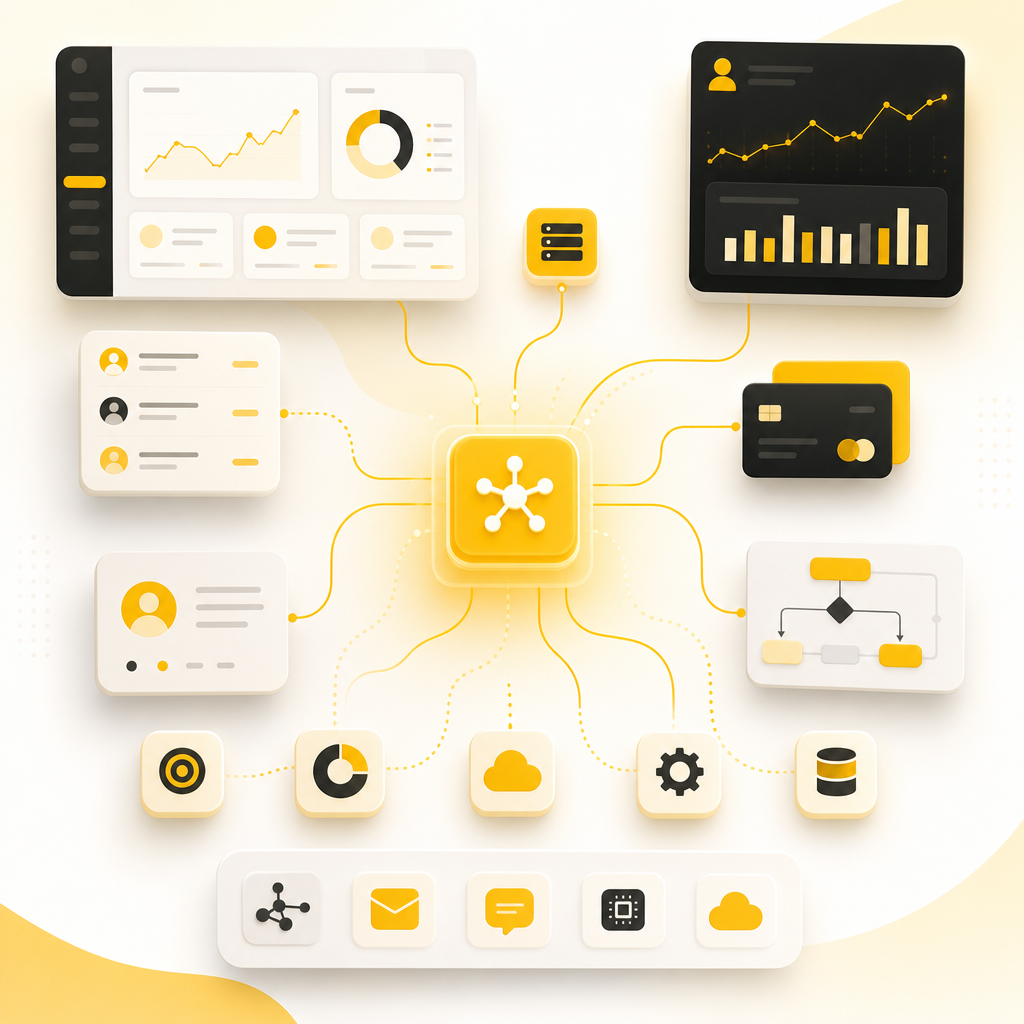
A custom web app should stay fast and secure as traffic and users increase. We focus on scalable architecture for growth, performance optimization for speed and reliability, security improvements to protect data and users, and maintainable code so features evolve without breaking.
Designed for growth as traffic and users increase.
Focused on speed and reliability.
Protect data and users.
Features evolve without breaking.
Every full stack project should follow a clear product process.
We map your workflows, users, and integration needs.
We design the architecture—front-end, back-end, database, and APIs.
We create interfaces that are usable for real teams and real customers.
We implement reliable business logic and data models.
We connect third-party systems and verify end-to-end functionality.
We validate performance and reduce production risks.
We maintain, upgrade, and enhance the platform as your business grows.
You don’t need theory—you need execution. Our team brings 10+ years of experience, 1300+ web applications developed, full-stack capabilities across Laravel, PHP, React, React Native, WordPress, Shopify, WooCommerce, expertise in SEO services, API integrations, SaaS development, and mobile apps, plus workflow automation and AI-powered business automation support for modern operations.
If you want website design and development that becomes a real system—not just pages—you’re in the right place with shakiransari.
If you’re ready for custom web development that saves time, improves operations, and supports growth, let’s build your platform end-to-end—custom web apps, dashboards, portals, SaaS platforms, e-commerce, API integrations, and automation-ready systems.