
SHAKIR ANSARI

Full-Stack Development & API Integration for Florida Businesses

If your business has a website, a CRM, an ERP, a payment gateway, and a marketing platform—but they don’t talk to each other—you’re losing time, data, and revenue.


Talk to Shakir Ansari

Shakir Ansari – Full Stack Developer & AI Automation Solutions helps Florida businesses (from Orlando, Miami, Tampa, Jacksonville, Fort Lauderdale, St. Petersburg, Tallahassee, Sarasota, Kissimmee, Winter Park, and all cities across Florida) build custom full-stack web applications and automation-ready systems—including API integrations that connect your tools into one smooth workflow.

1

A custom platform built end-to-end

A custom platform built end-to-end (front-end to back-end)

2

Secure APIs & integration

Secure APIs & integration between your business systems

3

Dashboards & portals

Dashboards, admin panels, and user portals

Why Your Business Needs More Than a Website

A basic website helps you look credible. But when your teams need to operate, track, sell, and automate, you need a system—not just pages.

Most growing businesses hit the same problem:

  • Leads come in from a form or landing page
  • They get manually copied into a CRM
  • Orders are handled across spreadsheets and tools
  • Inventory and fulfillment don’t update automatically
  • Marketing campaigns don’t trigger from real user actions
  • Reports require constant manual cleanup

Custom full-stack development turns your website into a platform that runs your operations—while API integrations keep every tool synchronized.

Common examples of “website vs. real system” gaps

Booking requests that don’t create calendar events or database records automatically

E-commerce orders that don’t update inventory or notify your team

CRMs that don’t sync with marketing platforms or customer portals

ERPs that can’t pull real-time data from your web app
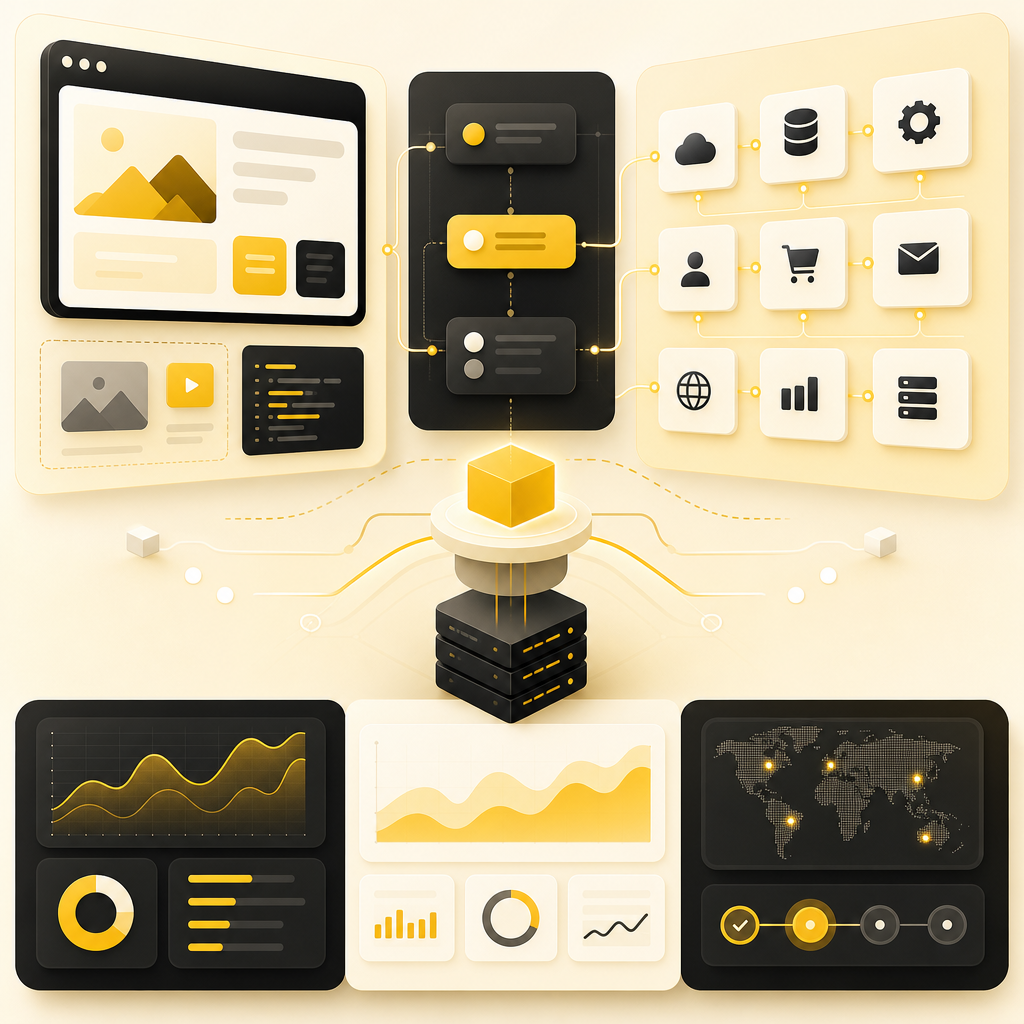
Clean modern dashboard illustration showing full-stack components and integration workflows.

What Full-Stack Development Includes (From UI to Integrations)

When you hire a web application development agency to build your product, you shouldn’t end up with disconnected components. You need one team that builds the entire experience—then integrates it with your business ecosystem.

1) Front-end development (the experience users actually feel)

  • Custom UI/UX design and modern front-end builds (e.g., React)
  • Responsive layouts for mobile and desktop
  • User portals, dashboards, and admin screens

2) Back-end development (the system that runs your business)

  • Server-side logic with PHP, Laravel, Node.js, or similar stacks
  • Authentication, roles/permissions, and secure workflows
  • Business rules that keep operations accurate

3) Database design and management

  • Data models built for scale and reliability
  • Clean, maintainable structures for fast reporting and automation

4) APIs and third-party integration development

  • Connect website/web app to CRM tools
  • Connect to payment gateways for checkout and billing
  • Connect to marketing platforms for lead and campaign automation
  • Connect to ERP and inventory systems
  • Integrate any required third-party software via custom APIs & integration

5) Automation-ready architecture (including AI potential)

  • Workflow automation that triggers actions based on real events
  • AI-assisted features (agents, custom logic, smart routing) when appropriate

Bottom line: full-stack development gives you an end-to-end digital product you can expand—without rebuilding every time you add a new tool.

APIs & Integration—The Backbone of Modern Business Workflows

APIs are how systems communicate. Without them, data transfer becomes manual, delayed, or inaccurate.

How APIs & integration help Florida businesses

  • Automatically create CRM records from website submissions
  • Sync customer profiles between portals and internal systems
  • Process payments and update orders in real time
  • Push inventory changes to sales channels immediately
  • Trigger marketing journeys based on user behavior
  • Consolidate reporting across your tools into one dashboard

Real-world integration examples we build

Website ERP Integration: order + inventory syncing between your web platform and ERP

CRM integration: leads, deals, and customer updates flowing automatically

Payment gateway integration: payments, subscriptions, invoices, and status updates

Third-party tool integration: support tools, scheduling tools, analytics, and more

Want your web app to connect to the tools you already use? Request an integration roadmap with Shakir Ansari.
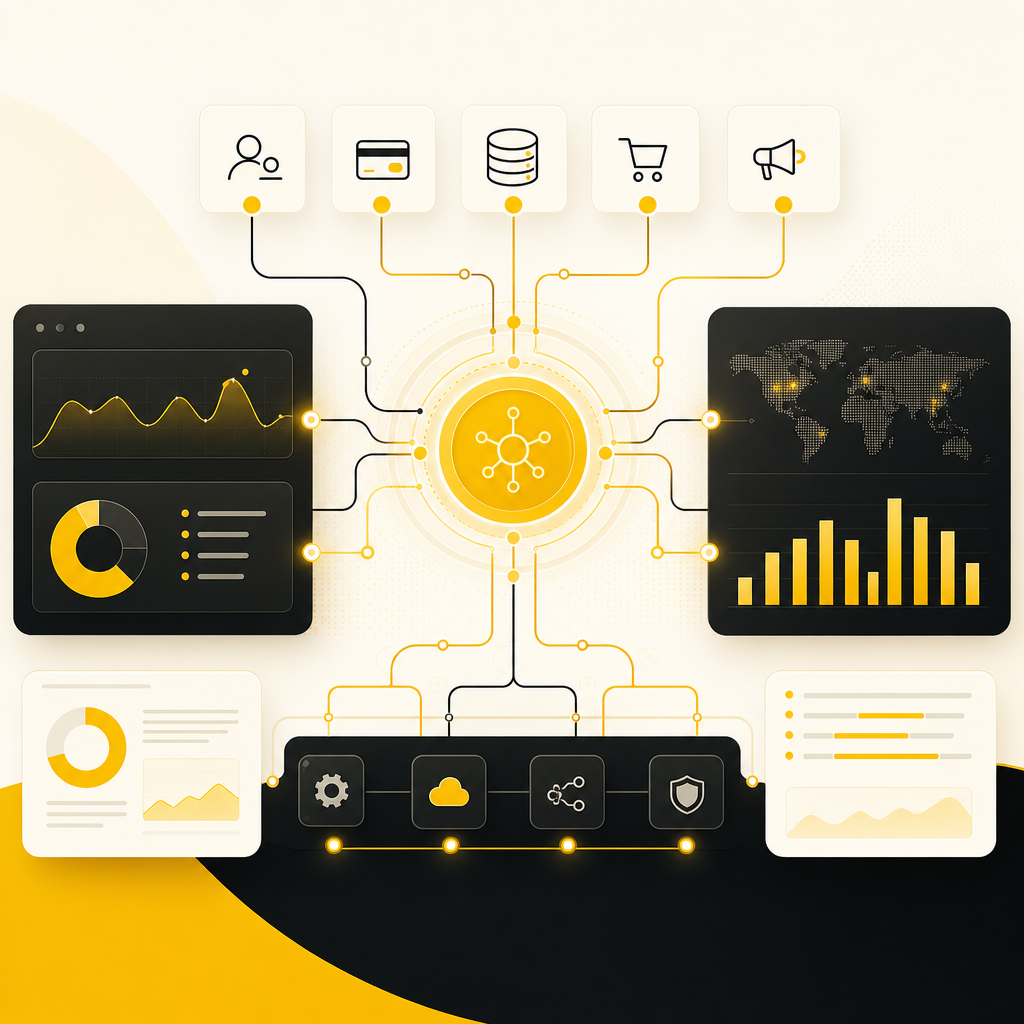
Abstract integration workflow illustration representing API connections and real-time syncing.

Why One Full-Stack Team Matters (Front-End + Back-End + Integrations)

When you outsource front-end and back-end separately, integrations often become a patchwork:

  • APIs break because data structures don’t match
  • Authentication flows aren’t aligned
  • Front-end changes require back-end rewrites
  • Third-party tools can’t be updated without disrupting the UI

A single full-stack approach helps you:

Build features faster with fewer handoffs

Maintain consistent logic across the entire platform

Design integration points from day one

Improve reliability, security, and performance

For businesses in Florida moving quickly—especially those scaling operations across multiple locations or teams—this matters.

Scalable Platforms Instead of Generic Templates

Templates can launch a website fast—but they usually fail when you need:

  • Custom workflows
  • Complex dashboards
  • Admin controls and user portals
  • E-commerce customization
  • Real integrations (CRM, ERP, payments, inventory, marketing)

Custom full-stack development gives you software built around your process—not someone else’s.

Automation-ready workflows (less manual work)

Better data quality (fewer errors and duplicates)

More control over scaling and feature upgrades

A foundation that supports new integrations and AI capabilities

Solutions We Commonly Build for Growing Businesses

Here are examples of the types of systems our clients use to move beyond basic websites:

Custom web applications

  • Internal tools for operations
  • Role-based admin panels
  • Dashboards for performance and reporting

SaaS platform development

  • Multi-tenant architecture
  • Subscription-ready billing models
  • User portals and managed access

E-commerce functionality + growth features

  • Catalog + checkout customization
  • Order workflows and fulfillment triggers
  • Payment integrations and status syncing

CRM, ERP, and business tool integrations

  • Lead and customer sync
  • ERP-driven order tracking
  • Inventory updates tied to real events
  • Marketing triggers based on accurate lifecycle data

Automation and AI-enabled workflows

  • Smart task routing and alerting
  • AI agents where it improves speed and decision-making
  • Automated follow-ups based on customer behavior

Performance, Security, and Scalability (Non-Negotiable for Connected Systems)

Once your platform connects to payments, CRMs, and ERPs, reliability becomes critical.

  • Performance optimization for fast load times and smoother workflows
  • Security improvements for authentication, authorization, and data protection
  • Scalability so your integrations and database can handle growth
  • Clean documentation and maintainable code for long-term feature upgrades

This is especially important for businesses in fast-moving markets across Orlando, Miami, Tampa, Jacksonville, Fort Lauderdale, St. Petersburg, Tallahassee, Sarasota, Kissimmee, Winter Park, and the rest of Florida.

Industries That Benefit Most From Full-Stack + API Integrations

If your business relies on multiple tools, you likely need a connected system. Common use cases include:

Service businesses with scheduling, booking, and lead intake

E-commerce brands managing inventory + order workflows

B2B companies with CRMs, approvals, quoting, and portals

Companies that operate with ERP-driven processes

Teams that want AI automation to reduce repetitive work
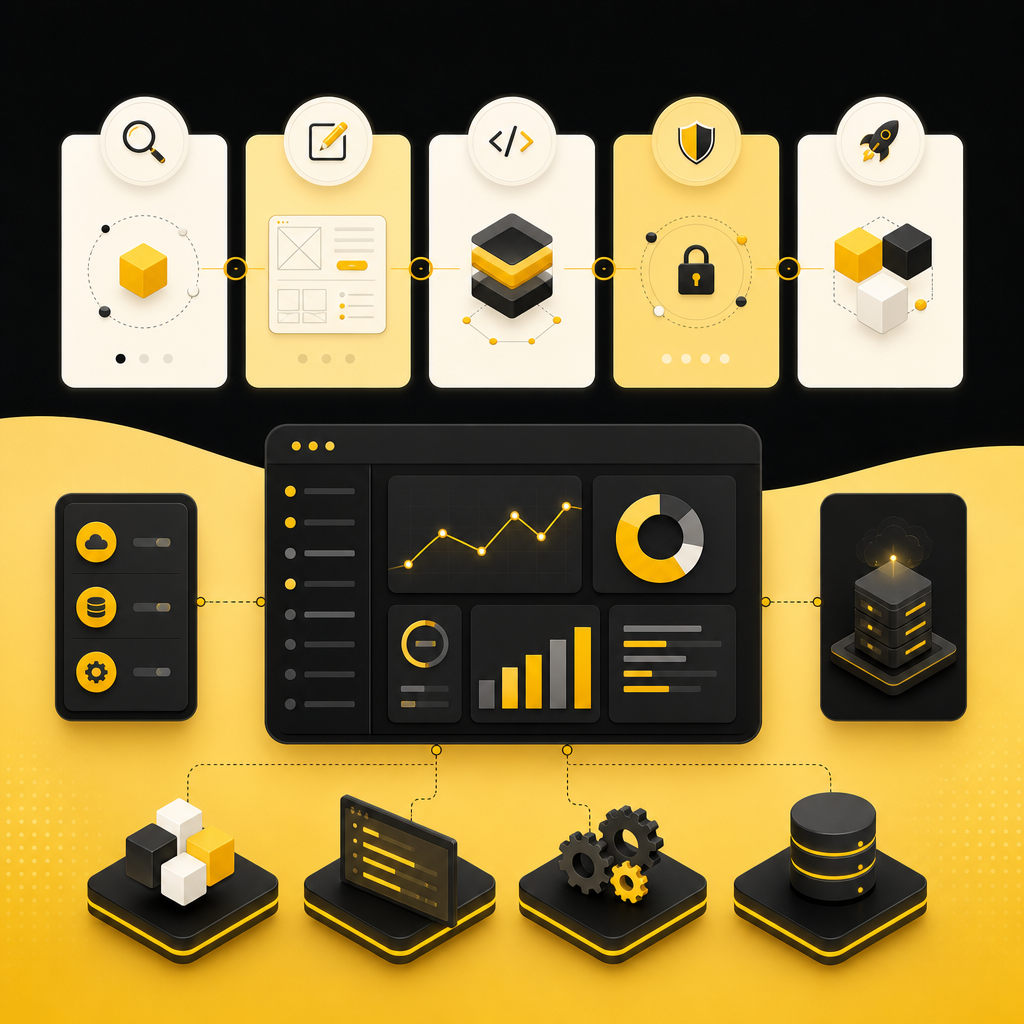
Dashboard-style illustration representing a multi-step development and deployment process.

Our Process (From Discovery to Deployment and Ongoing Improvements)

Here’s how we typically move from idea to a real working platform:

Step 1: Discovery & system mapping

  • Identify your current tools (website, CRM, ERP, payments, marketing)
  • Map where data currently gets lost or delayed
  • Define the automation workflow you want

Step 2: Full-stack solution design

  • Plan the user experience, database structure, and back-end logic
  • Design API endpoints and integration flows
  • Define security and role-based access requirements

Step 3: Build & integrate

  • Develop front-end and back-end together
  • Implement APIs & integration logic
  • Validate data sync, error handling, and reliability

Step 4: Test, optimize, and secure

  • Performance checks
  • Security hardening
  • Integration testing with real scenarios

Step 5: Launch + iterate

  • Deploy the platform
  • Train your team if needed
  • Continue maintenance, feature upgrades, and integration expansions

Why Clients Choose Shakir Ansari for Full-Stack Development

When you need a digital system that connects, you need a team that can build it correctly the first time.

  • 10+ years of experience
  • 1300+ web applications developed
  • Full-stack capabilities across modern web and automation needs
  • Expertise with Laravel, PHP, React, WordPress, Shopify, WooCommerce
  • Ability to deliver API integrations, SaaS development, mobile apps, workflow automation, and AI agents
  • A focus on scalable, reliable solutions that improve operations

Let’s build your next connected platform. Contact Shakir Ansari to schedule a consultation for full-stack development and API integration in Florida.

Frequently Asked Questions

What does full-stack development mean for my business?

Full-stack development means building your product end-to-end—front-end experience (UI and user flows), back-end logic, databases, and the integrations that connect your tools (CRM, ERP, payments, and more).

Do you build API integrations for existing websites or ERPs?

Yes. We can connect existing platforms by implementing secure APIs & integration workflows—such as website ERP integration, CRM syncing, payment updates, and third-party tool connections.

Can APIs automate daily business tasks for teams in Florida?

Absolutely. Once your systems are connected through APIs, workflows can automate lead capture, record creation, order updates, inventory syncing, status changes, and reporting—reducing manual work across your teams.

Do you build dashboards and admin panels too?

Yes. Full-stack development often includes user dashboards and admin panels so your team can manage operations, view analytics, and control access.

Are you a good fit if we’re moving toward a SaaS platform?

Yes. We support SaaS platform development, including user portals, subscription-ready workflows, and integration-ready architecture so your product can scale.

What’s the advantage of hiring a web application development agency that handles both front-end and back-end?

You get fewer handoffs, consistent logic across your system, and smoother integration implementation. This reduces breakage and speeds up upgrades.

Where do you operate?

We serve businesses across Orlando, Miami, Tampa, Jacksonville, Fort Lauderdale, St. Petersburg, Tallahassee, Sarasota, Kissimmee, Winter Park, and all cities across Florida, with projects that may be remote as well.

How do we start?

We begin with discovery to map your tools and goals, then outline the architecture for full-stack development and API integration—before we move into build and launch.

Get a Custom Full-Stack Plan for Connected Operations

Your website should be more than a brochure. It should be a connected system that helps your team move faster and operate smarter.

If you’re in Florida and want to connect your website, CRM, ERP, payments, and business tools with reliable automation-ready APIs, Shakir Ansari – Full Stack Developer & AI Automation Solutions is ready to build.


Schedule a consultation