
SHAKIR ANSARI
Coaches and consultants rarely need “just a website.” They need a complete digital system—one that captures leads, books sessions, collects payments securely, delivers client resources, and automates onboarding without constant manual follow-up.
This is where full-stack development shines: it connects front-end design to back-end logic, databases, integrations, and secure payment workflows—so your business can scale beyond templates and piecemeal tools.
Most websites are built to look good and explain your services. But coaching businesses often run on processes that happen after someone lands on your site:

A full-stack build allows you to move these steps into one connected platform—rather than forcing your team to stitch together separate services.
A website is typically static or lightly interactive: pages, blog posts, and a basic contact form.
A web application includes business logic and workflows—such as:
If you need client logins, booking automation, dashboards, or program delivery, you’re looking for web application functionality—not only a marketing website.

For coaches and consultants, payments aren’t just transactions—they’re part of access control.
A full-stack system can support:
This reduces the risk of manual errors and ensures clients only see what they’re authorized to access.
Modern business website design should guide action with:
Full-stack development allows those conversion elements to be connected to your backend workflows, so actions on the site actually trigger the next steps.
Client portals typically include:
Instead of sharing resources through email and links, a portal centralizes client experience and reduces your ongoing admin workload.
Onboarding should not be a manual process.
Full-stack systems can automate:
When onboarding is system-driven, your process stays consistent as you scale.
Full-stack development is end-to-end creation of your digital product—from the UI users click to the databases and integrations that make it run.
A coach-focused full-stack project often includes:
Here are examples of systems that benefit from custom full-stack development (instead of “one-off” tools):
Templates often handle design, but not the workflows coaching businesses depend on:
Custom full-stack development lets you build exactly what your business needs today—and extend it as you grow.
APIs connect your website, portals, CRMs, payment providers, and marketing tools so your systems can “talk to each other.”
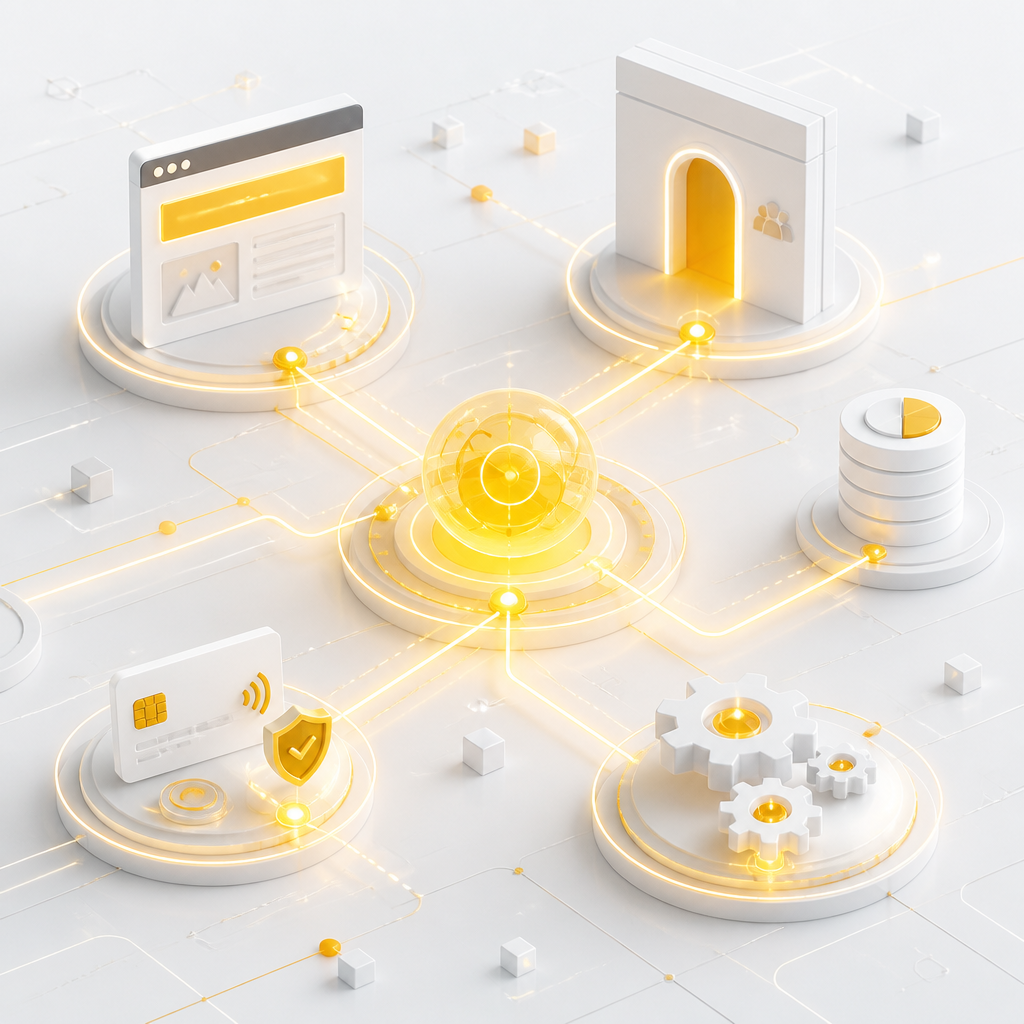
With API integrations, you can automate tasks like:
This is often the difference between a site that looks good and a system that actually runs your business.
When your platform includes logins, payments, and client data, security and performance matter.
A well-built full-stack solution should include:
For coaches and consultants, this builds trust—and reduces operational risk.
If you want “websites for coaches and consultants” that also deliver automation, portals, and secure payments, look for a partner that can handle both:
An end-to-end team reduces handoffs and keeps your marketing pages, booking flows, and client portal logic aligned.
A coaching website is mainly for marketing and basic interaction. A full-stack web application includes business logic such as booking workflows, client logins, onboarding automation, dashboards, and payment-driven access.
Yes. A full-stack build can integrate with payment gateways and link payment status to access control for programs, client portals, and next steps—so you reduce manual work and payment-related errors.
If you deliver modules, resources, or ongoing support, a client portal typically improves experience and reduces admin overhead by centralizing access, progress, and onboarding.
You might start with multiple tools, but custom full-stack development can consolidate workflows into one system—especially when you need API integrations and role-based access.
Timelines vary based on complexity (booking, portal, dashboards, payments, integrations). A full-stack roadmap typically starts with the highest-impact workflows and then expands.
Coaches and consultants don’t just need a website—they need a connected system that supports real operations: booking, client onboarding, secure payments, and client portals for programs and resources.
With full-stack development, you can replace manual processes with automation, integrate your tools through APIs, and build scalable platforms that support growth—without being limited by generic templates.
If you’re ready to upgrade from a basic site to a smarter digital platform, explore full-stack development with Shakir Ansari – Full Stack Developer & AI Automation Solutions to build automation-ready websites, client portals, booking flows, and systems that support secure payment collection and streamlined onboarding.