SHKIR ANSARI · Full Stack Developer & AI Automation Solutions

Full-Stack Development for Logistics & Transportation

Logistics companies don’t just need a website—they need a digital operating system. With custom Full Stack Development, you can move beyond basic templates and build reliable, scalable, automation-ready platforms that unify the entire workflow: shipment tracking, booking portals, dispatch operations, customer dashboards, admin controls, and integrations.

Shakir Ansari – Full Stack Developer & AI Automation Solutions helps logistics and transportation businesses build and improve these systems—end-to-end, from front-end to back-end—so your team can operate faster, reduce manual work, and support growth.

Talk to a Full-Stack DeveloperSee How Full-Stack Development Works

What Full-Stack Development Means for Logistics & Transportation

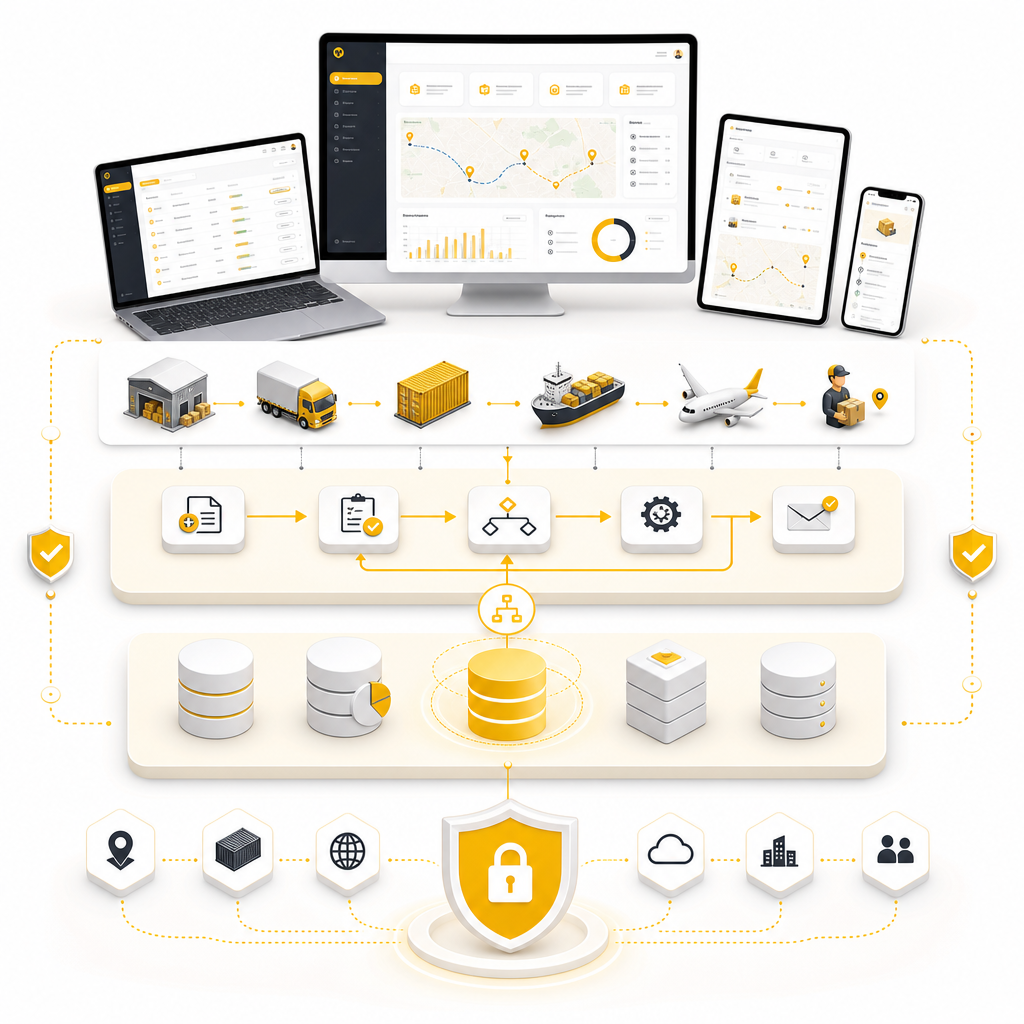
Illustration representing the full-stack logistics system layers: UI, workflows, databases, APIs, and security.

A full-stack build connects every layer of your product:

  • Front-end (UI): customer booking experiences, driver portals, dashboards, and operational screens
  • Back-end (logic & workflows): dispatch rules, status updates, role-based access, notifications
  • Databases: reliable data storage for shipments, orders, routes, users, documents, and events
  • APIs & integrations: connect CRMs, ERP tools, payment gateways, tracking services, email/SMS, and more
  • Security & performance: protects customer data and ensures fast page loads during peak operations
  • Automation-ready architecture: supports future AI features and workflow automation

In short: custom full-stack solutions for businesses that need reliable, scalable, and automation-ready web applications.

Why Logistics Companies Need More Than “Transportation Website” Templates

Most logistics websites are static or lightly interactive. They don’t handle the realities of operational workflows—like:

  • real-time shipment status changes
  • booking + documentation tracking
  • dispatch assignment and route updates
  • customer service workflows and notifications
  • role-based access for internal teams vs customers vs partners
  • syncing data across multiple tools

A generic site can’t automate operations.

A custom Logistics Software Development project can.

This is where a production-ready, end-to-end build helps logistics teams move from information to execution.

Key Systems Logistics Teams Want to Build (and Improve)

Below are common “software & platform applications” logistics businesses need—powered by full-stack development:

1) Shipment Tracking Platforms

  • Tracking number input + live status timeline
  • Proof of delivery support (documents, signatures, photos)
  • Event history (picked up → in transit → delivered)
  • Customer notifications and status updates

2) Booking Portals for Customers & Partners

  • Quote request forms with dynamic routing options
  • Booking confirmations and order creation
  • Upload and management of shipping documents
  • Customer self-service portal (view/edit bookings)

3) Dispatch & Operations Systems

  • Dispatch dashboards for staff
  • Driver/vehicle assignment tools
  • Route planning support (or integration with route providers)
  • Task queues, alerts, and workflow triggers

4) Customer Dashboards & Admin Panels

  • Customer view: shipment status, invoices, documents
  • Internal view: order management, exceptions handling, logs
  • Admin controls: roles, permissions, settings, audits

5) SaaS-Ready Platforms (If You Need to Scale)

  • Multi-tenant architecture for partners/branches
  • Subscription plans and usage tracking
  • Automated onboarding and feature permissions
  • Reporting and analytics built into the platform

“Website vs Web Application” for Logistics: What You Actually Need

If your goals include operations, automation, portals, and tracking—what you need is a web application, not only a website.

A website is usually:

  • marketing-focused
  • informational pages
  • limited data interactions

A web application is built to:

  • manage workflows and business logic
  • store operational data in real time
  • automate updates and customer interactions
  • support multiple user roles and permissions

For logistics teams, this distinction is critical—because your platform must support daily execution, not just presentation.

Transportation Websites – SEO That Works With Real Functionality

When you build custom Transportation Websites – SEO, you’re not just improving rankings—you’re improving the entire customer journey.

A full-stack approach supports SEO through:

Result: higher-quality organic traffic that converts into bookings and tracking requests.

Integrations Logistics Platforms Can’t Live Without

Full-stack development is what makes integrations reliable—because your system can coordinate everything across tools.

Common integration targets:

  • CRM/ERP (lead management, billing sync, customer records)
  • Payment gateways (deposits, invoices, subscriptions)
  • Email/SMS/WhatsApp notifications (booking updates, ETA changes)
  • Tracking providers and logistics data feeds
  • Document tools (uploads, storage, retrieval)
  • Marketing platforms (campaign tracking, retargeting signals)
  • Internal workflows (automated task creation and alerts)

APIs are the backbone—connecting your booking flow, your tracking system, and your internal operations so data stays consistent.

Reliable coordinationConsistent dataAutomation-ready workflows

How Full-Stack Development Automates Daily Logistics Work

Custom systems can replace manual processes with automation-ready workflows, such as:

  • auto-updating shipment statuses when events occur
  • sending notifications on milestones and exceptions
  • generating invoices or routing tasks based on booking rules
  • creating dispatch tasks automatically from new orders
  • managing document lifecycles (required docs, reminders, approvals)
  • consolidating customer service actions with a single dashboard

This is where custom Software & Platform Applications deliver measurable time savings.
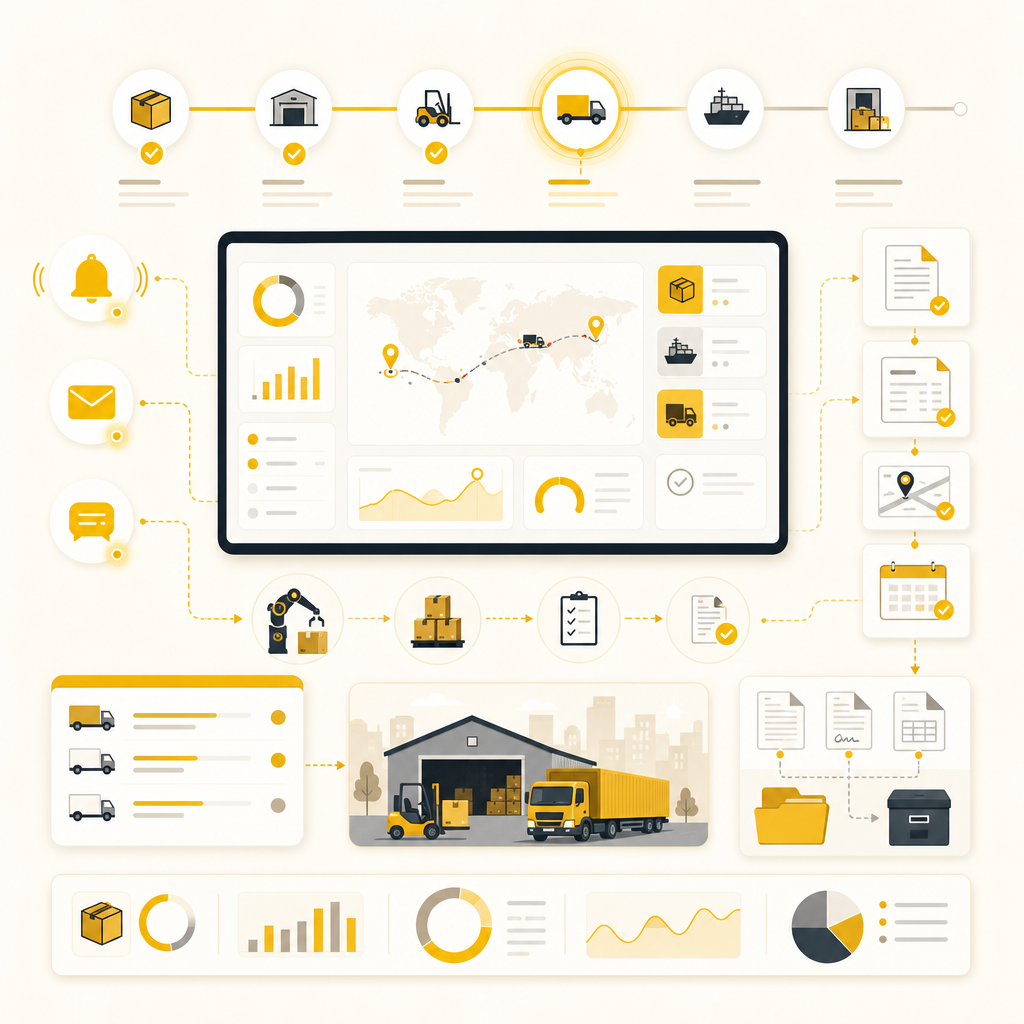
Illustration showing automated logistics workflows like status updates, notifications, dispatch tasks, and document lifecycle handling.

Security, Performance, and Scalability (Non-Negotiables)

  • Role-based access control (RBAC) for customer/admin/dispatch roles
  • secure authentication and authorization
  • data protection practices for personal and operational info
  • performance optimization to handle peak usage during busy seasons
  • scalable architecture so your platform doesn’t break as volume increases
  • maintainable code for ongoing features and upgrades

Tech Approach (What We Build With)

Depending on your project requirements, Shakir Ansari and the RTP team deliver with modern, production-ready stacks such as:

Front-end

(React (and modern JavaScript frameworks))

Back-end

(PHP / Laravel / Node.js (or similar stacks))

Mobile-ready experiences

(React Native where needed)

CMS/e-commerce support

(WordPress, Shopify, WooCommerce (if applicable))

APIs, integrations, and SaaS development

(APIs, integrations, and SaaS development)

Workflow automation + AI-powered automation

AI-powered automation for advanced operations

You get a solution designed for reliability today—and growth tomorrow.
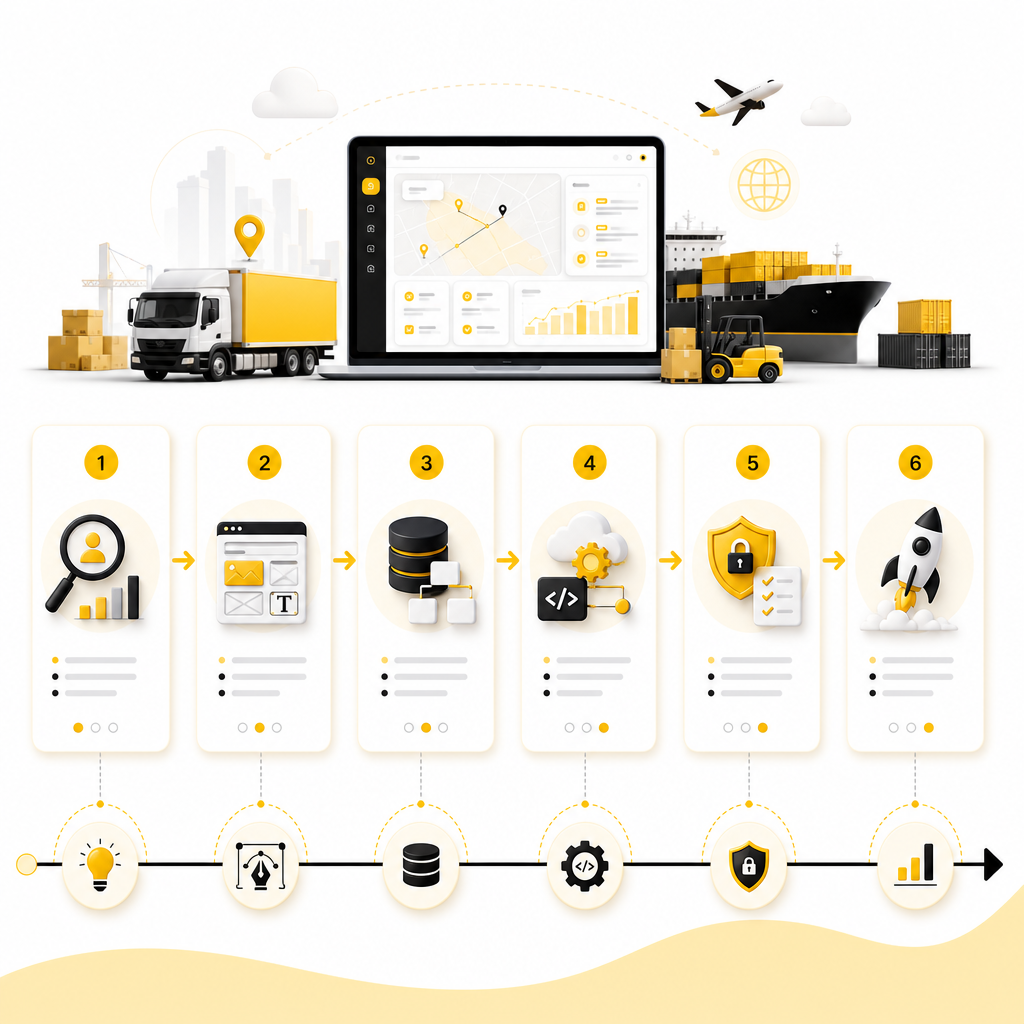
Typical Project Flow: From Idea to Logistics Platform

Illustration of a step-by-step lifecycle for delivering a logistics full-stack platform, from discovery to launch and maintenance.

1) Discovery & Workflow Mapping

  • define user roles (customer, admin, dispatcher, partner)
  • map booking + dispatch + tracking workflows
  • clarify integration needs and success metrics

2) UI/UX Design for Real Operations

  • operational dashboards that reduce training time
  • customer portals designed for conversion and clarity
  • admin panels built for efficient day-to-day control

3) Full-Stack Development & Database Setup

  • implement business logic and data models
  • build dashboards, portals, tracking features, and admin tools

4) API Integration & Automation

  • connect external services and internal systems
  • set triggers for updates, notifications, and workflow events

5) Testing, Security Hardening, and Optimization

  • ensure stability for real-world logistics edge cases
  • performance tuning for fast customer and dispatch experiences

6) Launch + Ongoing Maintenance

  • feature upgrades
  • bug fixes and security updates
  • continuous improvements based on operations data

Real Use Cases This Supports

A freight company launching a booking portal with instant confirmations

A logistics operator building a dispatch system for faster team coordination

A carrier creating a customer tracking dashboard that reduces support tickets

A logistics brand turning its offering into a SaaS platform for partners

A business connecting its platform to CRM + payment + notification systems via APIs

An organization adding AI automation to reduce repetitive operational work

Why Work With Shakir Ansari – Full Stack Developer & AI Automation Solutions?

You need more than development—you need execution that matches logistics operations.

  • 10+ years of experience
  • 1300+ web applications developed
  • full-stack capabilities across front-end, back-end, dashboards, portals, SaaS, and integrations
  • SEO services support when building Transportation Websites – SEO foundations
  • workflow automation and AI agent readiness for future upgrades

Goal: help businesses build, improve, and automate their digital systems—reliably and at scale.

If you’re aiming for end-to-end logistics execution, a full-stack build is the foundation.

Choose Custom Full-Stack Development for Logistics Growth

If you’re ready to upgrade from a basic website to a smarter digital system, this is the next step.

You’ll get:

Tell us what you need: tracking, booking, dispatch, dashboards, integrations, or SaaS.

Frequently Asked Questions

1) What’s the difference between a logistics website and a logistics platform?

A logistics website is mostly informational. A logistics platform is a web application with workflows, databases, roles/permissions, tracking, booking flows, and integrations.

2) Can you build shipment tracking and customer dashboards?

Yes. Full-stack development enables real-time status updates, tracking timelines, document handling, and customer/admin dashboards.

3) Do you handle API integrations with CRM, payments, and tracking services?

Yes. APIs connect your platform to CRMs, payment gateways, notification tools, and tracking/data providers—so your operations run smoothly.

4) Can this support SaaS if we serve multiple partners or branches?

Yes. SaaS-ready builds can be multi-tenant, support permissions, and include onboarding and subscription logic.

5) Do you also support SEO for transportation websites?

Yes. A full-stack build supports SEO with performance optimization, scalable page architecture, and SEO-friendly structure—especially for logistics lead capture and booking intents.

6) How does workflow automation fit into full-stack development?

Automation-ready architecture lets your system trigger actions automatically—updates, notifications, task creation, invoice generation, and more.

Get a custom full-stack development plan

Ready to build a logistics platform that streamlines operations and drives bookings?

Get a custom full-stack development plan for your shipment tracking, booking portal, dispatch system, dashboards, integrations, and automation.

What you’ll cover

  • Shipment tracking
  • Booking portal
  • Dispatch system
  • Dashboards, integrations, and automation