
SHAKIR ANSARI
Launching an MVP is tough when you’re trying to balance speed, scalability, and a clean product foundation. For startups building SaaS platforms or software web development products, full stack development helps you move faster because it covers the full build—from the user interface to backend services and the database that powers everything.
what users see and interact with (web app screens, dashboards, forms, mobile-responsive experiences)
business logic, authentication, roles/permissions, workflows, and system integrations
the data layer that stores users, products, transactions, events, logs, and more
Full stack development is the end-to-end engineering approach for digital products. Instead of handing off work across multiple vendors, your build typically includes:
what users see and interact with (web app screens, dashboards, forms, mobile-responsive experiences)
business logic, authentication, roles/permissions, workflows, and system integrations
the data layer that stores users, products, transactions, events, logs, and more
how the app runs reliably across environments (development → staging → production)
For startups launching digital products, this structure supports faster iteration, fewer integration gaps, and a more consistent architecture.
Startup teams usually need to validate an idea quickly—while still avoiding technical debt that slows future development. Full stack development helps with:
Faster MVP delivery: one cohesive implementation across the app
Cleaner product iteration: changes to UI often map directly to backend endpoints and database updates
Reduced integration risk: authentication, APIs, and data models are designed together
Scalable foundations: you plan for growth early (performance, security, and maintainability)
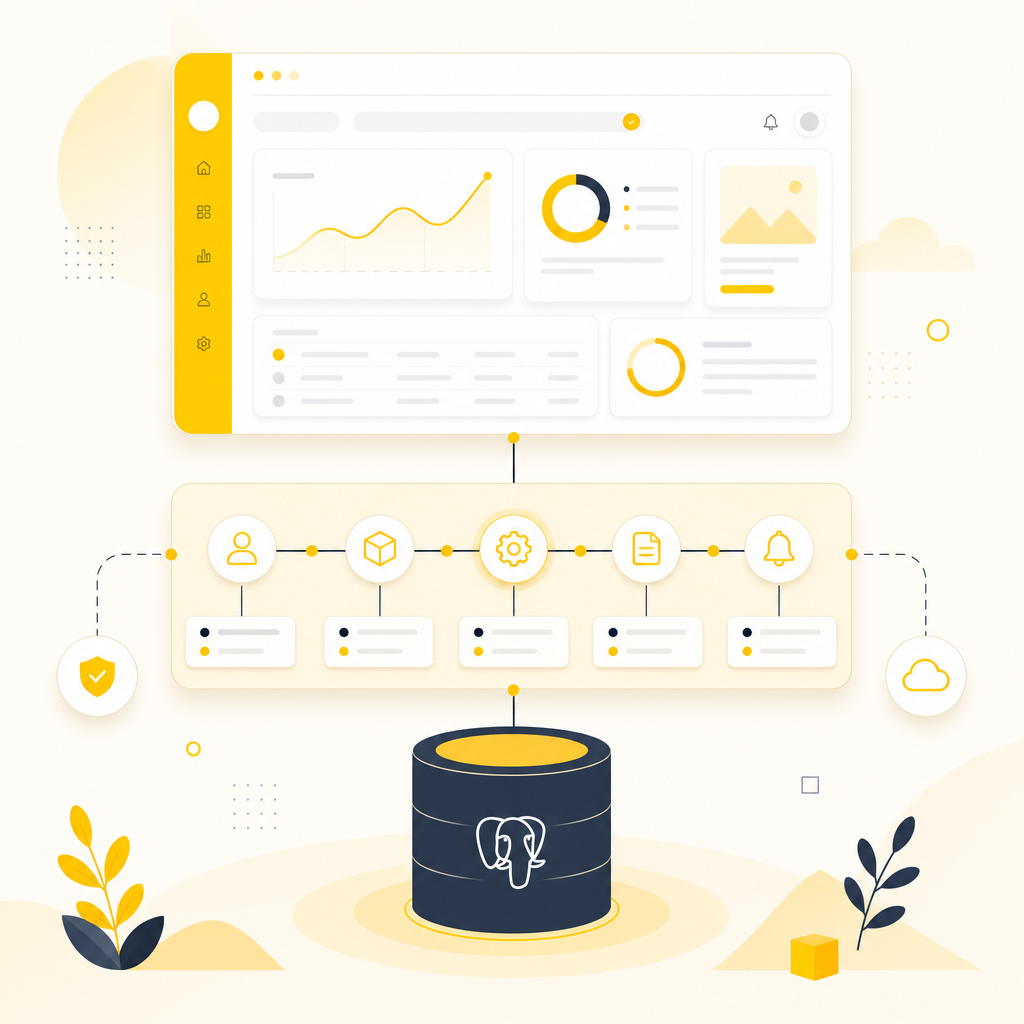
A practical MVP architecture for SaaS or a software web development product typically follows a predictable pattern:
Common MVP goals:
Core backend MVP responsibilities:
Postgres acts as your system of record for product data and user activity. A well-designed database layer enables:
Many teams search for a free Postgres database option to speed up setup during development. While a “free tier” approach can be helpful, the key is separating development convenience from production reliability.
When evaluating free-tier or starter Postgres options, startup teams should ensure:
Environment separation: don’t mix dev/test data with production expectations
Backup and recovery approach: know how resets and restores work
Performance limits: confirm your MVP workload won’t break your dev/testing flow
Migration path: you should be able to move schemas and data safely later
Security settings: understand access controls and network exposure
Best practice: use your development Postgres to validate schema design, queries, and authentication flows early—then standardize on a production-grade setup when you’re ready to scale.
To keep your MVP stable as adoption grows, design your Postgres layer intentionally.
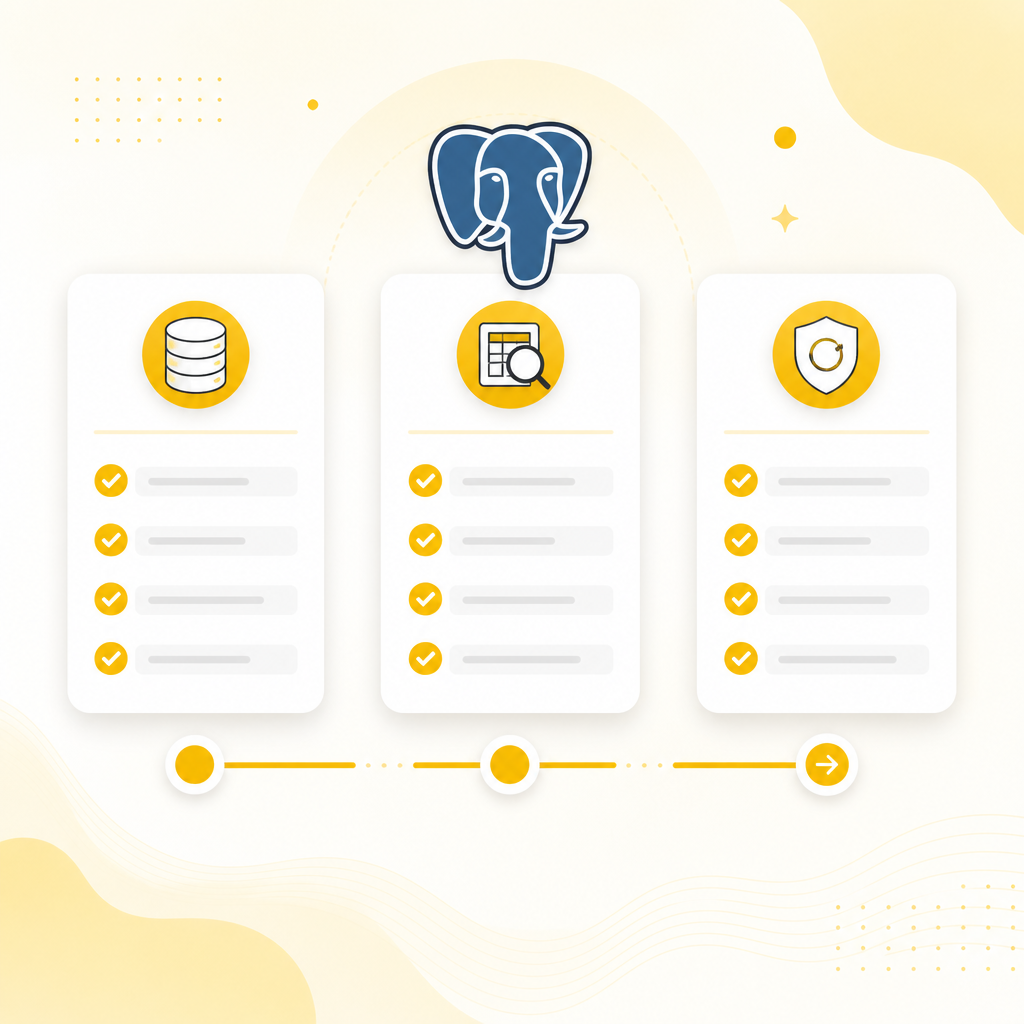
For SaaS MVPs, “it works” isn’t enough—you need a system that can handle growth.
Key software web development practices include:
keeps frontend and backend easier to extend
versioning and predictable response formats
prevent common vulnerabilities
authentication, payments (if applicable), billing status, and onboarding
logs/metrics for debugging and performance tracking
When these are built in early, scaling becomes an iteration problem—not a rewrite.
Many startups want to automate internal workflows or add AI-assisted features. The best approach is to integrate automation progressively:
This lets you launch an MVP that feels modern and efficient—without delaying the core product.

When comparing full stack development support for your startup, focus on evidence of execution, not just tools.
Look for a team that can:
Build custom-coded web apps and SaaS platforms (not template-only)
Handle end-to-end scope (UI + backend + Postgres + deployment)
Implement API integrations cleanly
Support growth with scalable architecture
Communicate clearly with startup teams (iterative delivery, transparent progress)
For teams like Shakir Ansari – Full Stack Developer & AI Automation Solutions, the goal is to build reliable digital systems that support product growth—web applications, SaaS platforms, API integrations, and automation—based on your MVP needs.
For many startups, yes—full stack development reduces handoff gaps, keeps architecture consistent, and speeds up iteration across frontend, APIs, and Postgres.
Start with the entities you must run the core workflow (e.g., users, organizations, and the main product records). Design schema migrations early so you can evolve safely as features expand.
It usually refers to starter/free-tier Postgres options for development or testing. The important part is using it safely for non-production needs and planning a clean migration to production-grade infrastructure.
Yes. You can design multi-tenant logic, authentication, roles/permissions, subscription models (if needed), and dashboard UX early—then extend them as traction grows.
Not always. Many startups add AI automation after the core workflow is validated. A good approach is to integrate automation step-by-step where it reduces manual effort and improves throughput.
API integrations are typically implemented in the backend layer first (so the frontend stays clean), then exposed to your UI through reliable endpoints and data models.
For startups launching digital products, full stack development is a practical path to an MVP that’s fast to build and easier to scale. By designing your frontend, backend, and Postgres database together—and planning for migrations, performance, and integrations—you set your SaaS or software web development product up for sustainable growth.
If you’re aiming to launch a scalable MVP (and later automate workflows with AI and integrations), exploring a full-stack build process can help you move from idea to production with fewer architecture surprises.
Learn how Shakir Ansari – Full Stack Developer & AI Automation Solutions can build your MVP as a complete, startup-ready product.
Review how custom SaaS platforms and web applications are structured for scalability.
See how your database, APIs, and third-party tools can work together reliably.