Inventory Management (Accurate Stock Across Locations)
- SKU and product catalogs
- Stock levels by warehouse/location
- Stock movement tracking (receipts, transfers, adjustments, returns)
- Reorder points and low-stock alerts (automation-ready logic)

SHAKIR ANSARI
Retailers, wholesalers, distributors, and product companies don’t just need “software”—they need a reliable system that controls inventory accuracy, streamlines order processing, and supports supplier workflows. Generic templates often fail when SKUs multiply, fulfillment becomes complex, and teams need automation across sales, warehouse, and purchasing.
With full-stack development, you can create an enterprise inventory and order platform that fits your operations—front-end user experiences for staff and partners, back-end logic for real-time stock handling, and APIs that connect ERPs, CRMs, shipping tools, payments, and supplier systems.
This is exactly the kind of enterprise solutions work that transforms manual processes into an integrated digital system your business can scale.
Many growing businesses start with a website, a spreadsheet, or an off-the-shelf inventory tool. Over time, these approaches create bottlenecks:
A custom-built system addresses these issues by designing the entire workflow around your business—not around a generic template.
Full-stack development means one end-to-end team builds both what users see and what your system runs behind the scenes. For inventory and order systems, that matters because accuracy and speed depend on the connection between front-end operations and back-end data logic.
A complete inventory/order solution typically includes:
When these layers are built together, your system can behave like a unified platform rather than disconnected tools.

If your goal is to manage inventory and orders at enterprise scale, your system should support key modules such as:
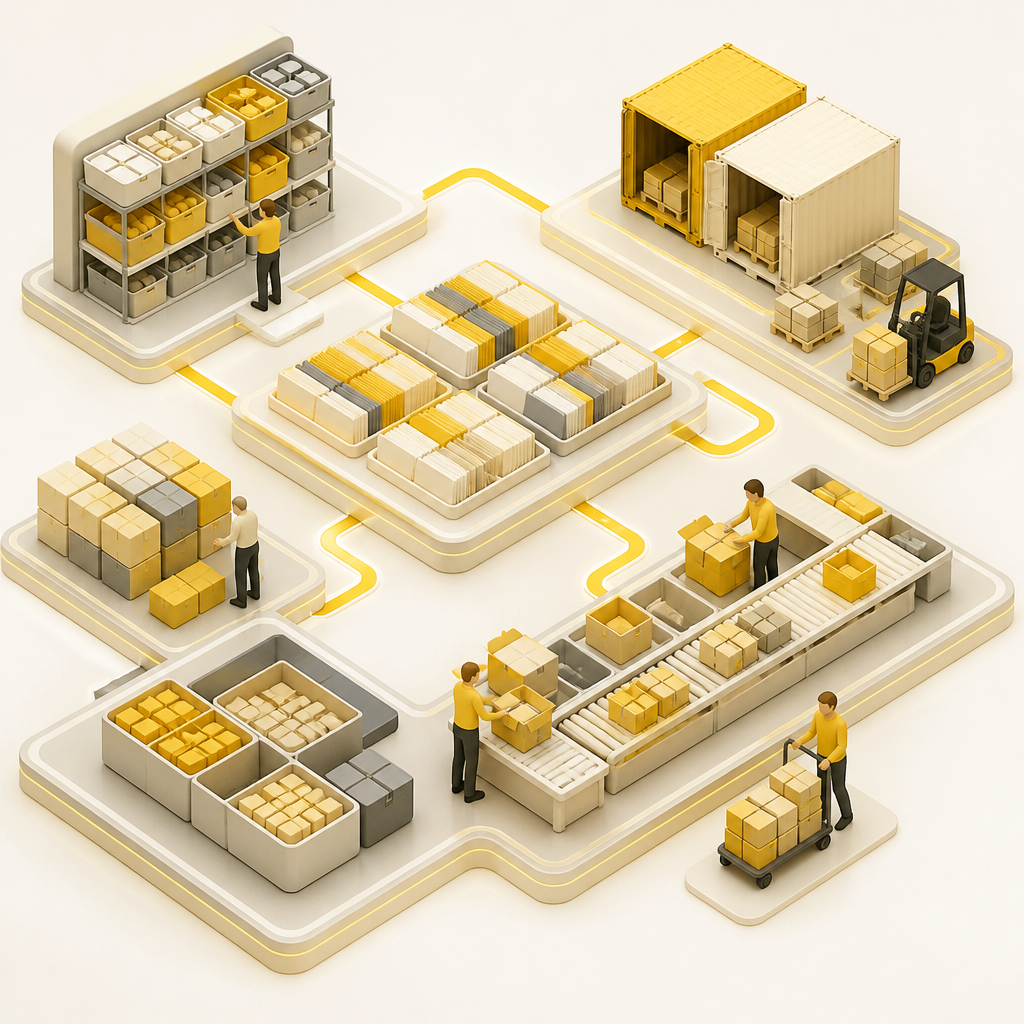
A major advantage of custom enterprise solutions is the ability to automate what your teams do repeatedly—without losing control or auditability.
Examples of automation logic include:
A full-stack approach helps ensure automation is applied consistently from the UI actions to back-end transactions.

Inventory and order systems rarely live alone. They must connect to the tools your business already uses.
With a full-stack platform built around APIs, you can integrate:
APIs make integrations dependable—so inventory and order data stays consistent across systems.
When inventory/order systems are built by separate vendors—or assembled from unrelated tools—handoffs often create gaps:
A single full-stack delivery approach helps align:
Operations teams need dashboards that answer questions immediately, such as:
A custom dashboard experience—paired with strong permissions and backend reporting—lets teams act faster and reduce operational risk.
Enterprise inventory and order systems face high data accuracy requirements and frequent updates. Your platform should be built for:
A full-stack team can support business needs beyond a single inventory tool, including:
These solutions are designed to replace manual steps and reduce reliance on disconnected tools.
You may be ready to upgrade when you notice:
A custom platform built with full-stack development helps you regain control and scale operations with confidence.
If you’re exploring enterprise solutions for inventory and order systems, the next step is to map your current workflow and identify where automation and integrations will deliver the most impact.
Explore Full Stack Development to build a tailored platform that includes inventory logic, order states, dashboards, admin panels, APIs, and automation-ready workflows—so your teams can operate faster and with fewer errors.