SHAKIR ANSARI

Generative AI Automation for Restaurants

Restaurants and food service teams handle the same requests every day: booking tables, answering customer messages, taking catering inquiries, following up on orders, collecting feedback, and reporting what happened. When these tasks stay manual, response times slip and staff spend more time on admin than hospitality.

Generative AI automation changes that. Instead of replacing your systems—or your people—it adds an AI layer that can understand requests in natural language, generate helpful responses, and route actions into your existing workflow.

This pillar page breaks down practical restaurant use cases and shows what we do to automate them with custom AI solutions.

What Generative AI Automation Means for Food Service

Generative AI can interpret customer questions (and customer intent), then generate outcomes such as:

  • a confirmation message for a reservation request
  • an answer to an order inquiry or menu question
  • a structured summary of a catering request
  • a draft follow-up email after feedback is submitted
  • a daily operational report in plain language

When paired with integrations and workflows, it becomes an automation engine, not just a chatbot.

Why Restaurants Are Adopting Automation (Job-Killer vs. Job-Transformer)

Industry conversations often focus on whether automation “takes jobs.” In practice, the most successful implementations do something different:

  • Reduce repetitive workload (message answering, intake forms, repetitive follow-ups)
  • Speed up response times during peak hours
  • Standardize answers for FAQs, policies, and allergy-related questions (with guardrails)
  • Let staff focus on guests, not ticket triage

The goal is transformation: your team handles exceptions and high-touch interactions, while AI handles the routine.

What We Do: Custom AI Automation for Restaurant Workflows

Shakir Ansari – Full Stack Developer & AI Automation Solutions builds custom-coded automation systems for restaurants that want to connect AI to the tools they already use.

Our approach for restaurant automation typically includes:

  • AI chat/agent experiences for reservations, messaging, and order inquiries
  • Workflow automation for lead handling, catering requests, and follow-ups
  • CRM and messaging updates so the right team gets the right info
  • API integrations to connect reservations, ordering, forms, and reporting tools
  • Feedback collection + analysis workflows with routed next steps
  • Reporting automation that summarizes daily activity and flags issues
  • Human handoff (escalation) for cases that require staff action

The result: smarter workflows that work with your existing setup—not around it.

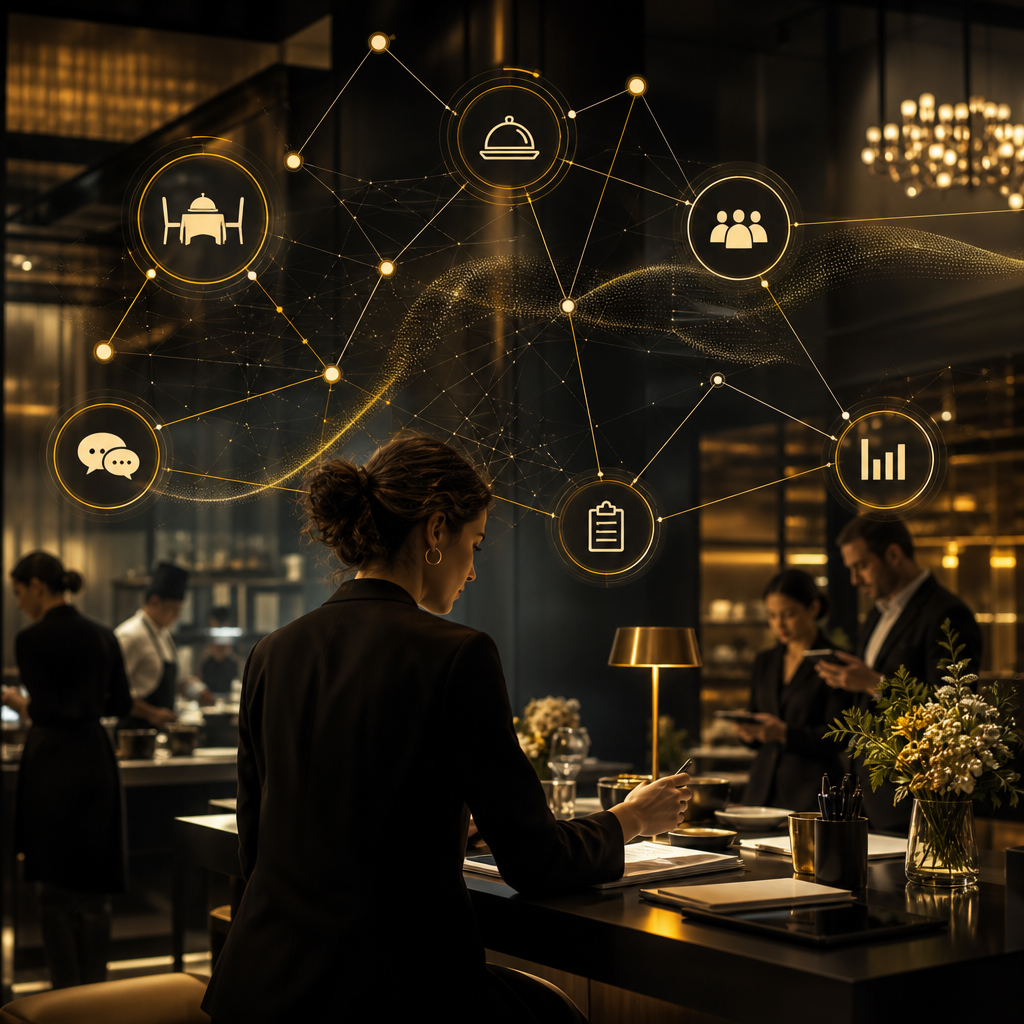
A premium editorial restaurant operations scene with abstract connected workflow nodes representing reservations, messaging, catering intake, CRM updates, feedback routing, and reporting in warm gold and deep neutral tones.

Restaurant Use Cases We Automate with Generative AI

Below are common restaurant scenarios where generative AI + automation can remove daily manual work.

1) Reservations, Waitlists, and Confirmation Messages

Automate table booking and message handling such as:

  • “I want a table for 4 at 7:30”
  • “Can I change my reservation?”
  • “Are you open for brunch on Saturday?”
  • confirmation and cancellation messages with correct details

Why it matters: customers get responses immediately, and staff spend less time coordinating scheduling.

2) Customer Messages and Order Inquiries (In Natural Language)

Use generative AI to handle common inbound questions:

  • order status and estimated timing (based on your internal updates)
  • menu questions (ingredients, common allergens—implemented with your approved data)
  • special requests intake (e.g., seating preferences, accessibility needs)
  • policy questions (hours, pickup rules, cancellations)

Human handoff: when an inquiry requires a manager or live resolution, the AI can escalate with the customer’s context attached.

3) Catering Requests and Lead Handling

Catering inquiries often come through web forms, Instagram DMs, or email. Automation can:

  • extract structured details from a message (date, headcount, dietary needs)
  • create a lead record
  • send an acknowledgement message
  • route it to the right person
  • trigger follow-up scheduling

Outcome: fewer missed inquiries and cleaner handoffs to your catering coordinator.

4) Feedback Collection and Sentiment Summaries

Instead of treating feedback as “another inbox,” automation can:

  • collect feedback after visits or orders
  • summarize what happened in a manager-friendly format
  • identify themes (service speed, food quality, wait times)
  • draft a response or next-step recommendation
  • route urgent cases to the right workflow

Outcome: faster review cycles and consistent response quality.

5) Promotions and Announcements (Without Manual Blast Work)

Promotions often fail when communication is too generic or mistimed. With AI workflows, you can:

  • confirm eligibility or preference details before sending messages
  • automate “announcement” messaging for events or seasonal menus
  • personalize communications using structured customer info
  • reduce repetitive manual tasks across campaigns

Key: promotions should still follow your brand voice and guardrails.

6) Reporting and Admin Automation

Daily reporting shouldn’t require hours of copy/paste. Generative AI can help generate:

  • end-of-day summaries (volume, common request types, feedback highlights)
  • intake summaries for catering leads
  • support and inquiry trend summaries
  • “what changed” narratives for operations teams
  • lightweight dashboards supported by automated data collection

Outcome: faster visibility for owners and managers.

A premium editorial wide scene with an abstract translucent pipeline illustrating capture, intent understanding, response generation, action execution, escalation, and result recording in warm gold and cream tones.

How It Works: Automating Without Disrupting Your Existing Systems

A practical restaurant AI automation setup usually follows this pattern:

  1. Capture the request (chat, form, email, or messaging)
  2. Understand intent (what the customer wants and what details are missing)
  3. Generate the response using your approved policies/menus (with guardrails)
  4. Perform an action via workflow + integrations (create reservation, log inquiry, update CRM, notify staff)
  5. Escalate when needed (handoff with full context)
  6. Record results for reporting and continuous improvement

This is how you get the speed of automation while keeping your operations reliable.

What to Prepare Before You Automate (So It Actually Works)

To make generative AI automation effective, restaurants typically prepare:

  • Top customer questions (hours, policies, menu details, reservation rules)
  • Approved response content (so answers stay accurate)
  • Your workflow routes (who handles catering, who confirms reservations, escalation rules)
  • Integration targets (reservations/ordering tools, contact forms, CRM, ticketing)
  • Brand voice guidelines (tone, phrasing, and “do/don’t” language)
  • Multilingual needs (if you serve diverse guests)

Common Considerations for Restaurant AI Automation

Accuracy and safety

We implement guardrails and escalation so customers get correct info and unresolved cases reach staff.

Peak-hour performance

Automation reduces queue time for routine requests and keeps response speed consistent.

Staff adoption

The best systems reduce interruptions by routing only what needs human attention.

Privacy and data handling

Integrations and message handling should align with your data practices and operational requirements.

A premium editorial wide restaurant setting with abstract translucent light layers symbolizing accuracy and safety, consistent peak-hour performance, smoother staff adoption, and privacy-conscious data handling in warm gold and deep neutral colors.

Resources for Restaurant AI Automation

If you’re planning Generative AI automation, here are practical resources you can use to map your rollout:

  • Restaurant AI Automation Use-Case Checklist (pick the first 3 workflows to automate)
  • Conversation Flow Starter Kit (reservation, order inquiry, catering intake)
  • Integration Map Template (what connects to what via APIs)
  • Feedback Workflow Worksheet (summaries, routing rules, response drafts)
  • Reporting Requirements Outline (what owners/managers need daily/weekly)

FAQ

Can generative AI handle reservation requests in a restaurant setting?

Yes. With workflow logic and system integration, AI can collect booking details, confirm availability, and trigger reservation actions—plus send the right confirmation and change/cancellation messages.

Will automation replace our staff?

The goal is to reduce repetitive work and speed up responses. Staff typically handles exceptions, complex cases, and guest-facing moments that require human judgment.

How do we avoid incorrect answers to menu or policy questions?

We use approved content sources, guardrails, and escalation rules so the AI responds within the boundaries you set (and routes uncertain cases to staff).

What types of messages can be automated?

Common channels include website chat, contact forms, email inquiries, and messaging workflows—depending on how your systems are connected.

Can AI help with catering requests and lead follow-ups?

Yes. AI can extract structured details from inquiries, create lead records, send acknowledgements, and trigger follow-up workflows with routing to the right team.

What kind of reporting can restaurants automate?

You can automate daily and weekly summaries such as request trends, feedback themes, lead counts, and operational highlights—based on the data your workflows capture.

Conclusion

Generative AI automation helps restaurants run faster and more consistently by removing repetitive daily tasks like reservations coordination, customer message handling, catering intake, feedback follow-up, promotions messaging, and reporting.

If you want custom AI automation solutions that integrate with your existing systems, explore AI Automation and learn how Shakir Ansari and his RTP team can design workflows tailored to your restaurant operations.