
SHAKIR ANSARI

Local SEO for Restaurants, Cafes & Hospitality

Local SEO is how restaurants, cafes, and hospitality businesses get found by nearby customers searching for things like “best brunch near me,” “coffee shop open now,” or “Italian restaurant near [neighborhood].” A strong Local SEO strategy connects three things: your online presence, the way search engines understand your website, and how easily customers can discover and choose you.

This pillar page covers a practical Local SEO approach designed for hospitality—where location signals, menu visibility, and reputation (reviews) directly impact foot traffic and reservations.

Why Local SEO Matters for Hospitality Businesses

For restaurants, cafes, and hospitality brands, most demand is local and intent-driven. When Local SEO is working, customers don’t just find your business—they find the right offering at the right time and location.

Local SEO helps you:

  • Earn higher local rankings in Google Maps and local pack results
  • Increase menu discovery through dedicated pages and optimized content
  • Improve location-based visibility (neighborhood and area targeting)
  • Attract more qualified visits from people ready to dine, book, or order
  • Build trust with reviews and star ratings that influence conversions

The Core Components of a Winning Local SEO Strategy

A hospitality Local SEO plan typically blends four pillars:

  1. 1

    Positioning & Development (how your digital presence is built)
  2. 2

    Website & Landing Pages (how customers and search engines experience you)
  3. 3

    Local signals (Google Business Profile, citations, consistency)
  4. 4

    Content + reputation (menus, services, local topics, reviews)

When these components work together, your visibility becomes more predictable—and easier to scale as you add locations, offerings, or seasonal promotions.

Website & Landing Pages: The Foundation for Local Discovery

Your homepage alone usually can’t rank for every high-intent local search. Hospitality businesses often need a structure that supports the queries customers are actually making.
What to build (or improve) for Local SEO

1) Location-focused pages
  • Create clear pages that match real search intent (e.g., neighborhoods served, notable areas, or branch locations).
  • Keep business details consistent: address, phone, hours, parking info, and “how to get there” context.
2) Menu and offering pages
  • Turn menu categories into indexable pages (e.g., “Breakfast,” “Brunch,” “Cocktails,” “Desserts,” “Vegan Options”).
  • Add locally relevant details where appropriate (popular items, seasonal availability cues, or nearby event tie-ins).
3) Service/intent pages
  • Pages for “Reservations,” “Private Dining,” “Catering,” “Event Hosting,” or “Order Ahead” help capture different conversion journeys.
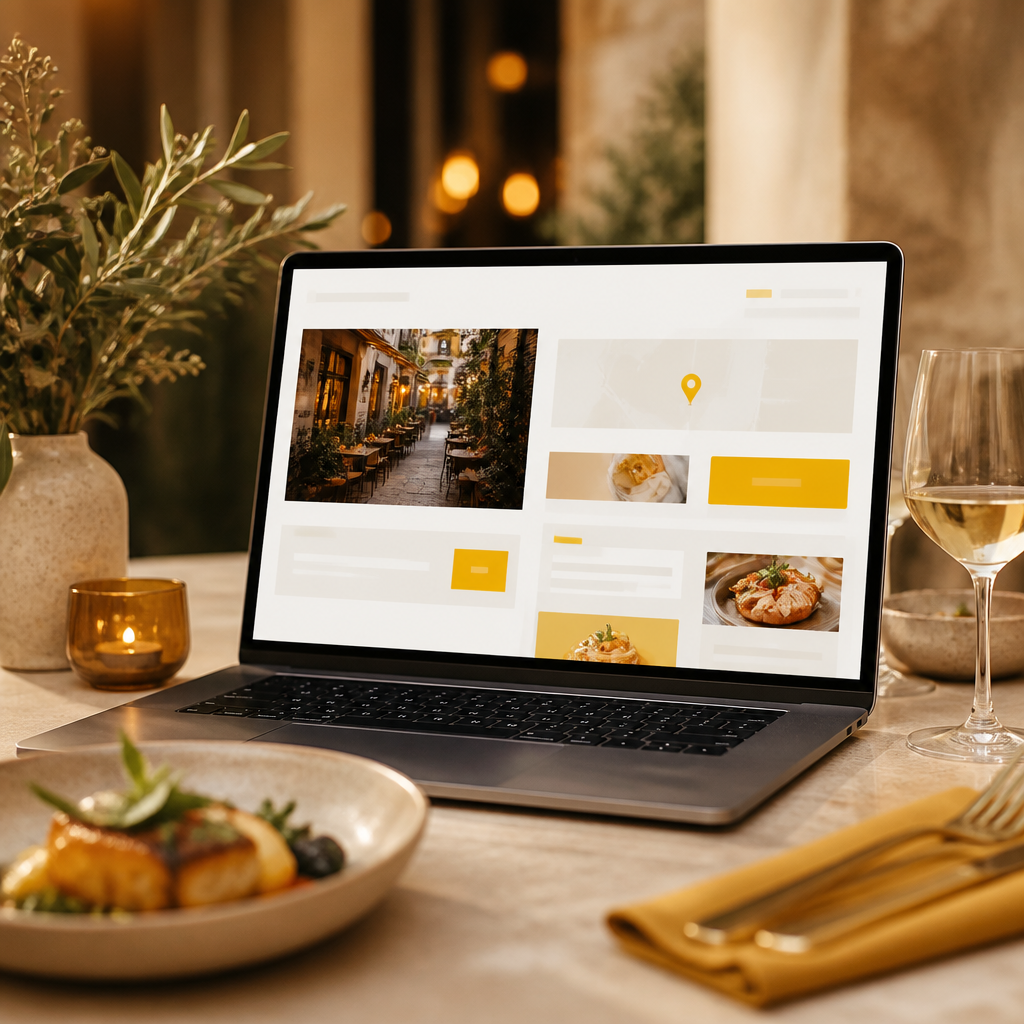
A premium laptop-and-table scene with blurred website layout blocks representing location pages and menu offerings in warm gold and near-white tones.

Positioning & Development: make your pages work harder

“Positioning & Development” means the website is built to support how customers search and decide—fast, easy to navigate, and structured for search engines.

Key development considerations:
  • Clear internal linking between location pages, menu pages, and booking/order CTAs
  • Clean URL structure and crawlable site architecture
  • Performance improvements (Core Web Vitals, image optimization, caching)
  • Technical setups that reduce friction for both users and search bots
A golden-hour street scene with an abstract location pin and blurred smartphone interface suggesting local business profile signals in brand gold.

Local SEO on Google: What to Optimize

For restaurants, cafes, and hospitality businesses, Google Business Profile (GBP) is a major driver of local visibility.

Focus areas that move rankings and clicks

  • Complete and accurate business information
    • NAP consistency (name, address, phone) across your site and listings
    • Correct hours, service areas, and categories
  • Regularly updated content
    • Menu links, posts, seasonal updates, and relevant attributes
  • Photos that match customer intent
    • Exterior, interior, dishes, team, and ambiance
  • Review strategy
    • Respond to reviews thoughtfully (not template responses)
    • Encourage review volume and consistency over time

Effective Local SEO starts with choosing keywords that align with local intent and high conversion behavior.

Common hospitality keyword themes

  • “Near me” and neighborhood modifiers
  • Cuisines and specialties (e.g., “tacos,” “ramen,” “brunch”)
  • Intent qualifiers
    “open now,” “late night,” “family-friendly,” “no reservations,” “outdoor seating”
  • Menu discovery terms (e.g., “vegan options,” “gluten-free desserts,” “signature cocktails”)
  • Booking and order intent (e.g., “reserve,” “private dining,” “catering,” “order online”)

How to map keywords to the right pages

  • Location + cuisine → location pages or location + menu hub pages
  • Menu topic + local intent → menu/offer pages optimized for discovery
  • High intent actions (“reserve/order”) → conversion pages with clear CTAs

Technical SEO for Local Rankings (Without the Guesswork)

Technical SEO ensures your website can be crawled, understood, and served quickly. For hospitality sites, it also affects whether location and menu pages index properly.

What to check and fix

  • Indexing and crawlability
    • Ensure important location/menu pages are not blocked
  • Structured data
    • Use schema to clarify business details and improve search understanding
  • Site speed and mobile performance
    • Mobile usability is critical for “near me” searches
  • Duplicate content prevention
    • Avoid near-identical location pages with insufficient differentiation
  • Internal linking
    • Strengthen routes from key pages (home → locations → menu offerings → booking/order)
A dark-neutral editorial scene with a laptop and abstract connected-node diagram suggesting crawlability, schema structure, and internal linking in brand gold accents.

Reviews, Reputation, and Conversion: The Hospitality Advantage

Reviews are more than reputation—they’re conversion fuel. Local SEO benefits when reviews and ratings influence click-through and customer confidence.

Reputation practices that support Local SEO

  • Create a consistent review request process tied to customer experience
  • Respond to both positive and negative feedback to demonstrate care
  • Highlight key hospitality themes customers care about:
    • service quality, cleanliness, wait times, ambiance, menu accuracy

Tip: Ensure your website reflects review value with visible ratings, testimonials (where appropriate), and pages that connect to ordering/reservations.

Content That Ranks in Local Search (Menus, Pages, and Local Relevance)

For hospitality businesses, content should do more than “rank”—it should help customers choose you.

Content types that fit Local SEO for restaurants and cafes

  • Menu pages built for discovery (not just PDF downloads)
  • Seasonal and event-focused pages
  • Neighborhood and community pages
  • FAQ pages tied to local intent (parking, accessibility, dietary needs)
  • Local landing pages that connect customers to the right experience

A practical content approach also supports your Website & Landing Pages strategy by keeping your site organized around what customers want to find.

How Shakir Ansari (RTP Team) Connects SEO With Positioning & Development

When Local SEO requires more than edits—like landing page structure, performance improvements, integration, or scalable page templates—development becomes part of the SEO solution.

Shakir Ansari – Full Stack Developer & AI Automation Solutions and the RTP team can help align:

  • Website & Landing Pages architecture for better crawl and conversion
  • Positioning & Development through technical improvements that support local discovery
  • API integrations and automation that keep business data consistent and updated
  • Scalable builds for multi-location hospitality businesses and evolving menu structures

Key Metrics to Track Local SEO Success

To know your Local SEO is working, measure performance across discovery, engagement, and conversions.

Common metrics:

  • Local pack visibility (impressions and clicks)
  • Map views and direction requests
  • Organic traffic to location and menu pages
  • Rankings for location + cuisine/specialty keywords
  • Click-through rate (CTR) from search results
  • Review growth and star rating trends
  • Conversion actions (calls, reservations, order submissions, form fills)

FAQs

1) How long does Local SEO take for restaurants and cafes to work?

Local SEO timelines vary by competition, website readiness, and how consistently local signals are strengthened (GBP, reviews, and content). Many businesses see early traction from technical fixes and page improvements, with stronger ranking growth over time.

2) Do I need separate Website & Landing Pages for each location?

If you have multiple locations—or serve distinct neighborhoods—separate location-focused pages are usually the best way to target Local SEO properly, improve relevance, and reduce confusion for both users and search engines.

3) What’s more important: reviews or website optimization?

Both matter. Reviews influence trust and click behavior, while website optimization affects whether your pages rank and convert. The best results come when reviews, GBP, and Website & Landing Pages are aligned.

4) Can SEO help with menu discovery?

Yes. Menu pages and offer pages can be built and optimized for discovery so customers can find specific cuisines, dietary options, and signature items—then take the next step (order/reserve/call).

5) What does “Positioning & Development” mean for SEO services?

It means building and improving the website in a way that supports the search journey: strong page structure, fast performance, clean linking, and conversion-focused layouts—so your Local SEO strategy has a reliable platform to perform from.

Conclusion: Turn Local Search Into More Visits

Local SEO for restaurants, cafes, and hospitality businesses is about being discoverable *near the customer* and easy to choose once they land on your site or Google profile. By combining Local SEO best practices with smart Website & Landing Pages and Positioning & Development, you can improve menu discovery, strengthen local rankings, earn more reviews, and convert searchers into real-world visits.

Call to Action

Explore SEO Services to build a Local SEO plan focused on Website & Landing Pages, technical setup, and measurable growth for hospitality.