
SHAKIR ANSARI

Multilingual Website & Web App Development for New Markets

Expanding into a new region or customer segment isn’t just a marketing shift—it’s a digital transformation project. Your website often becomes the first “operating system” for new-market growth: it needs to build trust quickly, communicate clearly in local languages, capture leads effectively, and connect to the systems your business already uses.

This pillar page explains how custom website development (including Web Apps, automation, and API integrations) helps companies launch faster and scale confidently—without relying on template limitations or one-size-fits-all localization.

Why multilingual websites and Web Apps matter for market expansion

When you enter a new market, users compare you against local expectations. A high-performing website and the right web app functionality help you:

  • Increase trust with localized messaging, correct language, and region-appropriate layouts
  • Improve conversions with landing pages designed for new audiences and offers (without changing your core brand quality)
  • Reduce operational friction by connecting your website to CRMs, payment systems, and internal workflows
  • Scale efficiently using a flexible, maintainable digital foundation rather than rebuilding from scratch

In short: a professionally developed website becomes a business asset for growth—not just an online brochure.

Template-based vs. custom-built: what changes when you need localization

Many businesses start with template-based websites because they’re fast to launch. But market expansion usually brings requirements that templates struggle to handle cleanly, such as:

  • True multilingual structure (consistent navigation, localized pages, and SEO-friendly URL strategy)
  • Localized content workflows for different regions and teams
  • Role-based experiences (different journeys for customers, partners, or internal staff)
  • Custom integrations with third-party tools and internal systems
  • Web app features like portals, dashboards, dynamic forms, booking flows, or account experiences

A custom approach supports long-term scalability—especially when your expansion plan includes new lead flows, new product lines, or new operational processes.
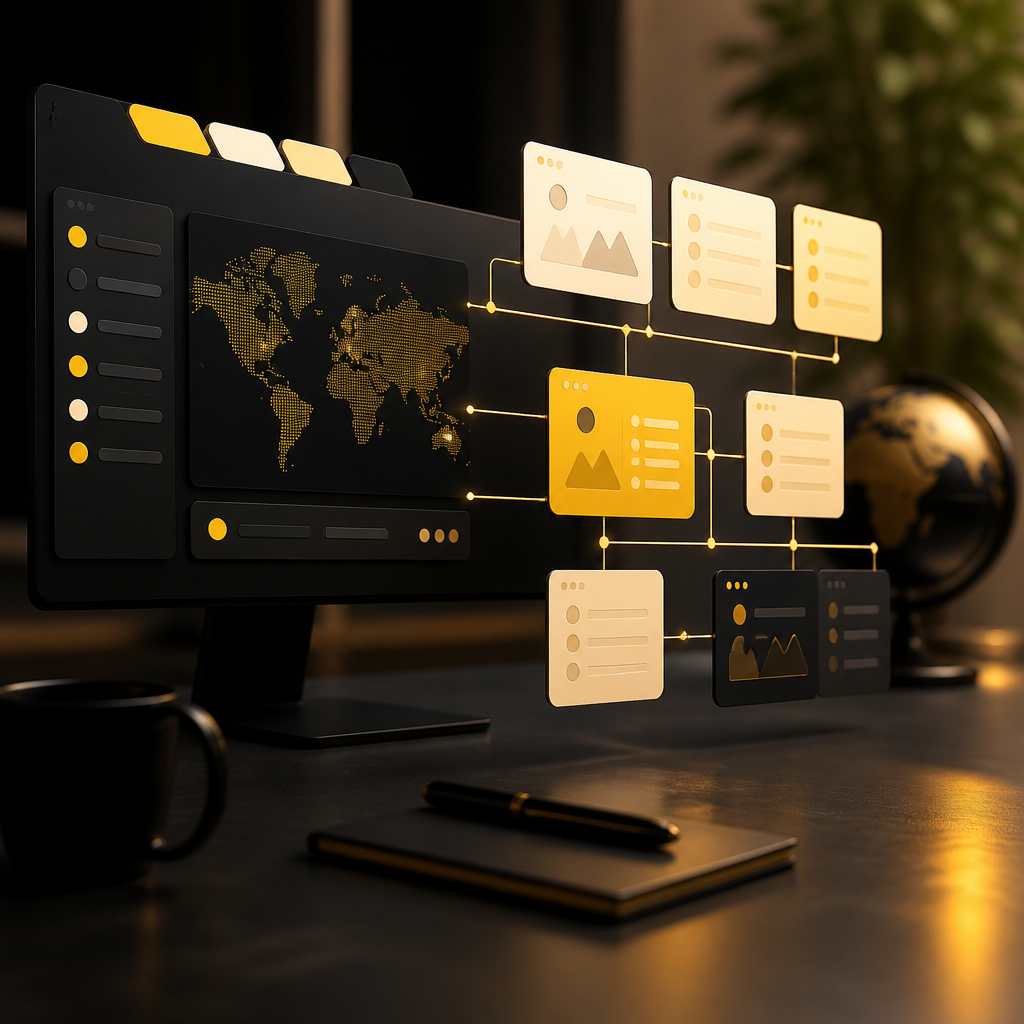
Abstract layered web interface panels connected by glowing lines to represent multilingual localization structure and workflows without readable text.

Digital transformation checklist for website + Web Apps in new markets

To align your website with digital transformation, your build should cover more than design. It should enable how your business operates in the new region.

1) Information architecture for each target market

Plan how users move through your site by region and language:

  • Local landing pages by audience intent
  • Clear service/product pages tailored to what local customers search for
  • Consistent navigation and page hierarchy across languages

2) Multilingual UX that feels native

Multilingual support isn’t just translation. It should include:

  • Language-appropriate formatting (dates, currencies, labels)
  • Correct page experiences per market
  • Smooth switching between languages without breaking user journeys

3) Web app functionality (when your website needs to do more)

Some markets require interactive capabilities, such as:

  • Customer forms that trigger workflows
  • Lead qualification experiences
  • Portals for accounts or partners
  • e-commerce flows or service request flows
  • Dashboards and internal tools (where relevant)

4) API integrations that connect your systems

For reliable lead capture and automation, your website or Web Apps should integrate with:

  • CRMs (so leads don’t go missing)
  • Payment systems (for regional purchase flows)
  • Marketing and analytics tools
  • Third-party platforms your team already uses

5) Conversion-focused performance and SEO structure

Your localized site should be built to perform:

  • Fast, responsive pages for all devices
  • Clean, SEO-friendly structure across languages
  • Landing pages designed to guide visitors to actions
Glowing interconnected modular components representing scalable web app and API integration services without any readable text.

Website development services built for new-market growth

Shakir Ansari – Full Stack Developer & AI Automation Solutions and the RTP team support businesses that need reliable, scalable website foundations for market expansion. Core service areas include:

Custom website development for localized launches

  • Business websites, service websites, and portfolio sites
  • Landing pages designed for new customer segments
  • Custom-coded experiences where templates can’t support your needs

Web Apps that extend your website into a platform

  • Full-stack web app development
  • Dynamic user experiences (portals, forms, dashboards, account flows)
  • Scalable architecture for future market additions

Multilingual and localized content support

  • Structuring localized pages and experiences
  • Maintaining clarity and consistency across languages
  • Building a foundation that supports ongoing content updates

API integrations and third-party connectivity

  • Connecting websites/Web Apps to CRMs, payment systems, and automation tools
  • Integrating external services that support new-market operations

E-commerce and commerce-enabled web experiences

  • Shopify / WooCommerce builds and enhancements
  • Region-ready commerce experiences that connect to your operations

What “scalable digital infrastructure” means for your website

Scalability isn’t only about traffic. For market expansion, scalable infrastructure means:

  • Maintainable builds that allow you to add pages, languages, and features without redesigning everything
  • Clean development structure so future iterations are faster and safer
  • Integration-ready systems so your website can evolve with your tools and workflows
  • A path to automation so repetitive tasks don’t slow new-market momentum

This is where custom-coded development and full-stack planning matter most.

Modular interconnected foundation structures that visually represent maintainable, integration-ready, automation-capable digital infrastructure without readable text.

How RTP approaches custom website development for businesses expanding

When businesses enter new regions, the requirements typically expand beyond “a better website.” The RTP team focuses on building digital systems that support growth and efficiency, including:

  • Reliable, modern website and web app development tailored to market needs
  • Conversion-focused design and structure to help visitors take action
  • Automation-ready workflows that connect leads and requests to the right systems
  • API integrations that reduce manual effort across teams
  • SEO-friendly, performance-first implementation for long-term search visibility

With 10+ years of experience and 1300+ web applications delivered, Shakir Ansari and the RTP team build solutions that support ongoing expansion rather than stopping at launch.

FAQs

1) What’s the difference between a multilingual website and localization?

A multilingual website supports multiple languages, while localization adapts content and UX for a specific market (terminology, formatting, page structure, and user expectations). For expansion, both are usually required.

2) Do we need Web Apps for market expansion, or is a website enough?

A standard website may work for early stages. But if you need interactive workflows—portals, account experiences, lead automation, dynamic service requests, or region-specific user journeys—Web App functionality often becomes necessary.

3) How do API integrations improve lead generation and operations?

API integrations connect your website/Web Apps to CRMs, payment systems, and automation tools. This helps ensure leads are captured correctly, routed to the right place, and processed without manual delays.

4) Will a custom website be easier to scale into more regions later?

Yes. A custom-built foundation is typically easier to expand for additional languages, pages, and features—because the structure and integrations are designed for growth.

5) How does custom development support digital transformation?

Digital transformation requires your website to function as part of your business system. Custom development enables the integrations, workflows, and scalable functionality needed to operate effectively in new markets.

6) Can you build landing pages specifically for new customer segments?

Yes. Landing pages are ideal for segment-focused messaging, region-specific intent, and conversion tracking—especially when you’re testing and refining your market entry strategy.

7) What should we consider before launching a localized website?

Key factors include information architecture, consistent UX across languages, SEO structure, integration requirements (CRM/payment/tools), and how your team will manage updates for each market.

8) Who is this service best for?

It’s best for businesses expanding into new regions, industries, or customer segments that need updated websites, multilingual support, localized content, scalable infrastructure, and web apps that integrate with business operations.

Conclusion: Make your website a growth engine for new markets

Market expansion succeeds when your digital presence supports real operations. With custom website development and the right Web App capabilities, you can launch multilingual experiences, localize content for trust and clarity, and connect your site to the systems that power your business.

If you’re preparing to enter a new region and want a scalable, conversion-focused foundation, explore Website Development to match your market entry goals.

CTAs

  • Explore Website Development for a custom, multilingual-ready foundation built to support growth.
  • Learn about Web Apps & API Integrations to connect your new-market website with your CRM, automation workflows, and third-party tools.