
SHAKIR ANSARITechnical SEO & Migration Support

Website SEO Migration & Technical SEO Services

If you’re moving to a new platform, domain, CMS, or custom system, the biggest risk isn’t just the launch—it’s what happens to your rankings after go-live.

Get migration-ready SEO support before your next launch.

Request a Technical SEO & Migration Audit

1

Technical SEO

Practical, growth-driven technical foundations that help protect your rankings during migration.

2

Search Everywhere Optimization

A migration workflow that broadens where customers discover you—beyond just Google rankings.

Website SEO Migration: Technical SEO That Prevents Traffic Loss

Shakir Ansari and the RTP team help businesses protect and grow organic visibility during website migrations with practical, growth-driven Technical SEO and Search Everywhere Optimization—so you don’t trade better technology for lost traffic.
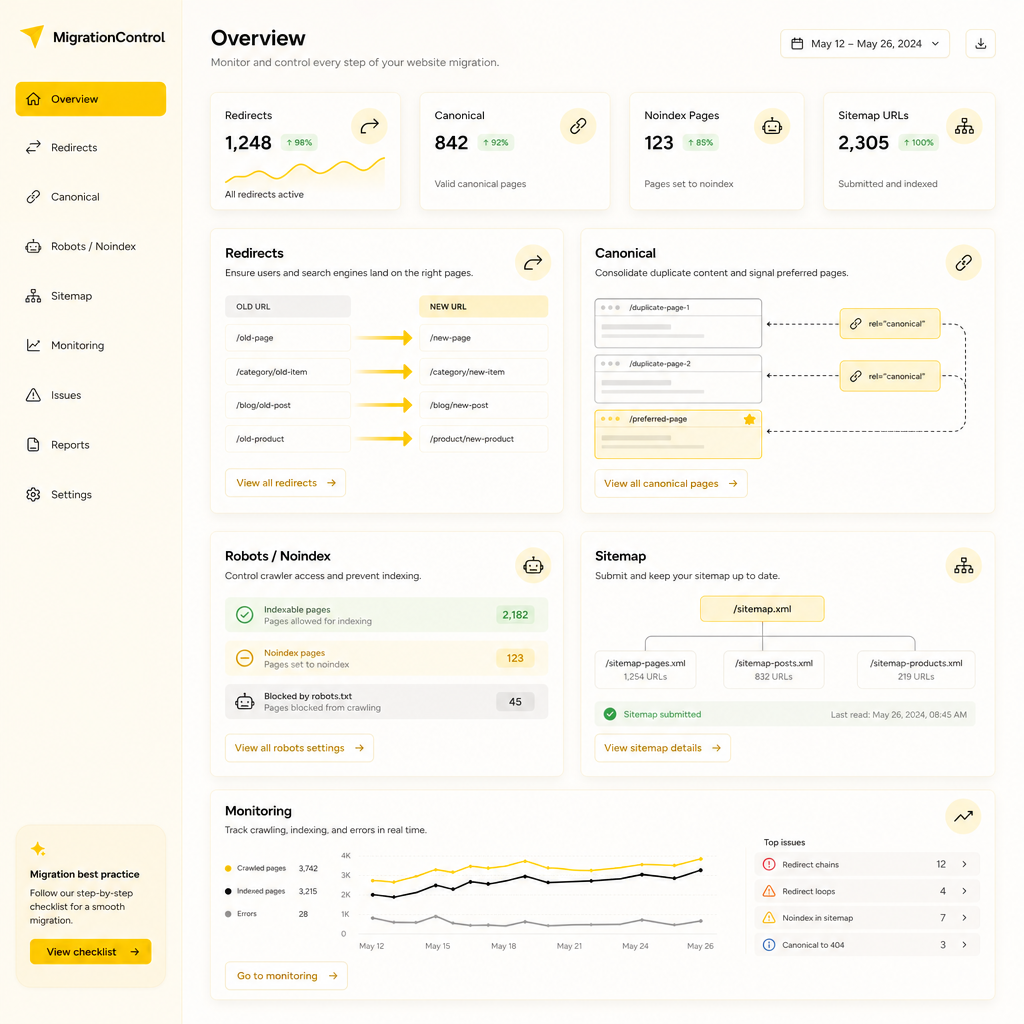
Illustration showing common SEO migration risks like redirects, canonical tags, indexing blocks, sitemaps, and monitoring.

Why Website Migrations Cause SEO Traffic Loss

Most SEO problems after a migration aren’t “mysteries”—they’re predictable execution gaps. Common issues include:

  • Broken or missing redirects (old URLs lose equity)
  • Incorrect canonical tags (Google gets the wrong page)
  • Indexation blocks (robots.txt, meta noindex, staging leaks)
  • Duplicate content from template changes or parameter handling
  • Sitemap errors (wrong URLs, missing pages, stale maps)
  • Internal link loss (navigation and linking structure changes)
  • Performance regressions (Core Web Vitals drop)
  • Tracking breakages (GA4/GSC events stop firing)

When you combine a real development workflow with SEO planning, you can avoid most of these outcomes.

Who This Pillar Page Is For

This is for businesses migrating websites that need SEO migration support because they’re changing one or more of the following:

  • Domain changes (e.g., example.com → newdomain.com)
  • CMS migrations (WordPress ↔ Shopify ↔ custom CMS)
  • Platform redesigns (new theme, new URL structure)
  • Custom builds (Laravel/PHP/React-based systems, SaaS platforms)
  • E-commerce migrations (Shopify/WooCommerce URL & taxonomy changes)
  • New international structure (subfolders/subdomains, hreflang setup)

If your goal is to launch something better without losing Google visibility, you’re in the right place.

Request a Technical SEO & Migration Audit

Tell us what’s changing (domain/CMS/platform, URL structure changes, e-commerce scope, international setup). We’ll help you define the safest migration plan and the post-launch monitoring strategy to protect growth.

Request a Technical SEO & Migration Audit

What Is SEO Migration (and What It Should Include)?

SEO migration is the full set of technical and on-page steps required to keep search performance stable while your website changes.

A strong migration plan typically includes:

  • URL mapping + redirect strategy
  • Indexation rules (robots, canonicals, noindex discipline)
  • Structured data updates (schema types that match your templates)
  • XML + HTML sitemap correctness
  • Internal linking preservation
  • Performance checks (speed, rendering, CWV readiness)
  • Search Console and analytics continuity
  • Monitoring after launch (so issues don’t linger unnoticed)

This pillar page covers the “must-do” technical foundation—then adds Search Everywhere Optimization to broaden where customers discover you.
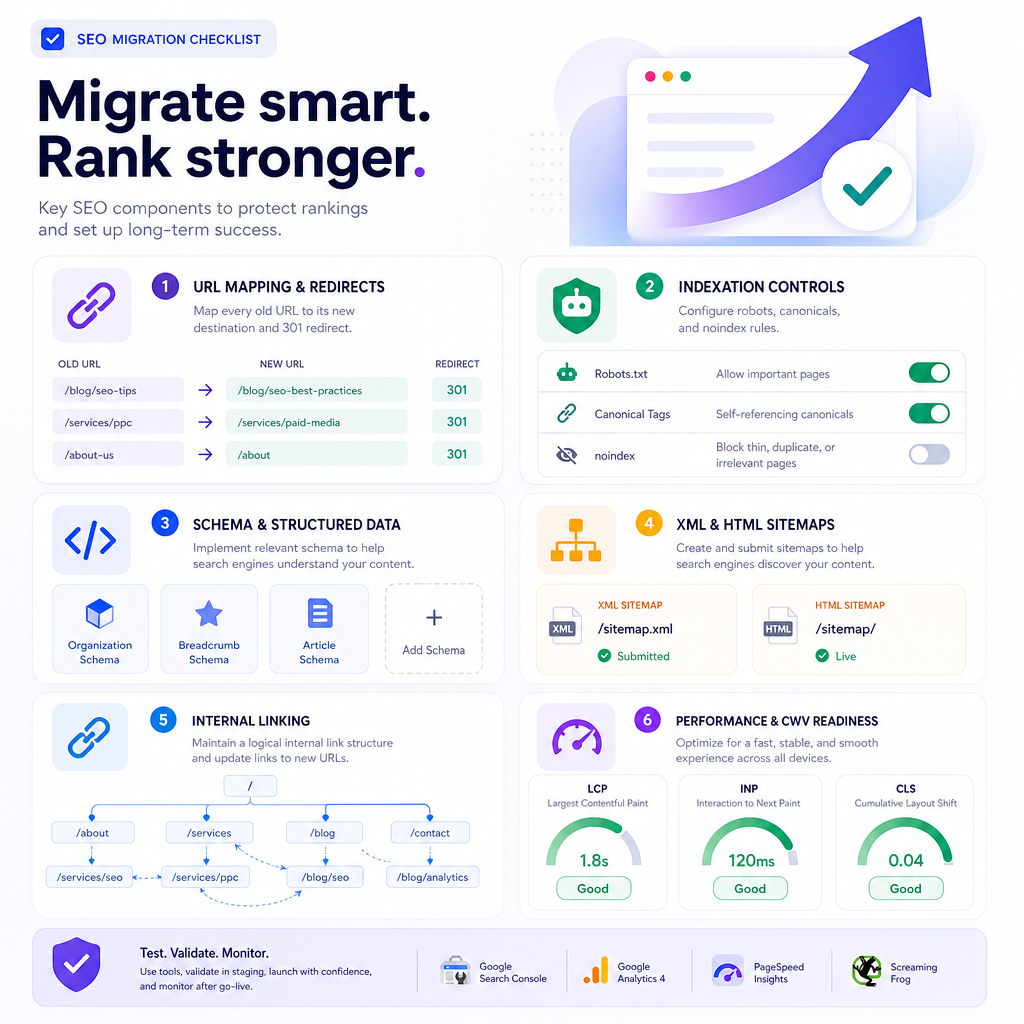
Illustration of an SEO migration checklist including redirects, indexation rules, sitemaps, structured data, and monitoring.

Search Everywhere Optimization (Beyond Just Google Rankings)

Ranking on Google is critical—but customers find brands across many surfaces. During migration, you can strengthen your presence in:

  • Local search (maps, location pages, local intent alignment)
  • Images and rich results (schema + image SEO readiness)
  • Video and content discovery (structured data and publishing consistency)
  • Social and share surfaces (Open Graph and social metadata)
  • Marketplace intent (where applicable to your business model)
  • App and software discovery (if you offer SaaS/mobile apps)

We treat these as part of the same migration workflow—so your new site doesn’t just “survive,” it performs.

That’s Search Everywhere Optimization.

Why Shakir Ansari & the RTP Team Are Built for Migration Success

Many SEO agencies can tell you what to fix. Fewer teams can also implement it cleanly at the code + system level—especially when you’re migrating to a custom system.

Experience that matches real migrations

  • 10+ years of development experience
  • 1300+ web applications developed

Expertise across modern platforms

Expertise across Laravel, PHP, React, WordPress, Shopify, WooCommerce, Squarespace, and custom integrations

Unified SEO + engineering workflow

  • A practical SEO approach aligned with real engineering workflows
  • Support for API integrations, SaaS development, workflow automation, and AI-powered tools

That means your migration isn’t “SEO vs. dev”—it’s one unified plan.
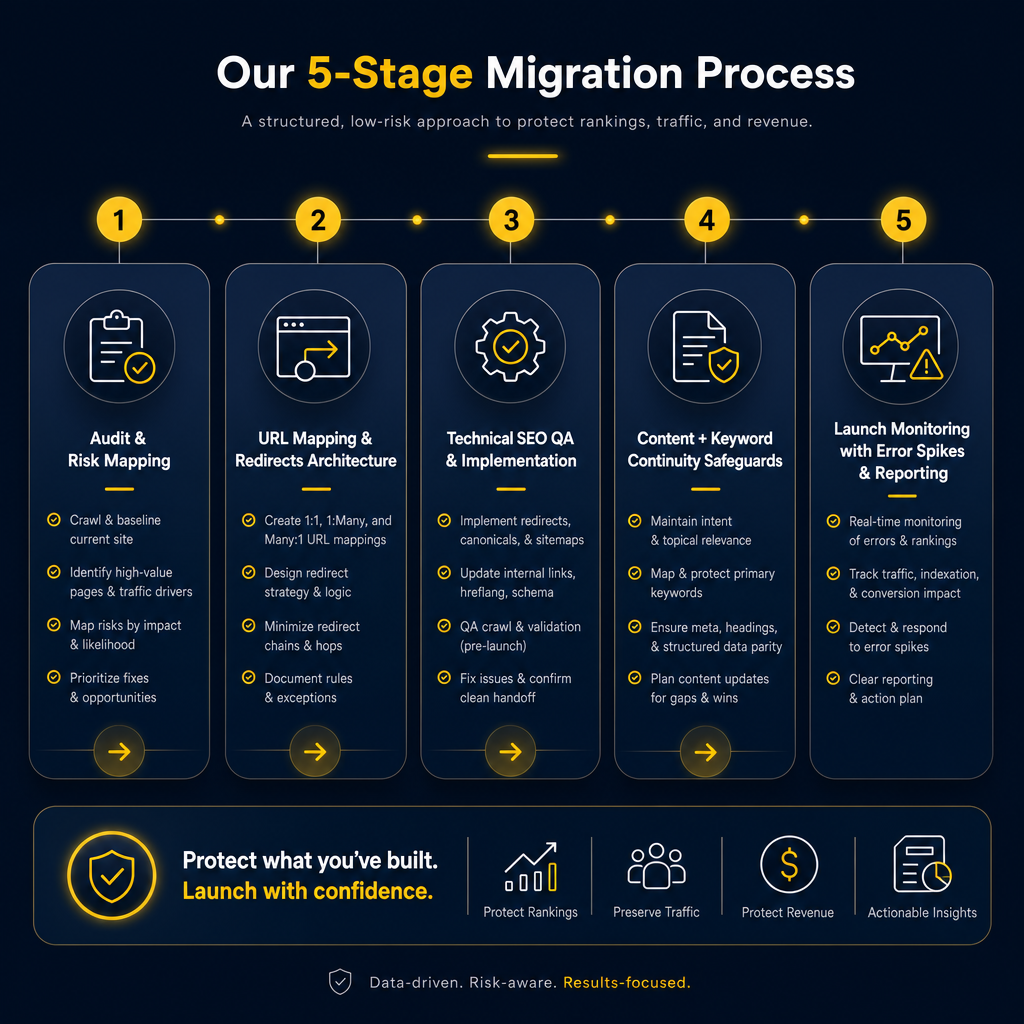
Illustration of a 5-step technical SEO migration workflow with audit, redirects, QA, content continuity, and launch monitoring.

The Migration Process We Follow (Conversion-Focused + Execution-Ready)

### 1) Baseline Audit + Risk Mapping

.

1) Baseline Audit + Risk Mapping

We start by documenting what’s working and where risk is highest:

  • Current index coverage and URL inventory
  • Top traffic pages and keyword clusters
  • Template and URL parameter behavior
  • Technical crawlability and metadata patterns

Output: a prioritized migration risk plan and success criteria.

2) URL Inventory, Mapping, and Redirect Architecture

Next, we build the migration blueprint:

  • Full URL inventory (important URLs only vs. full site scope)
  • Redirect mapping (1:1 where it matters, grouped where it’s safe)
  • Redirect chain and loop prevention
  • Planning for canonical and internal link destinations

Goal: preserve equity and avoid “redirect chaos.”

3) Technical SEO Implementation + QA (Before and After Launch)

We validate the details that typically break:

  • Canonicals, hreflang, and template rules
  • Robots.txt and indexing controls
  • XML sitemaps and HTML sitemap accuracy
  • Schema and structured data correctness
  • Pagination, faceted navigation, filters (where applicable)
  • Performance checks for speed and rendering integrity

Then we QA the whole system—not just pages in a browser.

4) Content + Keyword Continuity (Without Killing Conversions)

During migration, content often changes unintentionally. We protect:

  • Keyword-to-page mappings
  • Content intent alignment
  • Internal link paths to key pages
  • Metadata and headings continuity
  • Redirect rules for changed slugs

Result: fewer ranking dips and more consistent lead flow.

5) Launch Monitoring + Post-Launch Optimization

The migration isn’t over at go-live. We monitor:

  • Indexing changes and crawl patterns
  • Error spikes (404s, soft 404s, redirect issues)
  • Coverage and sitemap health in Search Console
  • Ranking movement for critical templates and keyword clusters
  • Fix backlog prioritization

This is where you catch issues early—before they become performance “loss.”

Technical SEO Deliverables You Can Expect

  • Technical SEO migration audit
  • URL inventory and prioritization
  • Redirect mapping plan (with implementation guidance)
  • Canonical + indexation verification
  • Robots/meta noindex control review
  • Sitemap validation (XML and HTML)
  • Structured data (schema) planning + QA
  • Internal linking strategy for navigation and key hubs
  • Performance and rendering checks to protect Core Web Vitals
  • SEO tracking verification (GA4 + Search Console readiness)
  • Log review / crawl signal analysis (where available)

SEO TOOLS in the workflow

And yes—we incorporate SEO TOOLS into the workflow for accurate detection and repeatable quality checks, such as:

  • Google Search Console & Google Analytics (GA4)
  • Crawlers like Screaming Frog or Sitebulb
  • SEO platforms (e.g., Ahrefs/Semrush) for competitive context
  • Custom scripts and regression checks for template-based fixes

How This Connects Directly to Your SEO Services

This pillar page is part of a broader SEO strategy. If you need more visibility on Google and other search engines, our SEO Services support the entire growth engine:

  • Technical SEO foundation you can trust
  • Optimized content built around the right keywords and intent
  • Stronger site structure, speed, and technical setup
  • Ongoing improvements that turn organic search into a long-term growth channel

A migration without the right plan can erase months of SEO work. The right migration plan protects it—and positions you for stronger results afterward.

Typical Timeline (What to Plan For)

  • Discovery & inventory: 1–2 weeks
  • Mapping + implementation planning: 1–2 weeks
  • Technical QA + pre-launch checks: 1–3 weeks
  • Launch + monitoring: 2–6 weeks (with a continued optimization window as needed)

Exact timing depends on site size, CMS complexity, and URL change scope.

Common Migration Scenarios We Support

  • Platform change (WordPress → custom build, Shopify → WooCommerce, etc.)
  • Domain migration and brand changes
  • Theme redesign with template-level SEO changes
  • Custom CMS migration requiring canonical and sitemap rule rebuilding
  • E-commerce URL + taxonomy restructuring
  • International setup (subfolders/subdomains, hreflang)

Frequently Asked Questions

Do we really need technical SEO for a website redesign?

Yes—designs often change templates, metadata, internal links, and rendering behavior. Even “visual-only” redesigns can create technical SEO regressions.

What’s the biggest SEO risk during migration?

The biggest risks are incorrect redirects, broken indexation rules (canonicals/noindex), sitemap errors, and internal link loss—followed by performance drops that reduce crawl efficiency.

Can we migrate without downtime?

Often yes, but even “zero downtime” migrations still require careful index control and redirect validation. We plan for both uptime and SEO correctness.

How do you handle old URLs when slugs change?

We create a mapping strategy and redirect architecture based on intent and importance—preserving equity while avoiding unnecessary redirect chains.

How long does it take to recover rankings if something goes wrong?

It depends on the issue. Some problems show within days (indexing/404s), while others reveal over weeks (template issues, internal link changes, crawl efficiency). Early monitoring reduces recovery time.

Do you provide reports for clients?

Yes. You’ll receive clear findings, success criteria, and post-launch monitoring results aligned with your migration goals.

Ready to Launch Without Losing Organic Traffic?

If you’re planning a platform, domain, or CMS migration—and you want Technical SEO that prevents ranking loss—Shakir Ansari and the RTP team can help you build a migration that performs.

Request a Technical SEO & Migration Audit

Next Step

Tell us what’s changing (domain/CMS/platform, URL structure changes, e-commerce scope, international setup). We’ll help you define the safest migration plan and the post-launch monitoring strategy to protect growth.