
SHAKIR ANSARI

Websites for Doctors: Custom Healthcare Web Design & SEO

Healthcare providers don’t need a “generic brochure website.” They need a digital front door that earns trust, works perfectly on mobile, helps patients take action, and attracts the right inquiries through search. This pillar page explains what goes into building websites for doctors that perform—combining custom development, modern UX, conversion-focused booking flows, and SEO.

Why healthcare websites must do more than look good

Most patients decide quickly—often on their phone. A well-built healthcare website should:

  • Build trust fast: clear services, clinician credentials, transparent processes, and professional design
  • Convert inquiries into appointments: simple booking paths, strong calls-to-action, and low-friction forms
  • Perform under real-world conditions: fast load times, stable layouts, and mobile-first usability
  • Support long-term growth: scalable page structure, maintainable content, and SEO-ready foundations

When your website becomes a consistent marketing and intake channel, it turns into a measurable business asset—not just an online presence.
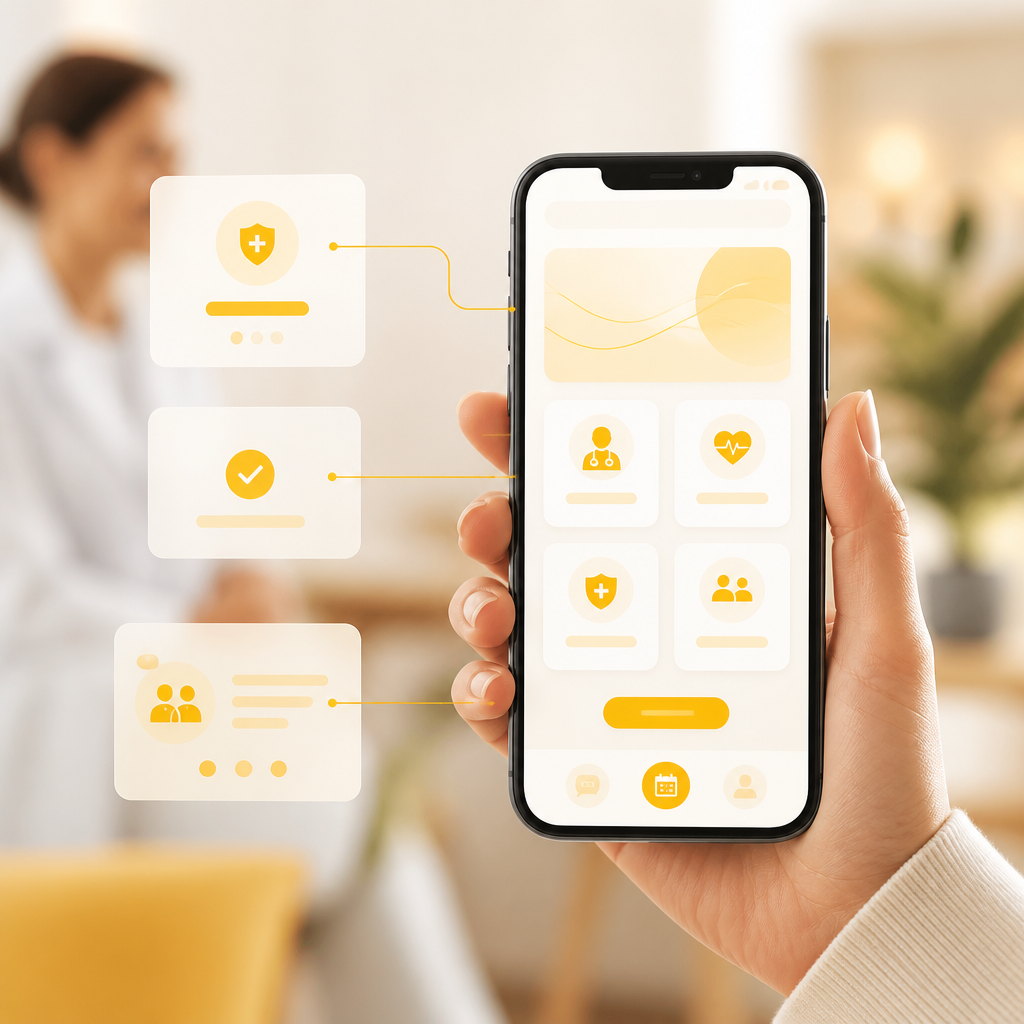
A mobile-first healthcare website layout on a smartphone with clean service cards and trust-focused visual cues in warm amber tones.

The core ingredients of websites for doctors that convert

1) Mobile-first design (because patients browse on mobile)

A clinic or wellness visitor should be able to:

  • find services within seconds
  • view relevant details without zooming
  • contact or book without struggling with forms

Mobile-friendly design also supports stronger SEO performance and better user signals.

2) Clear service architecture

A healthcare site should be organized around how patients search, such as:

  • “primary care appointments”
  • “therapy for anxiety”
  • “dental implants”
  • “sports physiotherapy”
  • “wellness programs”

Each service should have its own page with:

  • what it is
  • who it’s for
  • what to expect
  • FAQs
  • next step (booking/contact)

3) Conversion-focused booking and contact flows

Patients usually want one of these actions:

  • book an appointment
  • request an intake form
  • ask a question
  • call the office

Conversion-focused pages include:

  • prominent CTA buttons
  • streamlined form fields
  • confirmation messages
  • clear business hours and locations

4) Trust and clarity components

To reduce hesitation, your website should include:

  • clinician profiles (education, experience, specialties)
  • credentials and affiliations (where applicable)
  • patient-focused FAQs
  • service expectations and safety notes
  • reviews/testimonials (when appropriate and compliant)

A premium editorial web design composition with modular components connected by abstract integration pathways in warm amber and near-white tones.

Custom healthcare web design vs. template websites

Template-driven sites can look “fine,” but healthcare providers often hit limitations when they need real functionality—like flexible scheduling, specialized intake, or integration with internal tools.

Custom-built websites allow you to:

  • tailor layouts to your service model and patient journey
  • implement unique booking/intake workflows
  • connect APIs to CRM, calendars, payments, messaging, and analytics
  • scale into new services without redesigning the entire site

B2B web design thinking, you can also structure pages for partnerships (referrals, employer/wellness programs, vendor coordination, or multi-location operations), not just individual consumers.

SEOBoosting search rankings and traffic for healthcare providers

If patients aren’t finding your services in search, your website can’t generate meaningful inquiries. Effective SEO for healthcare websites typically includes:

Technical SEO and performance

  • fast page speed and smooth mobile experiences
  • clean URL structures
  • indexable pages (no accidental blocking)
  • structured internal linking between services, locations, and FAQs

On-page SEO that matches patient intent

  • Each service page should answer the search intent behind queries:
  • “how to prepare for…”
  • “what conditions do you treat…”
  • “how long does recovery take…”
  • “cost factors” (when you provide this information)
  • “who qualifies” / eligibility criteria

Local SEO for clinics and practices

  • consistent NAP (name/address/phone) across the site and listings
  • location pages that are genuinely useful (not thin duplicates)
  • map-ready contact and location details
  • review and reputation signals (when appropriate)

SEO-ready structure for long-term content growth

  • A scalable site helps you expand content over time:
  • new services
  • new FAQs
  • seasonal campaigns (e.g., back-to-school wellness, sports seasons)
  • clinician highlights and educational posts

SEOBoosting search rankings and traffic is rarely a one-time task—it’s a system built into the website structure, content approach, and technical performance.

Security, privacy, and HIPAA considerations (important for healthcare sites)

Healthcare websites often involve sensitive patient workflows. While every project is different, a responsible build considers:

  • Whether the website collects or transmits PHI
  • How forms and scheduling handle user data
  • Encryption in transit (HTTPS)
  • Secure session handling and authentication (if login is used)
  • Reducing exposure (only collecting what’s necessary)

If your site involves PHI or HIPAA-covered workflows, your development should align with applicable requirements and vendor responsibilities. A strong approach is to design the system so sensitive data is handled appropriately, and to coordinate with the right compliance stakeholders.

A secure healthcare data protection composition with layered shield motifs and abstract encrypted data flow in deep charcoal and amber.

B2B web design: when healthcare needs more than patient pages

Many healthcare providers operate with business relationships that benefit from a professional, structured website experience, such as:

  • referral partnerships
  • employer-sponsored wellness programs
  • multi-location organizational needs
  • vendor or clinical collaboration pages

B2B web design for healthcare can include:

  • partnership and contact pages with clear next steps
  • structured case-study style content (process and outcomes, where appropriate)
  • multi-audience navigation (patients vs. partners vs. clinicians)
  • integration-ready workflows for internal teams

This ensures the site supports not only patient inquiries, but also organizational growth.

How Shakir Ansari & the RTP team approach healthcare website development

A conversion-optimized healthcare site is built in stages. Shakir Ansari and the RTP team focus on custom development that supports growth and operational efficiency, including:

  1. Discovery & goals
    • clarify patient journey: services → trust → booking/contact
  2. UX/UI and content layout
    • design pages that reduce friction and highlight credibility
  3. Custom development and integration
    • connect scheduling, CRM, payments, and third-party tools via APIs when needed
  4. Performance and mobile readiness
    • ensure the site is fast, stable, and mobile-friendly
  5. SEO-friendly structure
    • build pages and templates that support search visibility
  6. Testing and launch readiness
    • validate forms, CTAs, and key workflows before going live
  7. Scalable foundation
    • make it easier to add new services and features without rebuilding from scratch

With 10+ years of experience and 1,300+ web applications developed, the RTP team works across full-stack development and modern web platforms—helping healthcare businesses build reliable, maintainable digital systems.

A practical healthcare website roadmap (checklist)

Use this as a starting point for what your website project should include:

  • [ ] Service pages mapped to patient search intent
  • [ ] Appointment/booking or inquiry workflow designed for mobile
  • [ ] Clinician and trust content (profiles, specialties, FAQs)
  • [ ] Contact forms that route inquiries correctly
  • [ ] Technical SEO foundation (performance, indexability, structure)
  • [ ] Local SEO elements for clinics and multi-location needs
  • [ ] Secure data handling aligned to your workflow requirements
  • [ ] Analytics and tracking to understand inquiries and behavior
  • [ ] Scalable page templates for future services

Hiring guide: what to look for in a healthcare web design partner

If you’re comparing agencies or freelancers, prioritize providers who can demonstrate:

  • Healthcare experience and patient-focused UX
  • Mobile performance and accessibility awareness
  • SEO-ready development practices
  • Clear integration capabilities (booking, CRM, payments, analytics, APIs)
  • Security and privacy-minded implementation
  • Custom-coded approach when templates would limit your workflows
  • Ability to collaborate on content and structure (not just design)

A partner who understands how healthcare websites convert will help you avoid the common mistake: launching a visually attractive site that doesn’t generate patient inquiries.

FAQs

Are websites for doctors required to be HIPAA compliant?

HIPAA requirements depend on whether your website handles protected health information (PHI) and your specific workflows. If your site collects PHI (or connects to PHI systems), compliance considerations should be part of the design and implementation process.

Can a custom healthcare website integrate appointment booking?

Yes. Custom development can support booking flows and connect scheduling-related tools and workflows through integrations—so patients can book or request appointments with minimal friction.

How do I improve patient inquiries from my website?

Focus on mobile UX, clear service pages, trust-building content, and conversion-focused booking/contact flows. Add analytics to measure where inquiries come from and refine the site based on real behavior.

How important is SEO for healthcare providers?

It’s essential. Many patients discover providers through search. SEO-friendly structure, strong page intent alignment, and technical performance help you reach more qualified inquiries over time.

What makes B2B web design relevant in healthcare?

Healthcare businesses often need to support partnership and organizational audiences in addition to patients. B2B web design helps structure these experiences clearly—making it easier for partners and stakeholders to understand next steps.

Should I choose a template or custom website?

If you need specific integrations, unique workflows, or scalable growth, a custom-built approach typically performs better than template sites that limit functionality and flexibility.

Conclusion

Building websites for doctors and healthcare services should be approached as a long-term growth system: mobile-first UX, conversion-focused booking, secure and privacy-minded implementation, and a structure designed for SEO. With the right development partner, your website becomes a reliable intake and trust platform—supporting both patient inquiries and business operations.

CTA (Explore Website Development)

If you’re planning a healthcare website that performs—fast, mobile-friendly, SEO-ready, and built for real workflows—explore Website Development with Shakir Ansari – Full Stack Developer & AI Automation Solutions.